
Blog 10 of the Business Strategy Series
From product to company technology, innovation and design.
Just think about the smart phone – the i-phone – that was introduced to the market in 2007 and closely followed by the Android phone. The previous generations of the phone included the fixed location home phone, then we moved to rather bulky mobile phones where you could only talk, then on to phones with messaging and some functions such as calendar, etc. And now we have the i-phone and what does it do with all its apps? It is a phone, it lets you manage your emails, it is your console for social media, it can access and play any music, it can access and play videos, it can track and help you manage your health, it is a camera, it is a library, it is a research assistant, it’s a games console, it can let you do all your banking, it has Siri your assistant, it’s your mobile office, and the list goes on and on! How much more will you be able to do when you add IoT, 5G and AI technologies? That is the power of technology, innovation and design (Figure 10-1).
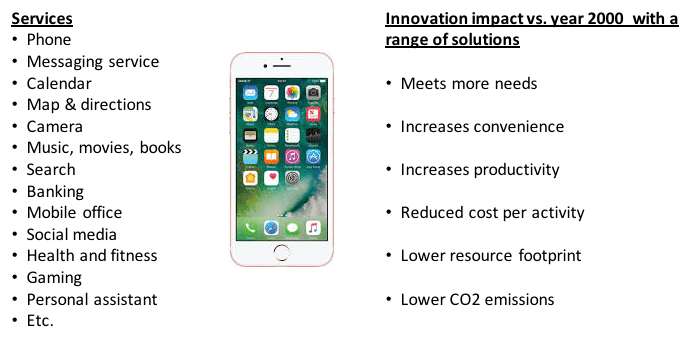
What are some of the interesting lessons that the smart phone illustrates in terms of the role of technology, innovation, and design (TID)? Just think back to the pre-smart phone era as to what it would take to do the same things – how much would it cost, how much space would it take, how much more time would it take to do the same task and switch between tasks, how does the performance of each task compare in terms of productivity, what level of physical resources would you have depleted, what would be the energy foot print of having all those capabilities and using them. Across virtually every relevant dimension you can think of there is a learning curve from innovation.
What do I mean specifically by learning curve? With time, volume and experience a task or set of tasks has the potential to improve across a set of key dimensions including output quality and productivity, cost, resource use and breadth of capabilities provided. This is progress – continuous improvement – in key dimensions of performance over time. It won’t all be a in a straight line. There will be a combination of incremental improvements, step changes, setbacks; but, overtime there will be progress. The smart phone in combination with broadband, computing power, big data, battery life has now made a significant change to the lives of billions of people.
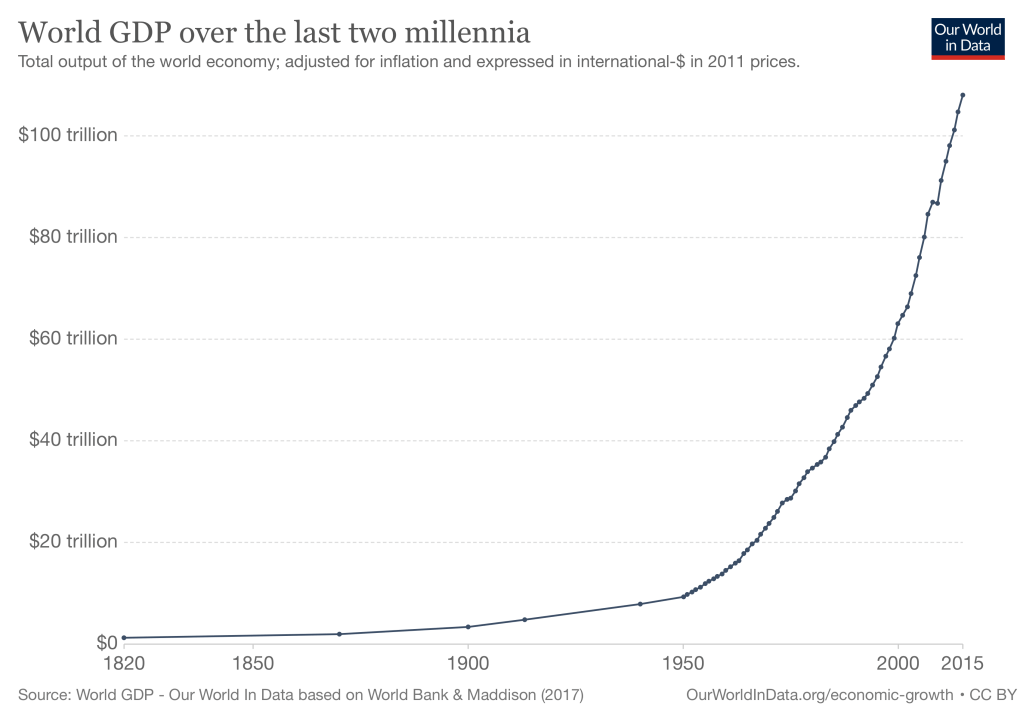
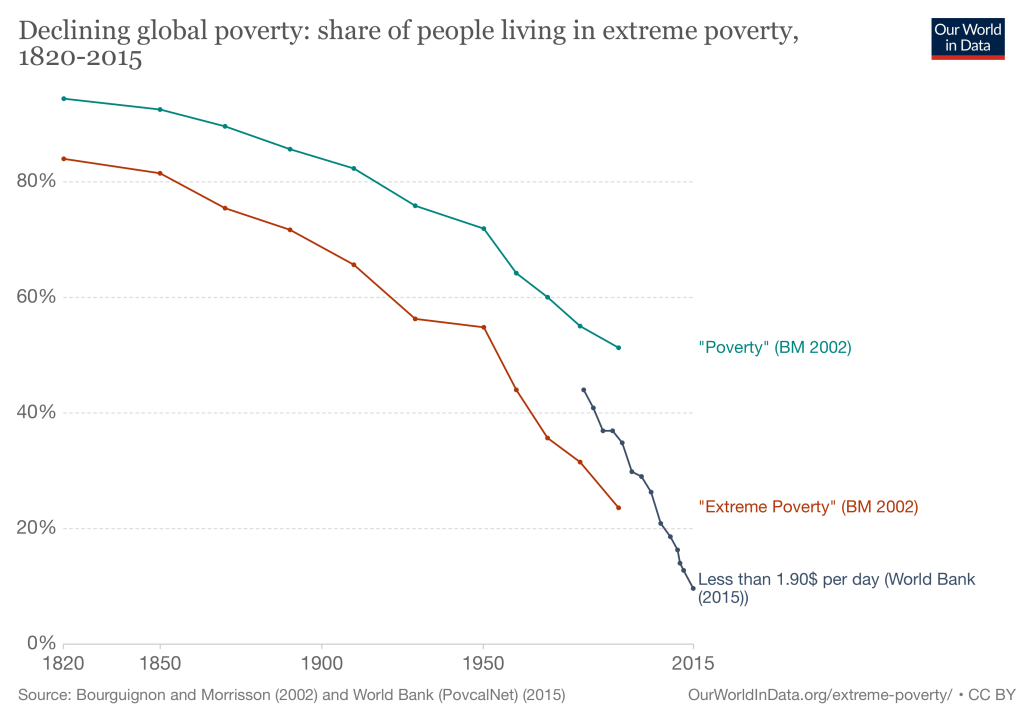
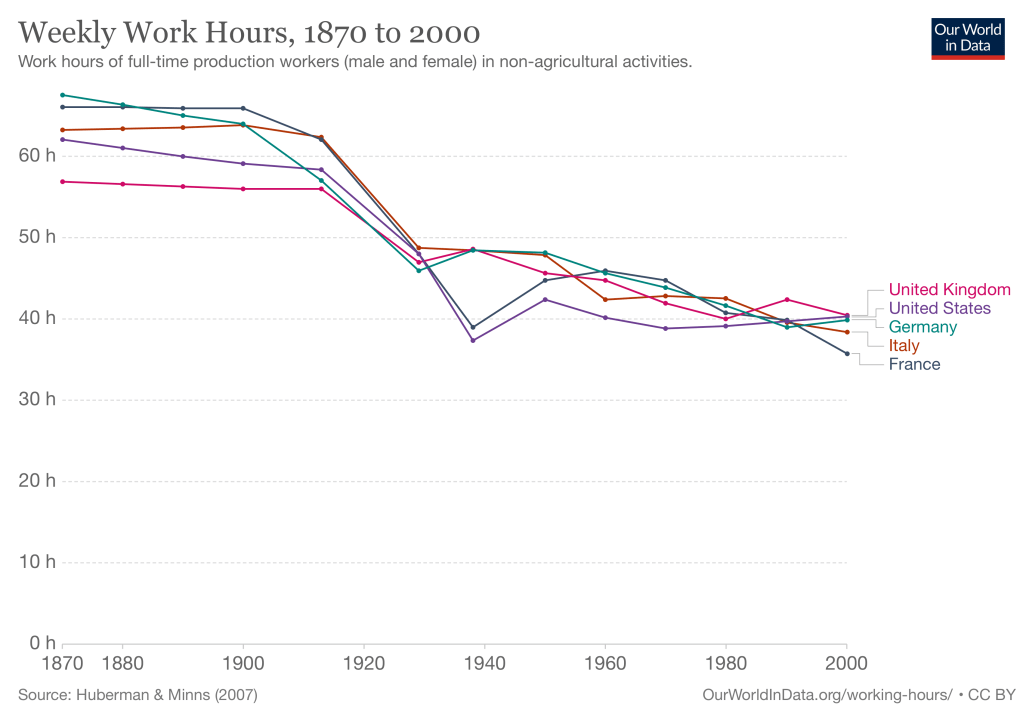
This concept of the learning curve has the potential to replicate across virtually all aspects of our life if we focus on learning and innovation. Here are some examples of improvements that are being seen in the world in Figures 10-2 to 10-7.
Since 1820, World GDP has grown by about 100 times while population growth has been 8 times.
Since 1800, life expectancy at birth has increased from below 30 years to over 80 years in some countries.

The share of the world population in absolute poverty has dropped from about 90% in 1820 to now under 10% of the population. Even since 1980, it has dropped from about 44% of the population to below 10%.
With all the growth in GDP and GDP per capita, the average weekly work hours per person has dropped. This is also the case if you look at household work with the advent of the dishwasher, washing machine and drier, the oven, the vacuum cleaner, etc.
The death rates from pollution per 100,000 people have declined, as with homicide deaths, disease related deaths, deaths from other health conditions and traffic related deaths.

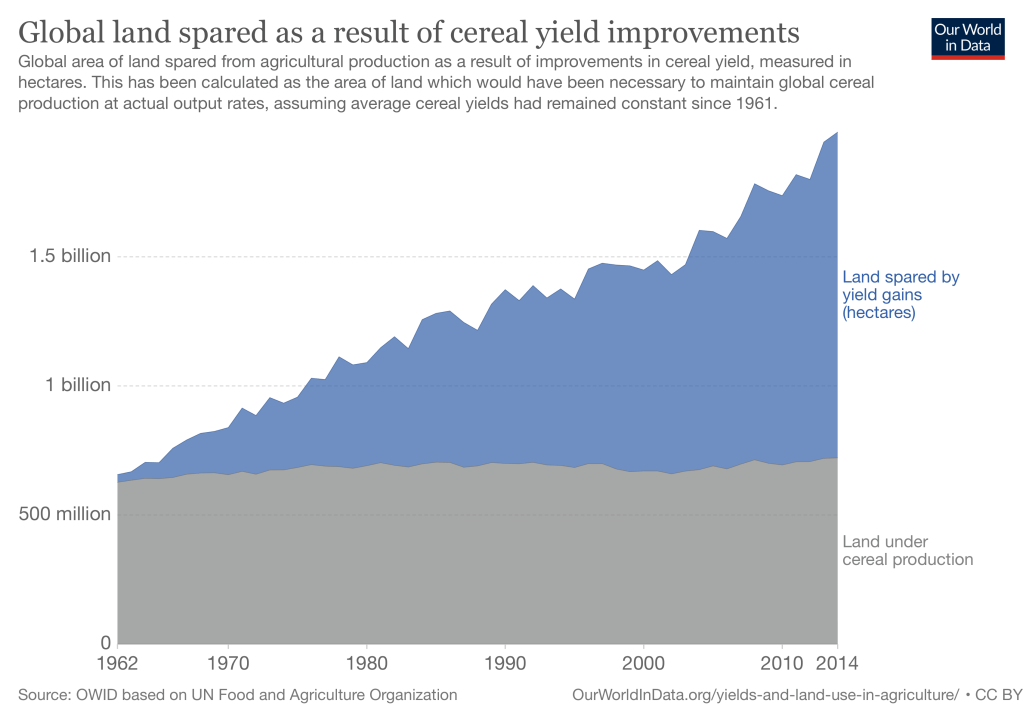
Cereal yield improvements have almost fully offset the need for additional land from the growth of the population since 1962 from 5.15 billion to the 2014 level of 7.3 billion people (we are now at about 7.8 billion people) and improvements in income per person which has driven growth in calorie intake.
If you want to really study this, I suggest Steven Pinker’s book ‘Enlightenment Now’ as a good place to start. The other source to look at is www.ourworldindata.org which was founded by Max Roser.
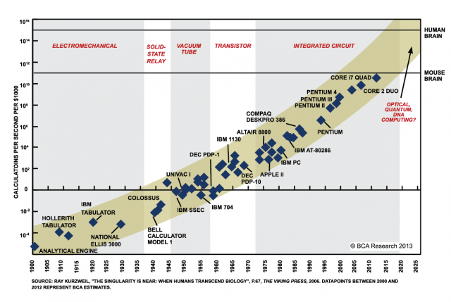
With the ability to create improvements across the world through learning, process improvements, focusing on reducing waste and development and use of new technologies, we should be systematically looking at how to improve all parts of a business. It may not all be on the Moore’s law curve that we see for computing power ( Figure 10-8) or a perfect experience curve.
Why have I called this technology, innovation and design? Technology is the availability of a new capability that has the potential to create an impact. The common thinking of technology progression is Moore’s Law.
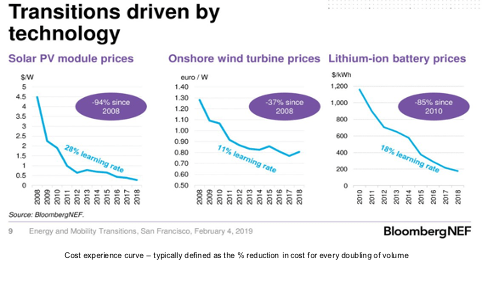
Innovation is the conversion of a capability into a specific application to enhance or transform the value of a product or the performance of a business. In the example below, are examples of how technology has driven down the cost-performance ratios of key products which open up large new market opportunities.
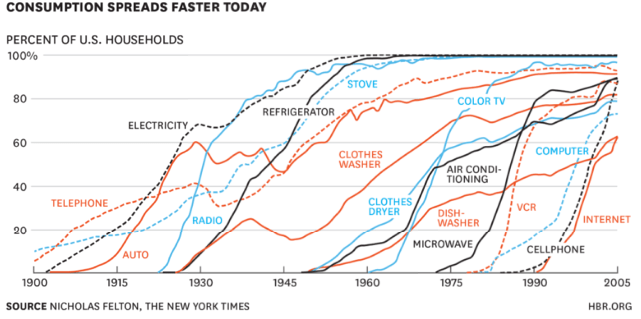
Design is the conversion of an application specific innovation into a product or service to drive adoption. Without adoption of an innovation, no value is created.
What are the implications for business and strategy? Everything! What is the strategy to transform customer value, reach new customers, improve productivity, employ capital more productively, reduce costs, reduce resource use and reduce CO2 emissions? A committed focus on innovation should drive medium and long term performance for shareholders, and improve alignment with key other stakeholders. The opportunities go well beyond just product.
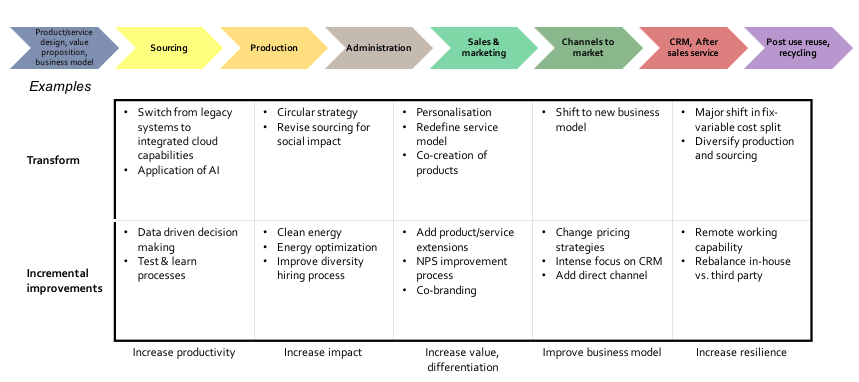
Here are some 5 key areas to think about.
- A continuous focus on understanding your customer in terms of how they make a decision to buy, how they buy a product and how they use the product and finding out where the business falls short will drive improvements across a whole business.
- Put as much data around decision making as possible. De-average your analysis and decision making to help eliminate waste, improve safety and privacy, personalise, find new innovation opportunities and remove unproductive activities.
- Put in test and learning processes across your business – in service, in production, in administration, in technological innovation and in new product development. Create a culture of continuous improvement.
- Explore getting the right mix of in-house vs. outsourced capabilities. This could be efficient access to expert power where it would be hard to create internally. Alternatively, it could also be outsourcing of non-mission critical activities to groups that are much more efficient. In addition, it could also link to shifting to third party cloud based systems to de-risk, variabilise costs, reduce technical debt, and let experts innovate new functionality.
- Find the right balance of focusing on continuous improvement vs. finding opportunities to create step changes; for example, from new technology or changing your business model.
In summary, if you don’t keep moving forward you will be passed. In a rapidly changing world, integrating technology, innovation and design in the operating DNA of the business is mission critical.
 REBOOT