Categories
REBOOT Strategy

REBOOT Business Strategy

“It always seems impossible until it is done”, Nelson Mandela

Blog 14 of the Business Strategy Series

In this second blog describing the strategic framework (figure 14-1), I will cover off talking about the delivery model which is the strategic component behind the purpose of the business that drives both the economic and impact model of the business.
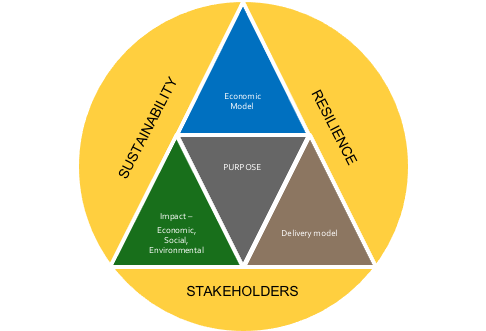
Figure 14-1

The delivery model aligns the customer proposition with the delivery components that are comprised in a circular strategy, to address climate and environmental impact, and the social strategy that focuses on economic and social impact (Figure 14-2).
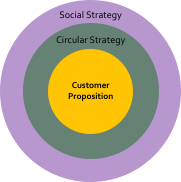
Figure 14-2

Behind all businesses are the dimensions of customer – product fit.  The three key strategic pieces of this comprise a powerful proposition to the customer, ensuring the proposition is differentiated from its competitors, and focusing on a market segment that is attractive or ideally large and growing. 

Achieving and sustaining a differentiated customer proposition is critical to success.  To this end, having an intense and ongoing understanding of a business’ existing and potential customers in terms of purchasing decision making and behaviours, usage and post-usage behaviours, and the factors that will drive emotional engagement are vital.  We can see the potential components of a proposition (Figure 14-3) and the ways to differentiate are growing over time. The newer dimensions include differentiating over environmental sustainability and responsibility, the business model as discussed in Blog 9 of this series including channels to market, and a number of technology based dimensions.
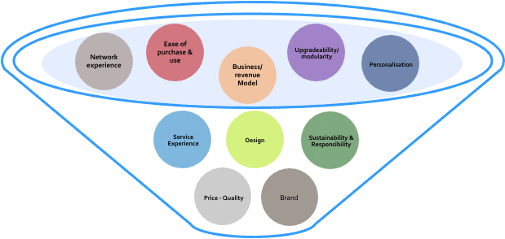
Potential Components of a Value Proposition,
Figure 14-3

In many ways, the bigger challenge is sustaining differentiation vs. the initial achievement of a differentiated proposition.  Success attracts copycats.  New technology or technology convergence invites disruption.

There are a number of components businesses need to have in place to succeed in sustaining differentiation.  Firstly, superior customer knowledge of existing and potential customers.  Secondly, and closely associated, is superior CRM (customer relationship management) capabilities.  The purchasing and usage experience of a product or service drives customer retention, which results in repeat buying and referrals.  Relentlessly improving this experience will be even more critical going forward as the environmental movement drives longer life products and higher levels of service.  Thirdly, the collection and use of data, including competitive information.  Fourthly, having innovation capabilities and agility to continuously improve, react to problems and opportunities, and to integrate major changes as new technological capabilities. Speed and agility in many sectors are mission critical for success.  Finally, none of the other dimensions matter if you do not have the financial capacity to progress on these factors and withstand competitive pressures.  

Now let’s move on to look at environmental impact.  To truly embrace environmental impact and set ambitious targets from an attitudinal, operational and strategic perspective you need to look at your business through the eyes of a circular strategy.  My first exposure to this concept was over 15 years ago when I read ‘Cradle to Cradle: Remaking the Way We Make Things’ by William McDonough and Michael Braungart, where they presented an integration of design and science that provides enduring benefits for society from safe materials, water and energy in circular economies and eliminates the concept of waste.

The book put forward a design framework characterized by three principles derived from nature.  Firstly – “Everything is a resource for something else. In nature, the “waste” of one system becomes food for another. Everything can be designed to be disassembled and safely returned to the soil as biological nutrients, or re-utilized as high quality materials for new products as technical nutrients without contamination”. Secondly – “Use clean and renewable energy. Living things thrive on the energy of the solar system. Similarly, human constructs can utilize clean and renewable energy in many forms – such as solar, wind, geothermal, gravitational energy and other energy systems being developed today – thereby capitalizing on these abundant resources while supporting human and environmental health.”  Thirdly – “Celebrate diversity. Around the world, geology, hydrology, photosynthesis and nutrient cycling, adapted to locale, yield an astonishing diversity of natural and cultural life. Designs that respond to the challenges and opportunities offered by each place fit elegantly and effectively into their own niches.”  

The circular economy is most easily visualised by Figure 14-4 below.

Figure 14-4

One of the real champions of this approach are the Ellen MacArthur Foundation who have been working with major corporations to rapidly and dramatically reduce the carbon footprint and environmental impact they are having on the planet.  Their mission is to accelerate the transition to a circular economy. The Ellen MacArthur Foundation works with business, government and academia to build a framework for an economy that is restorative and regenerative by design.  Figure 14-5 identifies the main components of the thinking within a circular strategy.
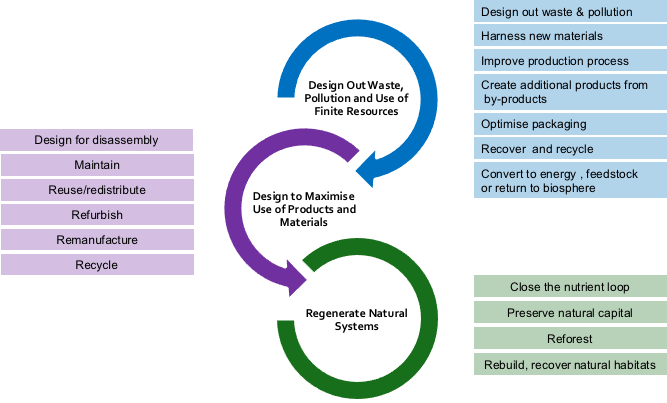
Figure 14-5

The starting point for developing a circular strategy is to know where you currently stand in terms of both economic cost and environmental impact (Figure 14-6). This sets the business’ starting point.
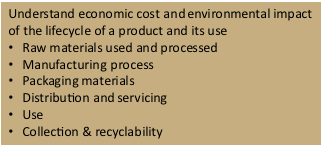
Figure 14-6

Secondly, explore ways that you can add value and revenue growth by making changes to your business model.  Getting the right business model is critical to align with a circular strategy.  As I noted in Blog 9 of the series there are many alternative business models that can be explored.  Below in Figure 14-7 are some examples of business models of some newer businesses.
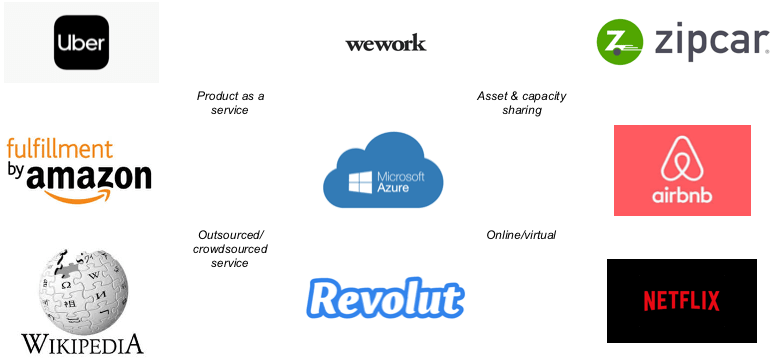
Figure 14-7

Achieving a full circular strategy in product based businesses is a major commitment of time, energy and resources.  This also requires full alignment across all parts of the business and its supply chain.  Defining the end point allows the business to define the journey and time frame to achieving it in order to deliver on the financial performance and meet the impact requirements of a responsible business.

Integrated with the circular strategy, a business needs to overlay a social strategy, which includes economic impact.  I believe the acid test of a strong social strategy is whether or not, or to what extent, the company is contributing in its own way to reducing inequality, ensuring inclusivity, and contributing to future generations of all children being better off.  This is positive impact.

The constituents of a social strategy are the customers, employees, people within the supply chain and communities which are touched by the business (Figure 14-8).
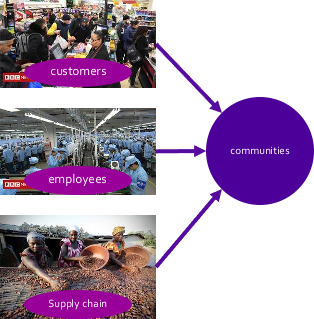
Figure 14-8

The social strategy can impact on many of the SDG’s (Figure 14-9) including ‘responsible consumption and production’, decent work and economic growth’, ‘quality education’, ‘good health and well-being’, ‘gender equality’, ‘reduced inequalities’, and ‘clean water and sanitation’.
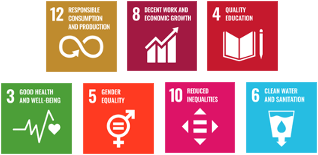
Figure 14-9

The impact focus of the social strategy will range from compliance with core principles such as anti-slavery, fair trade and gender equality, to specific proactive stances against behaviour that violates the core values of the businesses, or finding areas where the business can add some real specific value (Figure 14-10).

Figure 14-10

Most recently, we have seen the incident with Patagonia who removed its advertising on Facebook in a “Stop Hate for Profit’ campaign.  Alex Weller, Patagonia’s marketing director for Europe said, “It’s no secret that social media platforms have been profiting from the dissemination of hate speech for too long.  Facebook continues to be the most resistant of all the social media platforms to addressing this critical issue and so that’s why we decided to take action against it specifically.” Since Patagonia’s stance others like Adidas, Verizon, Coca-Cola and Unilever made similar moves.  Patagonia has said that it will stay the course and stand by this commitment for as long as it takes.  We will see the strength of the stance of other companies as time passes.

Overall, companies need to think about what their social balanced score card should look like (Figure 14-11).  
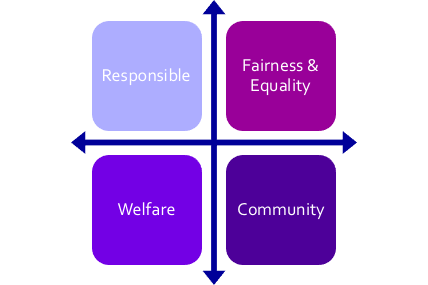
Figure 14-11

Just as with the other components of the thinking requiring short, medium and long term views, so does the organisational thinking.  This organisational thinking for the organisational components per the McKinsey 7S model (Figure 14-12) needs to be matched against both the time horizons and the alternative strategic scenarios in order to be properly assessed.

Figure 14-12

Critically, to get each of the organisational components right there needs to be clarity on the performance requirements (Figure 14-13) of the organisation.  Arguably, if there are some big strategic shifts in the business as a result of also needing to drive impact, then there will likely be some material changes required to the organisational needs of the business and linked to this the incentive structure to drive alignment. 
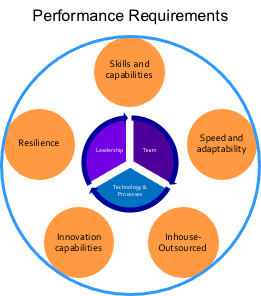
Figure 14-13

Finally, as the environment changes, the sector evolves and the company learns, there will need to be continuous adjustments to the strategy and the components of delivery in order the achieve both the economic and impact goals of the business.  Integration and alignment of these components is critical as well as continuous feedback across the cascade of components with appropriate adjustments (Figure 14-14).
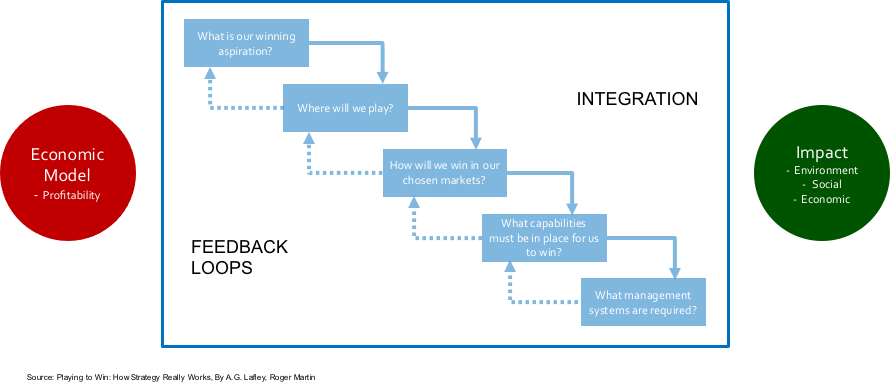
Figure 14-14

In final blog of this series, I want to talk in more depth about impact, strategic time frames, sustainability and resilience. I will also finish off with a short discussion on portfolio strategy for companies with multiple businesses.

Categories
REBOOT Strategy

REBOOT Business Strategy

“Innovation is seeing what everyone has seen and thinking what nobody has thought”, Dr. Albert Szent-Györgyi (discovered Vitamin C)

Blog 9 of the Business Strategy Series

The natural subject to follow on from customer – product fit is to explore business models.  The business model definition in the context of this discussion is, the economic model for profitability that joins the value proposition to the target customers with the delivery model of resources and processes that need to be combined to meet the customer need, and to build and grow the business.

It is critical to understand that the three components, the value proposition, the set up to deliver the value proposition and the economic model are all intertwined. As an example, in the US you might ask how does everyone seem to own a car and regularly get a new car. Surely, with the level of debt in America, most people don’t have the available cash to buy a new car!  The answer is that if you combine lease financing with a car you can expand the market by reaching a whole set of customers with limited or no savings, who can make payments out of their monthly pay.   In the case of General Motors (GM), you have GM the car manufacturer and GM Financial the lease provider.  The combination of the two provides the value proposition of a new car based on monthly payments and drives the overall profitability of GM from both product margins and financial margins from the  leases.  

A more modern example is AirBnB who are the biggest providers of rooms for short term accommodation.  They do this without owning any real estate.  They have crowd sourced the rooms, they then pay for them and resell them on a variable cost basis. AirBnb effectively then takes an intermediary margin to drive the economics of their business.  Both of these examples show how the economic model is an integral part of the value proposition and also dramatically affects the scale opportunity for the business.  Business model innovation, with innovation within the economic model, is a critical component in the development of new successful businesses.

There are five key economic dimensions of the business model that I will explore.  The first dimension is who pays. Is it the customer who pays for the product or service or does someone else pay – these are direct or indirect models.  One of the earliest versions of the indirect model is a newspaper or magazine that is free, and all the revenues are made from ads placed in that media.  The companies placing the ads are indirect beneficiaries of the consumer business if the ads generate revenues for the advertiser.  

Today two of the FAANGS (5 prominent American technology companies – Facebook, Apple, Amazon, Netflix, Google) have a core model that the consumer does not pay.  They are Facebook and Google.  These two companies make most of their money from the placement of ads in the web pages of their consumers.  In these digital models there are also opportunities to make money off the consumer data that they collect.  The reality of these economic models, although it may not be obvious, is the user of the service is the product and the economic customer is the advertiser or purchaser of consumer information.   The internet spawned a large movement towards this model; although, many companies have found that ad revenues alone are not enough and a hybrid model is usually required.

The second dimension is the economics of revenue growth.  There are two fundamentally different types of revenue focus, product focused (transaction oriented) and customer relationship driven.  The economics of the two models are very different and best suited for different situations.  In the transactional model, the sales, marketing and service costs related to the sale are covered within the profit margins of the product/service sold.  In the economic profile of a customer relationship focus, the upfront costs of finding a customer are often expensive; however, as long as you capture customer information and are able to market to them subsequently the follow on marketing and sales costs to a customer can be very low.  If this is matched with a product offer that you have reasonable expectations you can generate recurring revenues, and ideally growing revenues over time, then you would be willing to lose money on the first purchase and make the profit up in subsequent purchases.  

In the early days of Amazon, there was always wonder at how the economics of Amazon made sense as they were unprofitable for years. If you look at it from a customer relationship perspective it was clear that when you have a high growth curve your focus is on new customer acquisition and each new customer at the beginning of their relationship is a loss maker.  Jeff Bezos clearly believed from books and then adding new product categories that the lifetime economics of a customer would be positive and this was a critical part of his economic model.  

The third dimension is revenue payment model.  There are a number of payment timing approaches in a model which include individual purchase, periodic purchases (unstructured buying over time) and subscription payments.  

Figure 9-1

These three dimensions are captured in Figure 9-1.  The indirect model of who pays is captured in the ‘Free’ column.  In the free column, if a customer never makes a payment then the revenues for the organisation needs to be collected from interested intermediaries.  In the grid, you can see that for digital companies that involve high frequency of use, often the right model is customer focused and subscription payments.  In contrast for non digital, companies such as FMCG companies and physical retailing where it is difficult to capture a name and efficiently use it, they will tend to be product focused.  Many of them try to become more relationship oriented by adding a loyalty program to a standard offer.

Often, there are companies that use a freemium model in the digital world.  A freemium model of a no cost low specification software application can often be an effective way to create a low cost of customer acquisition by offering a free trial product and then by watching their behaviour to trigger opportunities to upgrade the customer to a paying version of the product.  Spotify uses a variation of this model, where you can use Spotify for free if you are willing to put up with a regular flow of irritating adverts.  To get rid of this negative experience and then enjoy the full benefits of Spotify you take on a subscription.  From a Spotify perspective the ad revenues for a free customer is an offset to the customer acquisition costs for creating a subscription customer.  Spotify understands the large network benefits of having as many customers as possible using their service, so freemium pricing is a critical component of their strategy to be a leader in this sector.

This matrix, product vs. customer focus, and the revenue payment model are the two standard ways that most companies look at their business model.  

Many companies are now adding additional dimensions to their thinking about what the right proposition is to the customer and how the financial models works for the business.  The fourth dimension relates to how the product/service to the consumer is financed in relationship to the payment from the customer.  In this dimension, the standard approach is that the consumer pays the full value of the product or service at the time of purchase.  In this context, the company needs working capital financing for the product until a customer comes along.  

At the other end of the spectrum, the company will build up a product offer for the market by working as an intermediary effectively selling other peoples products.  The company may pre-buy inventory for resale, or crowd source product (eg. AirBnB) where they only buy a product or service when there is a need.  Crowd sourcing is a working capital and asset light model and the key is to solve how to add value in the middle as an intermediary.  Many people will refer to these businesses as market platform businesses. 

The final approach within this financing dimension, is what I have call provider financed.  In this case, the company has financed the asset and then provides the product as a service so the company only gets full financial coverage on the asset from multiple uses and/or multiple customers.   This can help significantly expand the market by taking out the affordability issue in the use of the product or service.    This is also known as an asset sharing model. 

With the focus now moving towards climate and environmentally friendly businesses, business models that are focused on high asset utilisation should have an important role in our lives going forward.  One of the sectors, where this is often talked about is the auto industry.  It is clear that cars are used only a small fraction of the time that they are available for use.  It is thought that if cars were in a high asset utilisation model, then we might only need about 10% of the cars currently in circulation.  This movement may also accelerate with the shift to autonomous driving vehicles.  

This leads us to the fifth and final dimension within business model that I want to focus on.  With the drive towards making businesses climate friendly, and the growing recognition that asset sharing is an interesting opportunity  for both the customer and the asset owner, there is a growing movement away from asset ownership towards ‘use’ and ‘result’ focused business models.  

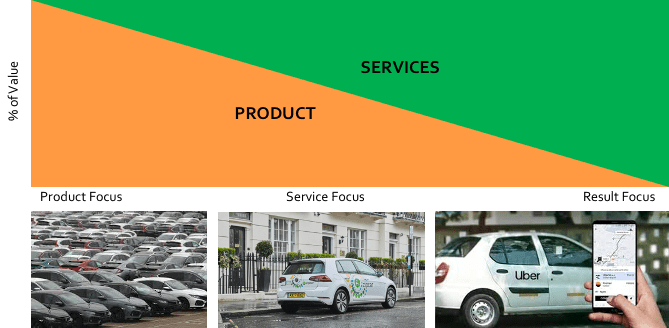
Once again within the automotive industry, we can see examples of each of these three models (Figure 9-2).  At the product focus end of the spectrum are the automotive manufacturers which include Toyota, VW, BMW, Mercedes, GM, Ford, Fiat, Renault, Peugot and the new entrant Tesla.  In the service focus part of the market, there are all the rental car companies and then new entrants such as Zipcar.  Zipcar is a highly convenient rental service to use the car as you want.  The service features include highly convenient pick up and drop off, a clean car, a full tank of gas/petrol, insurance and simple payment with all inclusive pricing.  Many consumers in urban environments are shifting to not owning a car and just paying per use.   At the results focus end of the spectrum, you have taxis and more recently Uber, and equivalent crowdsourced point to point personal transport service providers.   

Figure 9-2

If you were a large car manufacturer today, or a major player in the supply chain, facing a shift to electric cars, all the climate pressures, the emergence of crowd sourced / asset sharing companies, and in the medium term the growth of autonomous driving vehicles, what would your strategy be?

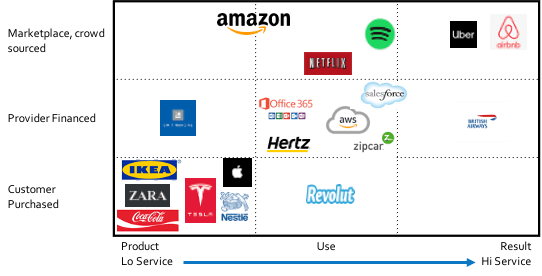
The mapping of the asset financing dimension and the product-service dimension provides and interesting look at the strategies of different companies (Figure 9-3).  An interesting business model to look at is Microsoft Office 365.  Microsoft has shifted from selling Work, Excel and Powerpoint as individual products or bundled as one off purchases to a subscription model with additional bundling of other services. This has helped to transform their business and economics.  They now have a product suite that is an integral part of their ‘cloud first’ strategy that provides a steady monthly flow of income, plus conversion to high proportion of direct sales to capture margins and only nominal additional marketing costs per existing customer for further potential sales.  This model also helps to open up additional innovation and cross selling opportunities off their cloud platform.  Uber and AirBnb in the marketplace and result box in the grid were able to build multi-billion dollar businesses by leveraging off other peoples assets and driving very simple user experiences.

Figure 9-3

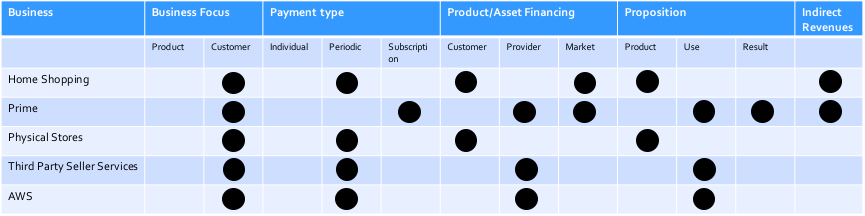
One of the masters of business model innovation is Amazon.  Amazon has built a business fortress with innovative use of business models (Figure 9-4). Amazon uses different combinations of business model components for each business. They go well beyond just looking at simple business models and create advantage from multi-factor business models.

All their businesses are customer relationship oriented and collect customer data.  The B2B businesses have leveraged off and enhanced the home shopping infrastructure.  Each business has carefully focused on how to drive drive growth, optimize the use of cashflow, and generate the long term profitability requirements of the business with a compelling customer proposition.

Figure 9-4

Going forward, it will be very difficult for anyone to compete directly against Amazon.  They have a relentless focus on customers and on how to drive continuous growth and improvement in the relationship they have with them, and they are innovation and execution obsessed.  Finally, they know how to use their scale with data, with the range of product and services they provide, and the efficiency of their infrastructure to their advantage.  It is no wonder that there is talk about the monopolistic market position that Amazon sits in.  

Clearly, there are other factors to explore that drive a business model, including different types of pricing, such as freemium and yield management pricing, and the selection of channels to market, which also have an impact on market size and growth potential, pricing and the cost structure of the business.

There is a real trend of businesses to move from simple business models to multi-factor business models. Different combinations of dimensions will create a business model with different financial characteristics and different market size and growth opportunities. The models create different financial profiles in terms of:

  • Upfront cash to get the business started and operating
  • Ongoing working capital and growth financing
  • Time to self sustaining economics
  • Resilience – reliability and predictability of future revenue streams, ability to handle economic disruptions, etc.
  • Market size and market growth potential

From a climate and impact perspective it is also critical to identify a sustainable business model. It is essential to explore models that will reduce waste from the traditional product delivery model of take – make – waste, towards a no waste model of being focused on maximising the life of a product/service and optimising the utilisation through reselling, remanufacturing, asset sharing, and finally optimised recycling.

Exploring different business model components is an essential piece of the innovation focus within a business. Creatively looking at whether adding further dimensions to the business model, as Amazon have, or fully switching to a different model, as Microsoft with Office 365 have, is a vital part of business strategy.