Categories
REBOOT Strategy

REBOOT Business Strategy

“You cannot avoid the responsibility of tomorrow
by evading it today”, Abraham Lincoln

Blog 15 of the Business Strategy Series

This is the final blog on the strategic framework and of the Business Strategy Series.  I will be continuing to write on related subjects.  I am also working on another series that will look at the roles and linkages of the market economy and the state – another critical subject as we work through these turbulent and challenging times.  A coordinated response between the market economy and governments is mission critical for solving our climate crisis and we can see how vital it is for other disruptions such as the pandemic we have now lived with for 6 months.  

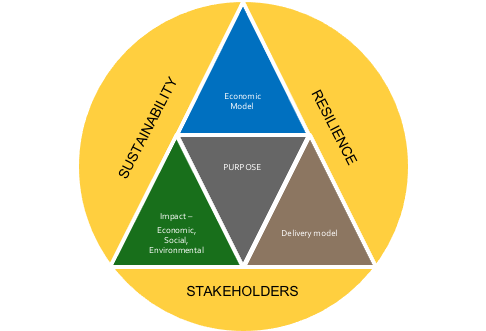
The components in the strategic framework (Figure 15-1) that have been introduced are focused on helping business executives and their boards create a long term sustainable business that has a true purpose in society by delivering both economic returns to investors and impact to other stakeholders.  
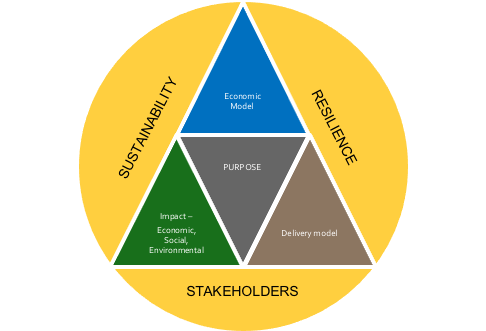
Figure 15-1

To date we have discussed purpose and the delivery model.  In this blog, I want to talk a bit more about impact, strategic timeframes, sustainability and resilience.  I will then complete the discussion with a short piece on portfolio strategy.  

Starting with environmental/climate impact.   Through the ESG reporting requirements (Environmental, Social, Governance), companies are being asked to look at the environmental at both level 1 impact, which is the company’s direct impact, and level 3 impact which considers the full supply chain impact including product use.  Clearly, at the environmental level the specifics of each sector, and its supply chain, will have different environmental dependencies and different opportunities to create impact.  Key sectors such as energy, food, packaging, retail, manufacturing and fashion which have high resource use, significant energy and water usage, and large supply chains will have high environmental impact unless they have already taken action (Figure 15-2). The urgency to create full circular strategies and lead the way is most vital for these high dependency companies; although, that should not stop all companies from moving forward as well.  
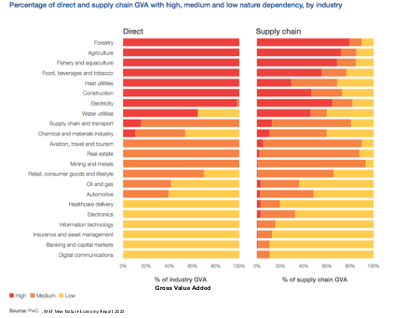
Figure 15-2

Taking the view at the societal level, that the climate problem can be solved by just focusing on the major companies that are contributing to climate change, reduced bio-diversity, high water use, etc. is definitely insufficient if you look at the science.   Part of the solution is for the public to be also looking at their consumption and making it more in tune with the needs for environmental sustainability. So the full and necessary challenge is to create a major shift in how we all live and how businesses, the government and NGOs operate. 

As I noted in Blog 14, for companies delaying this shift to a societally responsible strategy will only result in an increasingly challenging shift for each year of delay as the need to hit targets by certain dates will not shift.  Each company in each sector needs to set ambitious and timely targets to make its contribution to this.  It is management’s, and the Board’s, challenge to ensure that the strategy they set meets both its economic needs and its responsible level of impact.  

In addition to the sector, the geographic footprint of a business has implications for the impact focus and targets that it sets (Figure 15-3).  For example, companies that have large supply chain footprints in the developing world need to be thinking much harder about its specific social impact goals that it wants to achieve.  Truly exploring the UN Sustainable Development Goals will help define these.  Business as usual in many parts of the world will perpetuate the fundamental environmental, social and economic challenges that need to be overcome.
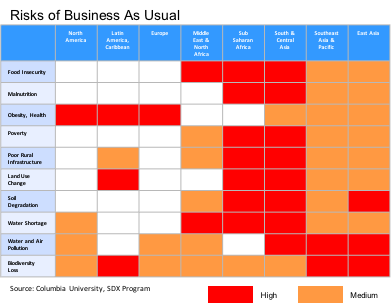
Figure 15-3

A helpful approach to thinking about how to incorporate impact programs and goals into the business is to look at the leading companies that are already a long way into this journey to be a responsible company.  

One of the companies leading the way is Unilever, who have been focusing on this now for over 10 years.  They now report on their progress against their goals each year (Figure 15-4). 

Source: Unilever Website,
Figure 15-4

From their website, you will see that they have created specific time based targets that roll up to overall ambitious goals, they have linked them to the Sustainable Development Goals, they are tracking their performance over time and they are publishing their performance publicly.

Other good examples covering different sectors are IKEAPatagoniaInterfaceOrstedTata and Microsoft.

As noted in Blog 12, strategic timeframes need to be extended vs. the typical 3 to 5 year timeframe (Figure 15-5).  A longer term time frame needs to be added to consider fundamental impacts such as climate, major changes in technology adoption and putting in place the right components for resilience.  3 to 5 year thinking and short term ROI horizons will not ensure adequate thinking on the sustainability of a strategy.  
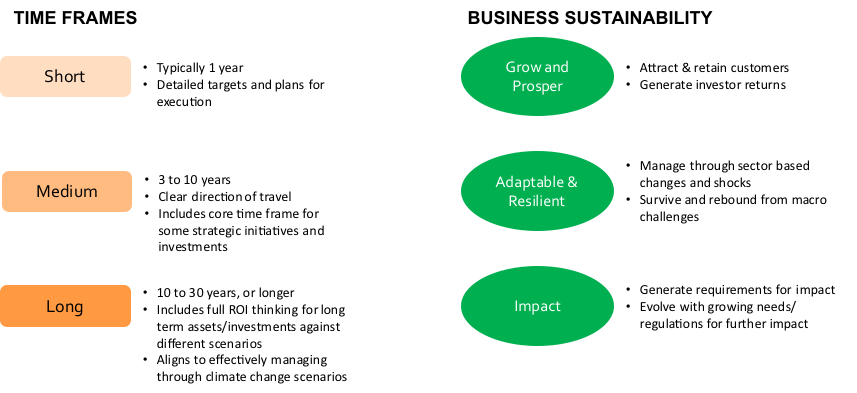
Figure 15-5

Linked to this, it is critical that there is a proper review of the potential activities and events that change markets and/or generate new opportunities (See Figure 15-6 for examples).  These events will range from changing views on environmental responses required, SDG compliance, new regulations, a changing geo-political environment and of course the potential for massive impact from new and converging technologies.
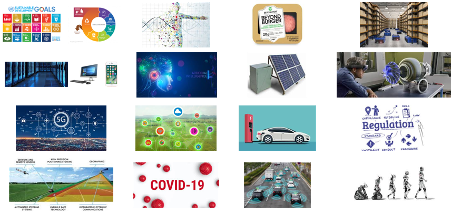
Figure 15-6

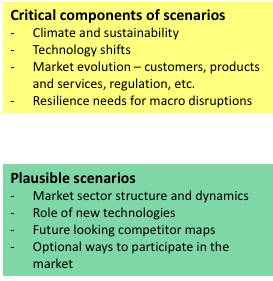
More important than ever is to develop strategic scenarios that would be effective based on different views of what could happen in short, medium and longer term horizons (Figure 15-7).  The approach for doing this is to pressure test strategic options against different externalities and come up with some plausible scenarios to evaluate.  These scenarios need to be developed holistically and need to be comparable. The components of the scenarios should cover off customers, products/services and supply chains, investment, metrics, people, processes and technology. 

Figure 15-7

With a real analysis of alternative scenarios, the comparison should provide further clarity around the performance opportunities for the business as well as the risk parameters.  The true strategic options can be explored along the key dimensions of profitability/ROI, impact, implementation risk, meeting of key stakeholder needs, sustainability and resilience.  

This moves strategic thinking significantly on from a pure profit and shareholder only focus.  In the short run, realigning the business to survive this pandemic and be able to prosper in the post Covid world, having an organisation that is proactively progressing on gender and race issues, as highlighted by the ‘black lives matter’ and ‘me too’ movements, and making a real contribution to the global climate/environmental targets that need to be met are big topics in most board rooms, and with investors, employees and customers.  These challenges need much more than tactical reactions, they are strategic and structural challenges that will inevitably require some major changes to most businesses in terms of how they operate, who they do business with, where they invest, and what performance targets can be expected.  

The overall strategy and each of the components should fit coherently into the strategic framework (Figure 15-8). Continuous evaluation of the components of the strategy over time and looking for ways to continuously improve and refine the strategy is equally as vital as the initial setting of the strategy. As the rate of change in the world accelerates, dynamically adjusting/refining the strategy and improving execution is mission critical. Speed and agility are much more important than a singled minded short to medium term focus on efficiency.

Figure 15-8

The final subject, I want to touch on is the implications of this in a company with a portfolio of businesses. Investors and stakeholders will be looking at the overall economic and impact performance of the business. Non-performing business units within the portfolio will have an overall effect on the attractiveness of the business to investors, employees and other key stakeholders.

The proposed approach to evaluate a portfolio of businesses is a four step process (Figure 15-9). Firstly, evaluate the portfolio of businesses from an economic perspective. Secondly, overlay the environmental impact of the businesses on to the economic performance of each of the businesses. Thirdly, look at the full alignment of the set of businesses against sustainability impact which will include social and economic impact. Finally, look at the portfolio options from a resilience perspective. This review should be done considering the realistic potential scenarios of each of the businesses.
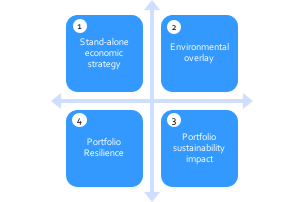
Figure 15-9

Now looking at each of these components in a little more depth. Starting with the stand-alone economic strategy, we have the traditional grid looking at business position vs market attractiveness (Figure 15-10). Both components of the strategy should be looked at from a short, medium and longterm perspective. Business position is the combination of profitability, market position, and ability to maintain performance over time as markets change and evolve. Market attractiveness is the combination of size, growth and the economic attractiveness of the market. The grid should be fairly self explanatory. If you have a strong market position in an attractive market then you ideally want to stay in the market and should be willing to invest and grow your position. Whereas, if you have a weak position in an unattractive you would rather manage the business for cash or divest from the market and reinvest the capital in more attractive businesses.

Figure 15-10

Moving on to the Environmental overlay (Figure 15-11), this takes the overall position from the economic strategy grid in Figure 15-10, Business Attractiveness, and matches it against the Environmental Attractiveness of the business. High environmental attractiveness has a low or positive environmental footprint within the timeframe of meeting the targets set by the Paris Climate Agreement and the environmental focused SDGs. For many businesses, the key target is the year the company will achieve a Net Zero carbon emissions equivalent level 3 footprint (ie. including the full supply chain of the business).

Overall, unattractive businesses, unless you have clear sight on how to transform them, should be harvested and/or sold. If an unattractive business is also very unattractive from an environmental perspective, such as a coal business, it is more likely that this should be divested as attracting investors and raising funds in your overall business will tend to be more challenging. In an equivalent way, if you have a small business with real potential in an environmentally attractive sector it may well be that you should be diverting your investment capacity into this business to build it. An interesting set of companies to watch on these dimensions will be BP, Shell and Exxon. Both BP and Shell have committed to reach a Net Zero CO2 emission target by 2050. It is not yet clear that they have strategies set out on how to achieve this; but, what is clear is that they will be redirecting their cash generation to the renewables sector where they have much smaller strategic positions. It has been a broad set of stakeholder pressures, including collapsing share prices, that have driven the adoption of these strategic commitments.
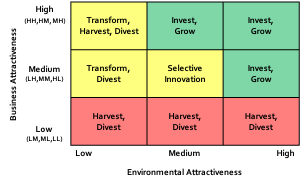
Figure 15-11

The third component of a portfolio review is the review of the alignment of impact overall with the business portfolio options (Figure 15-12). Although, climate impact tends to get the lion share of the attention from the press, economic and societal impact are vital components of the SDGs, and in many business and geography combinations, as you can see in Figure 15-3, they may be more important than climate impact. The food sector, including food retailers, are a great example of this with their broad geographically spread supply chains.

Figure 15-12

Finally, having evaluated the businesses, and their strategic options, in an overall and comparative context, the final step is to compare realistic combinations of businesses from a portfolio perspective. In particular, given the businesses have been evaluated against the three areas of impact, the portfolio options should be looked at from an economic return vs. a risk diversification perspective (Figure 15-13). The risk assessment is against the longterm sustainability and resilience of the portfolio scenarios. Adjusting a portfolio to reduce risk has real value, as we have seen in this pandemic. The potential benefits of a tight focus of businesses in terms of sector, geography, supply chain, efficiency and commonality of disruption risks may not be justified from a sustainability and resilience perspective. As I have noted before flexibility, adaptability, and diversification can provide real value to the business overall.
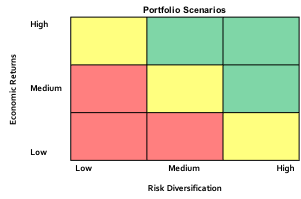
Figure 15-13

This brings to a conclusion, the series on Business Strategy. I hope you have found it thought provoking and useful; and hopefully, it will help you make a difference in your business and create a deeper impact in the world around you.

I will continue to write blogs to delve in deeper to sectors and subjects that will explore strategy and sustainability in a deeper context. As noted in the about section of my blog, REBOOT is not just about business, it is about the need for structural changes, or a new operating system, across all areas connected to our lives and our world.

Please continue to follow, share, engage in conversation, contribute and also reach out to me if you want to talk about this further. I can be reached through LinkedIn.
Categories
REBOOT Strategy

REBOOT Business Strategy

“It always seems impossible until it is done”, Nelson Mandela

Blog 14 of the Business Strategy Series

In this second blog describing the strategic framework (figure 14-1), I will cover off talking about the delivery model which is the strategic component behind the purpose of the business that drives both the economic and impact model of the business.

Figure 14-1

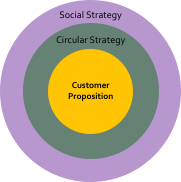
The delivery model aligns the customer proposition with the delivery components that are comprised in a circular strategy, to address climate and environmental impact, and the social strategy that focuses on economic and social impact (Figure 14-2).

Figure 14-2

Behind all businesses are the dimensions of customer – product fit.  The three key strategic pieces of this comprise a powerful proposition to the customer, ensuring the proposition is differentiated from its competitors, and focusing on a market segment that is attractive or ideally large and growing. 

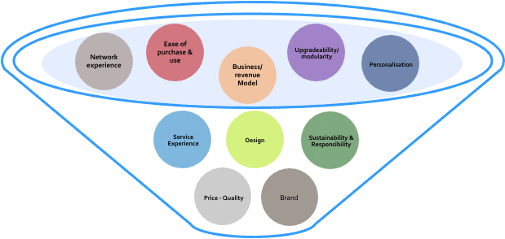
Achieving and sustaining a differentiated customer proposition is critical to success.  To this end, having an intense and ongoing understanding of a business’ existing and potential customers in terms of purchasing decision making and behaviours, usage and post-usage behaviours, and the factors that will drive emotional engagement are vital.  We can see the potential components of a proposition (Figure 14-3) and the ways to differentiate are growing over time. The newer dimensions include differentiating over environmental sustainability and responsibility, the business model as discussed in Blog 9 of this series including channels to market, and a number of technology based dimensions.

Potential Components of a Value Proposition,
Figure 14-3

In many ways, the bigger challenge is sustaining differentiation vs. the initial achievement of a differentiated proposition.  Success attracts copycats.  New technology or technology convergence invites disruption.
There are a number of components businesses need to have in place to succeed in sustaining differentiation.  Firstly, superior customer knowledge of existing and potential customers.  Secondly, and closely associated, is superior CRM (customer relationship management) capabilities.  The purchasing and usage experience of a product or service drives customer retention, which results in repeat buying and referrals.  Relentlessly improving this experience will be even more critical going forward as the environmental movement drives longer life products and higher levels of service.  Thirdly, the collection and use of data, including competitive information.  Fourthly, having innovation capabilities and agility to continuously improve, react to problems and opportunities, and to integrate major changes as new technological capabilities. Speed and agility in many sectors are mission critical for success.  Finally, none of the other dimensions matter if you do not have the financial capacity to progress on these factors and withstand competitive pressures.  

Now let’s move on to look at environmental impact.  To truly embrace environmental impact and set ambitious targets from an attitudinal, operational and strategic perspective you need to look at your business through the eyes of a circular strategy.  My first exposure to this concept was over 15 years ago when I read ‘Cradle to Cradle: Remaking the Way We Make Things’ by William McDonough and Michael Braungart, where they presented an integration of design and science that provides enduring benefits for society from safe materials, water and energy in circular economies and eliminates the concept of waste.

The book put forward a design framework characterized by three principles derived from nature.  Firstly – “Everything is a resource for something else. In nature, the “waste” of one system becomes food for another. Everything can be designed to be disassembled and safely returned to the soil as biological nutrients, or re-utilized as high quality materials for new products as technical nutrients without contamination”. Secondly – “Use clean and renewable energy. Living things thrive on the energy of the solar system. Similarly, human constructs can utilize clean and renewable energy in many forms – such as solar, wind, geothermal, gravitational energy and other energy systems being developed today – thereby capitalizing on these abundant resources while supporting human and environmental health.”  Thirdly – “Celebrate diversity. Around the world, geology, hydrology, photosynthesis and nutrient cycling, adapted to locale, yield an astonishing diversity of natural and cultural life. Designs that respond to the challenges and opportunities offered by each place fit elegantly and effectively into their own niches.”  

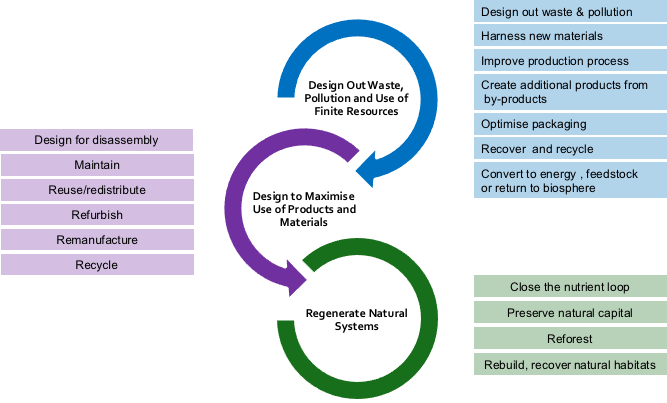
The circular economy is most easily visualised by Figure 14-4 below.

Figure 14-4

One of the real champions of this approach are the Ellen MacArthur Foundation who have been working with major corporations to rapidly and dramatically reduce the carbon footprint and environmental impact they are having on the planet.  Their mission is to accelerate the transition to a circular economy. The Ellen MacArthur Foundation works with business, government and academia to build a framework for an economy that is restorative and regenerative by design.  Figure 14-5 identifies the main components of the thinking within a circular strategy.

Figure 14-5

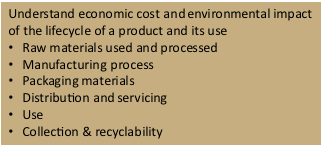
The starting point for developing a circular strategy is to know where you currently stand in terms of both economic cost and environmental impact (Figure 14-6). This sets the business’ starting point.

Figure 14-6

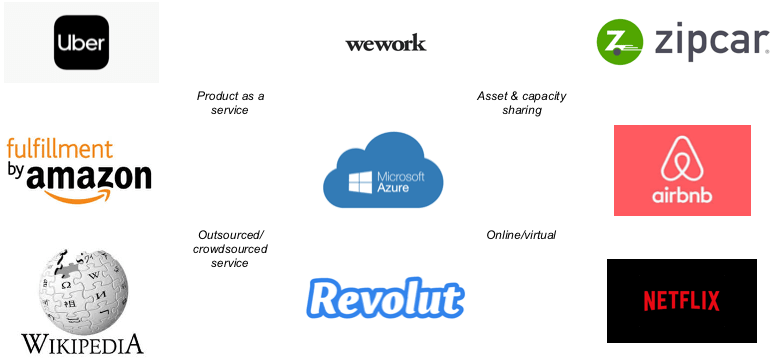
Secondly, explore ways that you can add value and revenue growth by making changes to your business model.  Getting the right business model is critical to align with a circular strategy.  As I noted in Blog 9 of the series there are many alternative business models that can be explored.  Below in Figure 14-7 are some examples of business models of some newer businesses.

Figure 14-7

Achieving a full circular strategy in product based businesses is a major commitment of time, energy and resources.  This also requires full alignment across all parts of the business and its supply chain.  Defining the end point allows the business to define the journey and time frame to achieving it in order to deliver on the financial performance and meet the impact requirements of a responsible business.

Integrated with the circular strategy, a business needs to overlay a social strategy, which includes economic impact.  I believe the acid test of a strong social strategy is whether or not, or to what extent, the company is contributing in its own way to reducing inequality, ensuring inclusivity, and contributing to future generations of all children being better off.  This is positive impact.

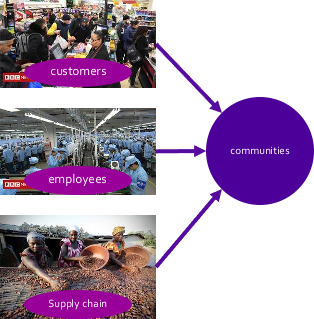
The constituents of a social strategy are the customers, employees, people within the supply chain and communities which are touched by the business (Figure 14-8).

Figure 14-8

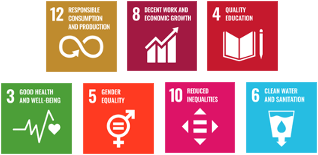
The social strategy can impact on many of the SDG’s (Figure 14-9) including ‘responsible consumption and production’, decent work and economic growth’, ‘quality education’, ‘good health and well-being’, ‘gender equality’, ‘reduced inequalities’, and ‘clean water and sanitation’.

Figure 14-9

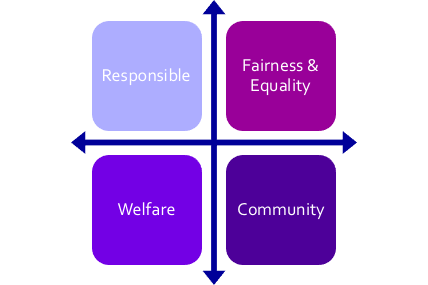
The impact focus of the social strategy will range from compliance with core principles such as anti-slavery, fair trade and gender equality, to specific proactive stances against behaviour that violates the core values of the businesses, or finding areas where the business can add some real specific value (Figure 14-10).

Figure 14-10

Most recently, we have seen the incident with Patagonia who removed its advertising on Facebook in a “Stop Hate for Profit’ campaign.  Alex Weller, Patagonia’s marketing director for Europe said, “It’s no secret that social media platforms have been profiting from the dissemination of hate speech for too long.  Facebook continues to be the most resistant of all the social media platforms to addressing this critical issue and so that’s why we decided to take action against it specifically.” Since Patagonia’s stance others like Adidas, Verizon, Coca-Cola and Unilever made similar moves.  Patagonia has said that it will stay the course and stand by this commitment for as long as it takes.  We will see the strength of the stance of other companies as time passes.

Overall, companies need to think about what their social balanced score card should look like (Figure 14-11).  

Figure 14-11

Just as with the other components of the thinking requiring short, medium and long term views, so does the organisational thinking.  This organisational thinking for the organisational components per the McKinsey 7S model (Figure 14-12) needs to be matched against both the time horizons and the alternative strategic scenarios in order to be properly assessed.

Figure 14-12

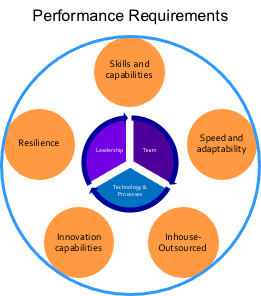
Critically, to get each of the organisational components right there needs to be clarity on the performance requirements (Figure 14-13) of the organisation.  Arguably, if there are some big strategic shifts in the business as a result of also needing to drive impact, then there will likely be some material changes required to the organisational needs of the business and linked to this the incentive structure to drive alignment. 

Figure 14-13

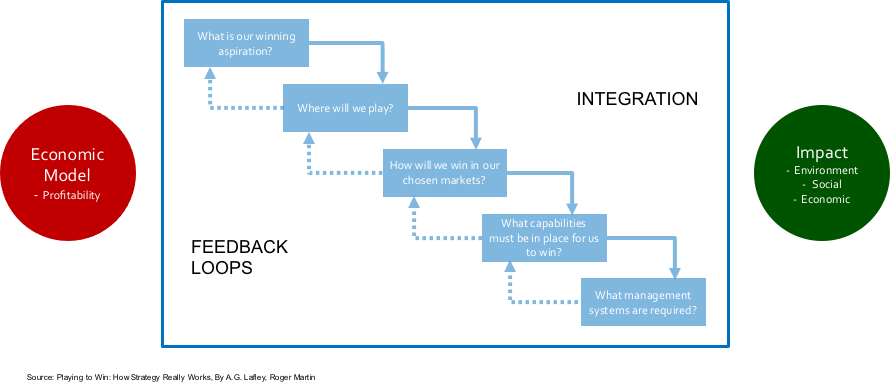
Finally, as the environment changes, the sector evolves and the company learns, there will need to be continuous adjustments to the strategy and the components of delivery in order the achieve both the economic and impact goals of the business.  Integration and alignment of these components is critical as well as continuous feedback across the cascade of components with appropriate adjustments (Figure 14-14).

Figure 14-14

In final blog of this series, I want to talk in more depth about impact, strategic time frames, sustainability and resilience. I will also finish off with a short discussion on portfolio strategy for companies with multiple businesses.

Categories
REBOOT Strategy

REBOOT Business Strategy

Blog 13 of the REBOOT Business Strategy Series

This is the first blog discussing a new strategic framework relevant for the world we now live in.  To date, I have covered off some background on how the world is getting increasingly complex from a societal, environmental, technological and disruption perspective; and the implication of this is a need to look at business strategies from a system based perspective so that business are aligned with economic, society and environmental goals.  Critically, linked to this are that the general consensus on these goals globally are best defined by the 2015 UN Sustainable Development Goals for 2030, which also link in with the 2015 Paris Climate Agreement.

The next section then went on to cover off 8 gaps in traditional strategic thinking that need to be covered off for a strategy in the 21st century.  These gaps were driven by deep interconnections of a business with their environment, which is not just their business sector.  These interconnections are vital to understand as there is continuous change and ongoing disruptions that are and will be affecting a business.  These factors include societal and economic factors as we can see now with the Covid 19 pandemic and ‘Black Lives Matter’ movement, the impact of new technologies, and most importantly the need to globally address the challenges of climate change and other key environmental issues. 

This new framework tries to create a shift in how we think about our business, away from just profitability for shareholders to goals that are also aligned other stakeholders including the public, consumers, suppliers, communities and governmental interests.  It is worth noting that investors are now requiring this shift given that the long term interests of businesses are for a sustainable world and they can see real business risks on the horizon from climate change.

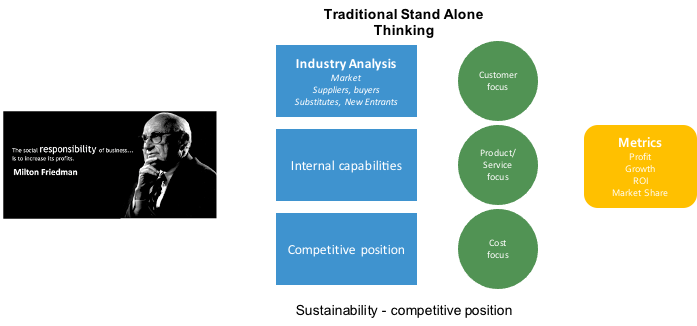
The traditional stand alone thinking (Figure 13-1) can be summarised by, firstly, a virtually exclusive focus on the shareholder as Milton Friedman had summarised,”the social responsibility of business is to increase its profits”. Secondly, an industry and competitor analysis as defined by Michael Porter’s five forces analysis matched to an understanding of the business’ internal capabilities.  Thirdly, profit and market based key metrics.

Figure 13-1

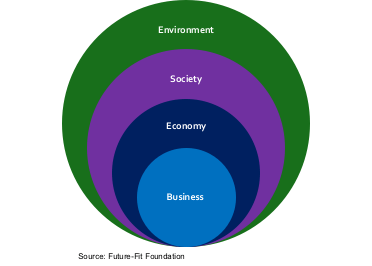
A  new system based framework needs alignment from the business through to the economy, society and to the environment (Figure 13-2).

Figure 13-2

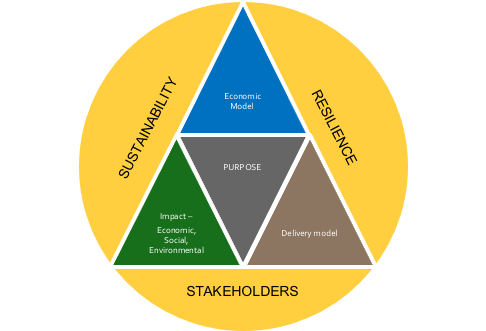
To create alignment a business needs meaningful purpose that aligns with the business on delivering against both its own economic goals as well as creating impact (Figure 13-3).  This is the challenge of strategy design, to cover the needs of both profitability and impact.  

Figure 13-3

Clearly, this can add complexity as the performance measures are now broader; however, it also creates opportunity and new ways of differentiating and competing.  For deeply entrenched players in the market who have adverse impact on the climate/environment, they are going to have to think about how they will use their resources and market position to evolve to a new sustainable strategic position and focus.  For the younger and nimbler companies, they will need to think about how to use their speed and flexibility to create a stronger positioning ahead of their key competitors.  If you are already there, then take advantage of your position.

A key part of this system-based framework is that it is relevant for all types of organisations whether in business, government or as an NGO.  Clearly, each type of organisation, as with each business, has to be clear on their economic model and what their impact targets are in order to get clear on what delivery model they need.  In the government and with NGO’s, they will have very different sources of funds; but, in any event they need to solve a sustainable financial model to survive rather than to make a profit.  A governments whole raison d’être should be impact; although, for many of us it may well be that their targets and metrics of achievement are unclear!  

Surrounding these triangles are three components that need to be full addressed within a strategy (Figure 13-4).  Firstly, having a clear view of the key stakeholders of the business.  Secondly, the business must be built to last – it must be sustainable.  This means the business must be able to continuously deliver value to it customers, it must deliver the right economic performance for investors, and it must provide the appropriate impact for other stakeholders. And, the business must be able to adjust, adapt and move forward in a way that this continues over time.

Thirdly, the business must be resilient and thus have the capability to withstand and manage through different scenarios of disruption from the 5 types of macro forces – societal, environmental, economic, technological, and geo-political – to the core challenges specific to the   

Strategic Framework
Figure 13-4

There are six tests of a business strategy:

  1. Is the business Purpose Driven?
  2. Can the business create real differentiated value for its target customers over time?
  3. Can the business perform at a level to attract and retain investors?
  4. Does the strategy integrate generating economic, social and environmental impact at ambitious levels for key stakeholders?
  5. Does the business strategy create sustainability and resilience?
  6. Does the strategy have ambitious and achievable triple bottom line metrics covering profit and impact targets?

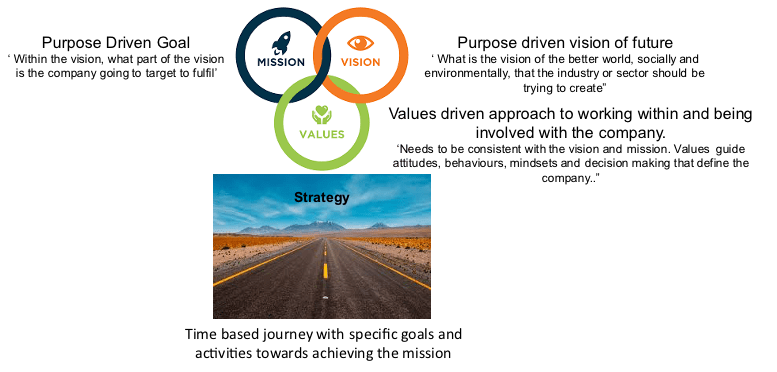
At the heart of a business lies its purpose.  It is the driving force and acid test of all business decisions.  It is what attracts and retains employees, customers, other participants in the supply chain and investors.  Sitting above the strategy are three components Vision, Mission and Values.  There are a lot of different views about how to define vision and mission, and sometimes they are combined; so to clarify, I have created definitions that fit with this strategic framework.

Figure 13-5

Within this strategic framework, the purpose defines how the world will be a better place as a result of the business.  The first component of the purpose is the Vision.  The Vision is the business’ view of the better world that the industry or sector will contribute to.  The Mission is the part of the vision that the company is targeting to fulfil.  I like to describe the Mission as the North Star that the company wants to be continuously moving towards.  Finally, the Values defines behaviourally how the Company‘s operates – what drives it, what motivates it, and how it will behave with its employees, customers, suppliers, communities, society and environment.  The combination of the vision and mission should be something that engages, and gains agreement from, all key stakeholders.

Here are some examples of the vision and mission, or a combined statement, for purpose driven companies.  

Orsted

Our vision is a world that runs entirely on green energy.

Mission: “We want to be a company that provides real, tangible solutions to one of the worlds most difficult and urgent problems.”

This is a Danish Company that started life as a state owned organisation focused on coal and oil.  Most recently it has been recognised as ….

Within this strategic framework, the purpose defines how the world will be a better place as a result of the business.  The first component of the purpose is the Vision.  The Vision is the business’ view of the better world that the industry or sector will contribute to.  The Mission is the part of the vision that the company is targeting to fulfil.  I like to describe the Mission as the North Star that the company wants to be continuously moving towards.  Finally, the Values defines behaviourally how the Company‘s operates – what drives it, what motivates it, and how it will behave with its employees, customers, suppliers, communities, society and environment.  The combination of the vision and mission should be something that engages, and gains agreement from, all key stakeholders.

Here are some examples of the vision and mission, or a combined statement, for purpose driven companies.  

Orsted

Vision: “Let’s create a world that runs entirely on green energy.

This is a Danish Company that started life as a state owned organisation focused on coal and oil.  Their current primary focus is on offshore and on shore wind farms. Most recently it has been recognised as the most sustainable company in the world in the Corporate Knights 2020 Global 100 Index.

Novo Nordisk

Our purpose is to drive change to defeat diabetes and other serious chronic diseases such as obesity and rare blood and endocrine disorders. We do so by pioneering scientific breakthroughs, expanding access to our medicines and working to prevent and ultimately cure disease.

How many other pharmaceutical companies have a missions to ultimately cure diseases where it derives all its revenues from?

Unilever

Vision – “to make sustainable living commonplace.

Mission – “To add vitality to life. We meet everyday needs for nutrition, hygiene and personal care with brands that help people feel good, look good and get more out of life.” 

Tesla

Mission: “To accelerate the world’s transition to sustainable energy

We all know Tesla for it’s pure electric vehicles; however, it now has a full suite of energy products that incorporate solar, storage and grid services.

Ikea

Vision: “To create a better everday life for the many people”

“Our business idea supports this vision by offering a wide range of well-designed, functional home furnishings products at prices so low that as many people as possible will be able to afford them.”

Microsoft

Mission: “To empower every person and every organization on the planet to achieve more”

“Our platforms and tools make small businesses more productive, multi-nationals more competitive, nonprofits more effective and governments more efficient. They improve healthcare and education outcomes, amplify human ingenuity, and allow people everywhere to reach higher.”

Patagonia, an outdoor clothing company, has had a sustainable mission since the beginning and has self imposed an earth tax of 1% of revenues for support activities to save the planet.  It has a very broad mission, “we’re in business to save our home planet”

It has defined it values in a different way to most companies that state the obvious ones of honesty, integrity, etc.  Their values are more action oriented, very honest,  and I think much more engaging:

Build the best product – Our criteria for the best product rests on function, repairability, and, foremost, durability. Among the most direct ways we can limit ecological impacts is with goods that last for generations or can be recycled so the materials in them remain in use. Making the best product matters for saving the planet.

Cause no unnecessary harm – We know that our business activity—from lighting stores to dyeing shirts—is part of the problem. We work steadily to change our business practices and share what we’ve learned. But we recognize that this is not enough. We seek not only to do less harm, but more good.

Use business to protect nature – The challenges we face as a society require leadership. Once we identify a problem, we act. We embrace risk and act to protect and restore the stability, integrity and beauty of the web of life.

Not bound by convention – Our success—and much of the fun—lies in developing new ways to do things.”

With a broader awakening of Boards and executive teams, as well as investor pressure, we should expect an increasingly rapid shift to much more purpose driven vision, mission and values? The companies not moving in this direction will inevitably be left behind.

The overall strategic framework tries to achieve 3 core objectives. Firstly, to ensure the business is systemically integrated into its economic, social and environmental situation context. Secondly, provide absolute clarity that the business is also focused on impact as well as profit to meet the needs of all key stakeholders. Finally, to have a true longer term perspective that considers both resilience and sustainability.

In the next two blogs, I will fill out the other components of the framework.

Categories
REBOOT Strategy

REBOOT Business Strategy

“It’s your reaction to adversity, not adversity itself that determines how your life’s story will develop.”
― Dieter F. Uchtdorf

Blog 7 of the Business Strategy Series

‘From risk monitoring to business resilience’.   How many companies had put pandemics as a risk factor in their risk register and were well prepared?  This is despite infectious diseases being logged as a medium likelihood and a high impact risk in the World Economic Forum’s Annual Global Risks report.  And, since the beginning of this new millennia, in the last 20 years, we have had Sars, Swine Flu, Mers, and Ebola.  Clearly, there were not many companies prepared or we would not have needed government economic support of up to 15% of GDP in wealthy nations.  

In addition, how many companies were prepared for the financial crash in 2008, have fully considered the risks from global warming, the challenges of political, economic or climate based refugee movements, or the full range of risks from different forms of cyber attacks?  This discussion follows on naturally from the previous blog on the need for macro modelling beyond traditional industry analysis.  

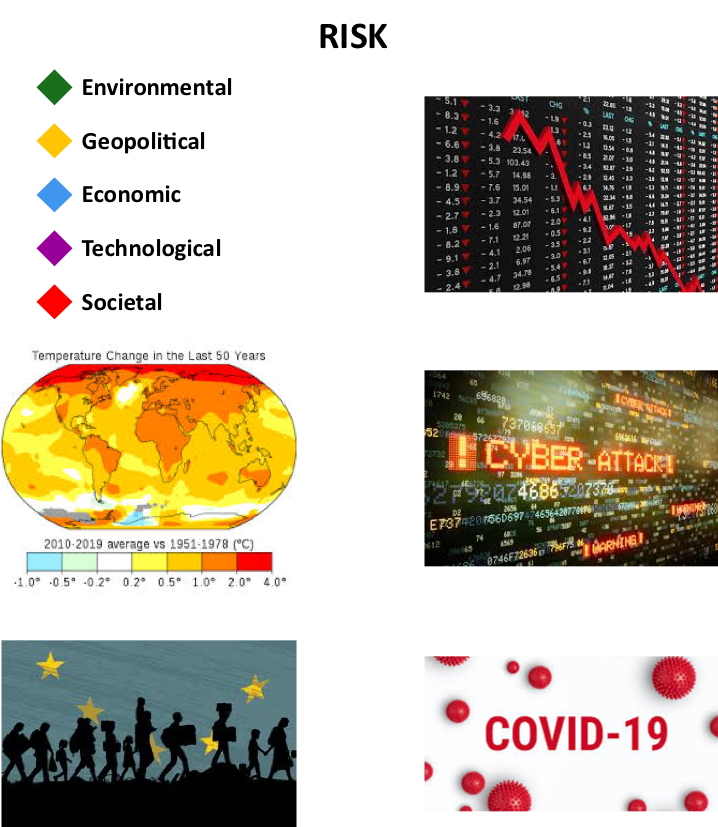
The first area of attention is to add macro risks with multi-horizon views into the risk monitoring (Figure 7-1)

Figure 7-1

As the world is getting more complex and more interlinked, the likelihood of an event occurring increases.  In addition, the risk and impact of an event is increasing due to inherent trends that we are facing.  These trends include climate change, population growth, increasing reliance on technology and data, increased population concentration in cities, globalisation and increased levels of debt per capita.  The optimistic view is that behind each of these trends should also be some great opportunities and this is where the great companies will be focusing.  Rigorous analysis should help to identify opportunities out of a risk assessment.  

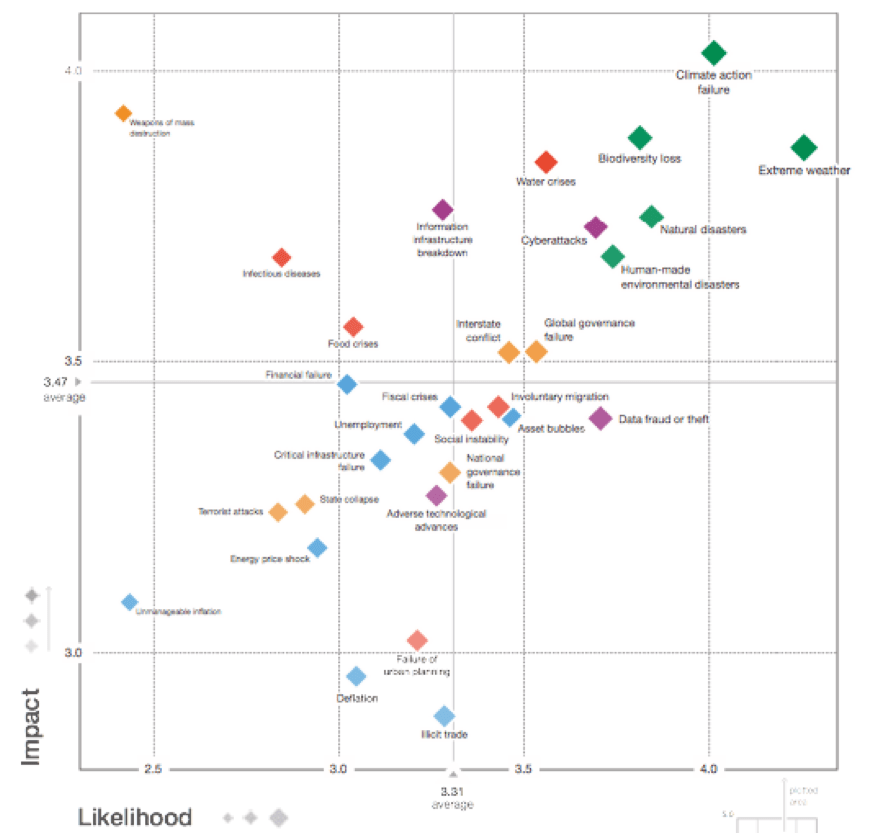
In the World Economic Forum’s Global Risk Report 2020, they have surveyed their member base to get their view of the likelihood of a risk occurring and its potential impact on a scale of 1 to 5.  The higher risk and likelihood events are listed in Figure 7-2.   

Figure 7-2

The outcome of this survey is set out in Figure 7-3 which shows the set of risks with a combination of high likelihood and high impact.  You can see the clustering of environmental concerns in the top right quadrant.   It is interesting to note that infectious diseases/pandemics were not ranked as high; although, still seen as serious.  

Figure 7-3

The perceptions of risk are not static over time with some of the perceptions being influenced by events that are occurring at the time, such as the 2008 financial crisis.  Since 2007, there are 2 visible trends. Firstly, the escalation in the risk levels related to climate and environmental issues.  Secondly, a growing view of risk levels on the technological front.  The good thing to take away from this risk assessment is that this indicates a growing understanding and view of the risks of climate change and environmental degradation.

Another interesting aspect of this report is that they compare the views of the WEF members against their Global Shapers Community which is the WEFs network of young people driving dialogue, action and change.  In most cases the Shapers see a higher likelihood of an event occurring and in virtually all cases a higher potential impact.  

What is not fully evident, and not addressed in the report, is the extent of government and business response in light of these risk assessments.  You would think that this could be one of the productive outcomes of the WEF Davos Meeting that happen annually.

For a specific business, the ratings of the risks would be affected by a combination of the sector and geography where they are involved.  Business risks can be divided into two broad categories of risk, direct risks (Figure 7-4) and macro, or indirect, risks (Figure 7-5).

Figure 7-4

Behind the direct risk, is the ongoing risk of one of the events occurring and the potential impact of that risk; however, there is also an implementation risk that occurs on an activity when you are undertaking a material action that is new and within your plan, or you are taking a substantive action to either mitigate a risk or respond to a risk that has occurred.  

Similarly, with Macro Risks, there is the physical risk which is the fallout related to the specific event. This would include second and third order effects as we have seen with the current pandemic.  However, there is also a transition risk which involves a fundamental change to the operating environment of the business; and, in these cases there are risks related to the period of change to a new environment.  Examples of transition risk are the risks arising from a transition from our current energy provision to a clean energy sector or a transition from a linear economy to a circular economy in a specific sector. 

Figure 7-5

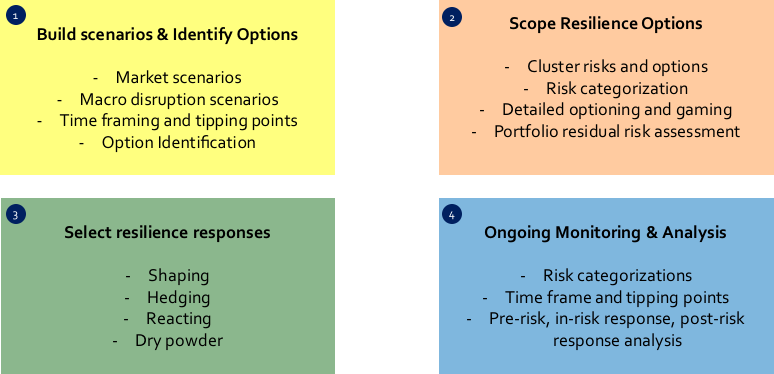
Against these risks, the management and their boards clearly need to think through how to build resilience.  Resilience strategies can take several forms.  Firstly ‘Shaping’, the company could eliminate or at least partially eliminate risk by boldly implementing a plan upfront. This approach would also be deployed where there were also business opportunities.  An example of shaping, would be a technology company building a second manufacturing facility outside of China due to geopolitical concerns and trade risks. This approach is clearly bolder and requires more upfront investment; and if there is a market opportunity involved it may well be the right approach.  Another interesting example of this is IBM, who started as a mainframe computer business, then separately invested in mini computer business in case the market took off; and then finally, did the same thing with the micro-computer market.  

 Secondly ‘Hedging’, the company could build a specific risk mitigation response capability that would be pre-planned and tested.  This would include optioning, if there are a set of discrete scenarios that would require quite diverse responses.  The goal is to limit the upfront expenditure, but keep the company in the game and help accelerate the speed of response if required; thereby, mitigating the risk.  Thirdly ‘Reacting’, a company could build the information and systems requirements that would give better pre-risk warnings, improve in-risk analysis to help the response, and provide post occurrence monitoring.  Finally ‘Dry Powder’, is to ensure that you have the financial capacity to react to any residual risks including known risks with unknown outcomes and unknown risks. 

In addition to defining risks in terms of likelihood and impact, it is important to categorise the risk.  There are effectively three risk categories.  The first risk category is ‘Clear Outcome’.  An example of this would be the binary decision of a competitor to build a new plant in a key market that would significantly affect the supply – demand dynamics.  

The second category is ‘Range of Outcomes’. In this case there are a set of different scenarios that could describe the future.  In some of these situations, it may link to scenarios of the outcome and timing of regulations related to a sector.   The third category is ‘Unknown Outcomes’.  In these situations, they are known risks but no true understanding on the likely scope of outcomes.  An interesting example of this would be during the development of the electric car market. In 2010,  I think it would be safe to say that the categorization of the development of this market and its implication on diesel and fuel cars would be ‘Unknown Outcomes’.  In 2016, Norway agreed to ban all conventional cars by 2025 and then other countries and cities started announcing bans in 2017.  By this time the risk category in the EU had turned to ‘Range of Outcomes’ and it was just a question of when the bans would be enforced by country across the EU.  Clearly, different types of risk need different option evaluation approaches.  Doing additional research and analysis to be able to shift to a clearer set of outcomes can add significant value.  

Linked to evaluating resilience responses, a business should be able to see that certain actions can create resilience against several, and often unrelated, risk types. This is clustering.  For example, having two manufacturing facilities in two countries rather than a single facility could mitigate risks for floods, fires, geopolitical trade risks and foreign currency risks. Another example would be, moving to an environmentally friendly strategy would help mitigate the risks from changing consumer purchasing behaviour, reduce employee retention risks, get the company ahead of potential new regulations, and reduce the potential of brand and reputation damage from climate action groups. 

The other side of resilience response is to evaluate whether or not risk reduction can be coupled with a new business opportunity. Pressure test your resilience thinking to see if you can turn some of the needed activities into opportunities to create deeper strategic advantages and further customer differentiation. A simple example of this, has been the Covid 19 based rush of many retailers to build an online channel for remote ordering and home shopping.  Many of these retailers somehow missed understanding that adding a home shopping channel market is a basic requirement today and should have been part of their strategy long ago to grow sales anyway.

These different components can be pulled together into an overall approach to resilience management (Figure 7-6).

Figure 7-6

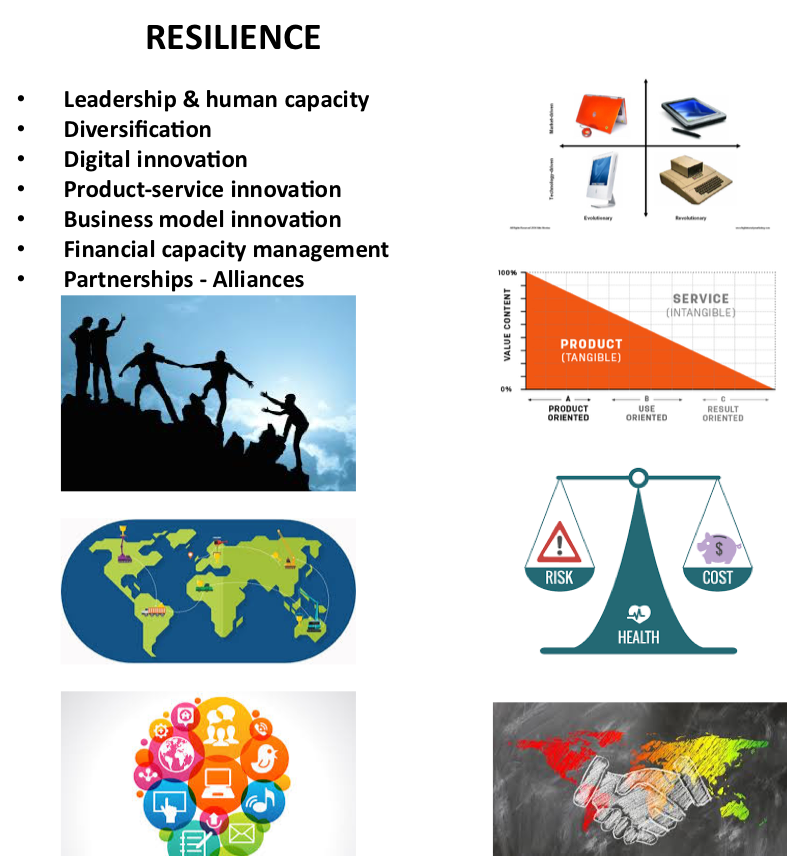
There are a number of ways to build resilience. The most important starting place is to have the right leadership and team in place that have the knowledge and the capacity to build resilience, and rapidly and effectively respond to risks.  This pandemic has shown some stark differences in country and company abilities to respond to risk and significant differences in speed and effectiveness of response.  

There are different ways to think of building resilience and some of them are noted in Figure 7-7  Firstly, diversification is a classic way of reducing risk.  Points of potential diversification would include raw material sourcing, manufacturing locations, distribution channels, data centre locations, geographic focus, and product range. Secondly digital innovation, which would include adding the ability to work remotely, home shopping, using cloud based systems, remote servicing.  Thirdly, product service innovation which would include having a more diversified set of products; but, also being able to rapidly change and adjust products and services for example as new regulations are put in place, software language use changes, and responding to disruptive new entrants into the market.  Fourthly, business model innovation is becoming increasingly important to look at.  We are now seeing a shift in some areas from single product purchasing models to locked in monthly payment models such as with digital news services vs. daily purchases of a newspaper.  Building reliability in revenue flows is a also critical part of resilience. 

Figure 7-7

Next is financial capacity management. In times of crisis, a strong balance sheet always wins.  It is increasingly hard to insure against all potential risks so residual risk may need to be covered off by a stronger balance sheet.   Just like at home, a business needs a cushion for a rainy day!  A strong balance sheet is also critical if a company is seeing increasing volatility of revenues and/or increasing seasonality of the business.  Private equity owned companies that are tightly financed and highly levered are particularly susceptible to small changes in trend lines.  I think everyone would agree that believing that the last line of defense of a business is a rescue by the government is not something worth relying on.

Finally, having partnerships-alliances or reliable third party support to help deal with, or be on call for, certain crisis types is usually a core part of a resilience strategy.  In technology based risks, having a specialised help to deal with cyber attacks is a common use of a third party.  They can help help reduce the risk of an attack succeeding as well as helping to respond to a threat that occurs.  Other examples could include having back up manufacturing capacity and some outsourced service capacity.  For many companies, having your data and software in the cloud results in the cloud supplier (eg. AWS, Google, Microsoft) providing the resources and skills to deal with a cyber attack risk.

Against this whole discussion of risk and resilience, it should be clear that resilience is a core component of strategy.  As noted in a 2016 HBR article, The Biology of Corporate Survival, companies are disappearing faster than ever before. “Public companies have a one in three chance of being delisted in the next five years, whether because of bankruptcy, liquidation, M&A, or other causes. That’s six times the delisting rate of companies 40 years ago.”  If you are focused on long term sustainable performance in a complex and rapidly changing world, resilience, speed, agility and innovation capability will outperform a low cost strategy.   

Source:  McKinsey wrote an excellent article in the HBR that helped shape some of this thinking.  “Strategy Under Uncertainty”, Harvard Business Review, November-December 1997

Categories
REBOOT Strategy

REBOOT Business Strategy

Blog 5 of Business Strategy Series

In Blog 4,  I completed the brief discussion on the current global environment.

To summarise the key points I made in Blogs 2 to 4, the thread of the story was as follows:

  • Covid 19 exposes how little we are prepared for serious disruptive events
  • We live in a complex world with many interconnected factors that will affect our businesses
  • There are multiple types of events that can occur over time that can be highly disruptive to businesses
  • We must move from thinking businesses operate distinctly from the global ecosystem and should only be profit focused.
  • Businesses need to be part of the global ecosystem, and will be mandated to look this way, so strategy must be looked at from a system perspective.
  • The perspective of how we fit into a sustainable world is best reflected by the global consensus represented by the UN Sustainable Development Goals.

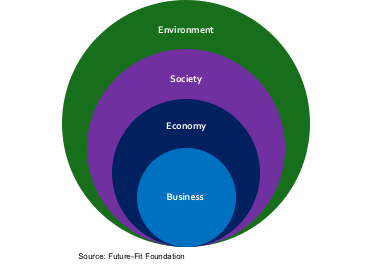
The nested circles below (Figure 5-1) illustrate that a business needs to not only build on their identified business opportunity but it must do so in a way that is aligned with the sustainability requirements from an economic, social and environmental perspective.

Figure 5-1

There are eight gaps in conventional strategic analysis and thinking that need to be integrated into system based business strategy. The next set of blogs are going to these eight gaps that are critical to strategic thinking going forward.  The eight gaps are:

  1. From shareholders to stakeholders
  2. From Michael Porter’s five forces to macro models
  3. From risk monitoring to business resilience
  4. From product-market fit to customer-product fit
  5. From simple to multi-factor business models 
  6. From product to company technology, innovation and design
  7. From profit focus to triple bottom line
  8. From medium term strategies to long term scenario based strategies

The place to start is ‘from shareholders to stakeholders’.  Some of the early thinking on shareholders, was discussed by the well known economist Milton Friedman.  In his 1962 book ‘Capitalism and Freedom”, he stated, “there is one and only one social responsibility of business—to use its resources and engage in activities designed to increase its profits so long as it stays within the rules of the game”.  This was linked to his view that the sole responsibility of management was to its shareholders.  

This Friedman doctrine, has been the driving force of thinking and management behaviour ever since.  Businesses are run with an intense primary focus on a mix of profitability, growth, and return on investment which are the critical drivers of shareholder wealth creation.  We see this every day in the stock markets and is the pervasive thinking in private equity.  If you look at the standard structures of incentives for CEOs and their management team, the core wealth generators for them are linked to financial performance and share price performance. This is coupled with the view that stock markets are focused on quarterly performance.

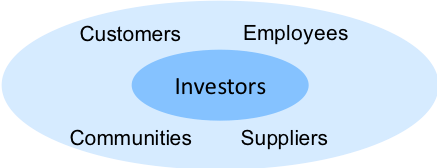
As the world has moved towards and into the 21st century, there has been a growing shift to increasing the view of stakeholders beyond investors to include other direct stakeholders (Figure 5-2).

Figure 5-2

This broader definition of stakeholders has to a large extent been at the core of many ‘family’ owned companies that have been around for decades.  It has also been a much more important part of the thinking of the companies situated in the EU and certain Asian countries.  The reality of these other direct stakeholders is that stronger relationships with each of them will create stronger and more sustainable economic performance. Alienating employees, not treating customers well to build customer retention, and having unstable relationships with suppliers tends to create financial and operating performance issues over time.  In a number of countries including Norway, Sweden, Germany and the Netherlands, company boards reflect the importance of a broader set of stakeholders by having specific representatives for the employees, unlike countries such as the US, Canada and the UK.

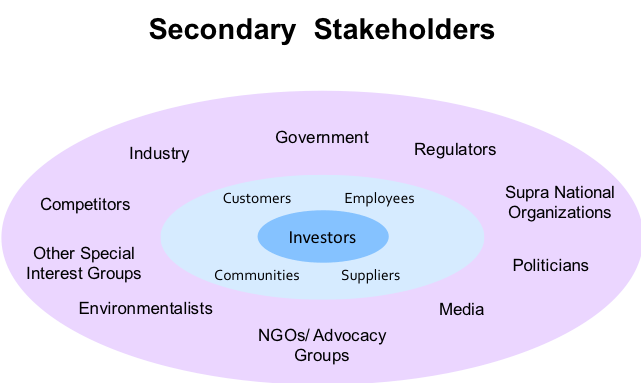
Through experience over the years, and as market and consumer behaviour has been changing, it has started to become clear to businesses that there is also a secondary set of stakeholders (Figure 5-3) that can also have a direct impact on the well being of a company and need consideration.

Figure 5-3

These impacts can come from a range of different groups and involve impacts such as regulatory challenges, acquisitions being blocked, government fines or additional taxes, and brand and reputation damaging press from advocacy groups or the media.  Clearly, strong relationships with these stakeholders can also have the opposite effects and open doors to opportunities.

Here are some examples that many of you will be aware of and I am sure there are many other examples that come to mind.

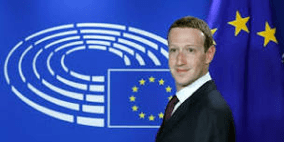
Figure 5-4

In May 2017, Facebook (Figure 5-4) received an EU $122m fine for the breach of anti-trust regulations, and then in 2018 the EU started  an action against Facebook for privacy breaches which had a potential fine of $1.6bn.  In 2019, the Federal Trade Commission imposed a $5bn fine for violating consumer privacy.  As well as the fine, the settlement order also required Facebook to restructure its approach to privacy from the corporate board level down, to establish strong new mechanisms to ensure that Facebook executives are accountable for the decisions they make about privacy, and that those decisions are subject to meaningful oversight.

Figure 5-5

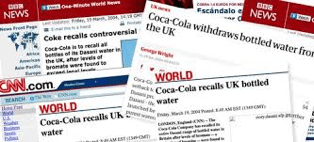
In 2004 Coca-Cola (Figure 5-5) launched Dasani, a leading bottled water brand in the US based on tap water, into the UK. The use of tap water and an ‘interesting’ marketing campaign caused a negative media frenzy, and then a Coca-Cola headquarters frenzy, and resulted in Dasani having to be withdrawn from the UK Market and cancelling planned launches of Dasani in certain other regions of Europe.  I will let you search this incident on the web if you have time for the more detailed and amusing story.

Figure 5-6

The Volkswagen emissions scandal (Figure 5-6) began in September 2015 linked to a violation of the Clean Air act in the US. This breach resulted in plans to spend €16.2bn in reparations and a $2.8 bn fine (source: Wikipedia – https://en.wikipedia.org/wiki/Volkswagen_emissions_scandal). Another example of the failure to meet regulatory compliance and the need to be on top of all regulations and potential new regulations.

Figure 5-7

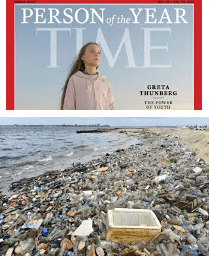
We are all aware of the environmental movement (Figure 5-7) and the impact it is having on many companies resulting in damaged brands and reputations, boycotting, or brand switching to more ethical brands.  A lot of this pressure has come from a combination of activist groups, such as Greenpeace, naming and shaming companies involved in areas such as deforestation of the Amazon, and public protests including the activities of Greta Thunberg.

Understanding the relevance of these different stakeholder groups is an essential component of strategy.   Evaluating the power, risk, legitimacy and urgency  of these stakeholder groups will affect strategies, priorities, investment spend and programs for effective management of the key groups.

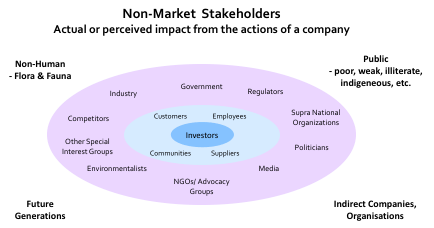
Fully understanding stakeholders, does not end with incorporating secondary stakeholders into your thinking.  There are non-market stakeholders (Figure 5-8) who are outside of the market of the company but can be indirectly deeply affected and therefore affect the company in return. 

Figure 5-8

As can be seen in Figure 5-9, these are examples of the types of corporate related activities that have had significant effects on non-market stakeholders.  There could be future generations that have severe health and well being problems as a result of nuclear or chemical disasters, or poor and indigenous groups that had been taken advantage of but now have rights.  It could be severe economic damage  to indirect businesses, such as in the 2010 Deepwater Horizon Oil Spill involving BP.  By 2018, it was estimated that this had cost BP $65 bn, including $4.5bn in fines.  Finally, with the environmental movement, damage to Flora and Fauna could also have consequences for a company.

Figure 5-9

We have outgrown, Milton Friedman’s view that the sole objective of a company was to increase its profits within the rules of the game.  He argued that the appropriate agents of social causes are individuals—”The stockholders or the customers or the employees could separately spend their own money on the particular action if they wished to do so.”  Today, charity does not solve the concerns of the secondary and non-market shareholders!  Thoughtful strategic integration of the needs of legitimate and valuable stakeholders is essential.  Effective management of all material stakeholders needs to be a fundamental part of managing a business.  In relation to climate change and the environment, we are already seeing that companies not focused on sustainability are losing access to finance, having trouble attracting and retaining talent, and losing customers.  We are only in the early stages of this movement!!

In summary, the landscape of stakeholders is broad and complex and their potential impact on businesses is continually evolving and changing.  Organisations not understanding this will have strategic and performance shortcomings, and be remiss in their responsibilities.

Categories
REBOOT Strategy

REBOOT Business Strategy

‘When the winds of change blow, some people build walls and others build windmills’ Chinese Proverb

Blog 4 of Business Strategy Series

In earlier blogs, we have talked about the broad range of externalities that can impact a business. We can see from our current experience of Covid 19 that a health crisis is an example of the depth of interconnected issues. Most key environmental, geopolitical, economic, technological or societal macro-factors have a heavy set of interconnections which can impact a business.  

These factors range from events with little or no warning such as floods, pandemics and cyber attacks, to events that are somewhat visible and require a reasonably quick response such as Brexit, regulatory changes, different forms of financial crises, and at the other end of the spectrum factors that are visible and will require large fundamental changes such as climate change, and perhaps AI and robotics.

At the global level, the 2008 financial crisis and the 2020 Covid 19 crisis has shown real weakness in the overall resilience of companies and the reliance of massive government interventions to backstop the collapse of our economies and way of life through both monetary and fiscal policies interventions.  However, it is important to note that the level of interventions that are taken are limited to the capacity of the government to assist.  Many governments, especially in low and middle income countries, lack this capacity.  For the affluent countries, it looks like that the cost of Covid 19 for the governments to keep the economy alive so it can recover will be up to 15% of GDP. There are many more examples at the national level where crisis have needed significant national and also. international responses.  At the company level, too many companies, from multi-nationals to small companies, have not properly addressed the dealing of potential disruptions at the macro level within their strategies to sustain the viability and performance of their businesses.  

Behind all these potential disruptions, the one issue that will not go away is environmental crisis.  No issue is bigger, more complex, or requires more structural change than the current environmental crisis with climate change at the center of this.  This challenge is going to last for decades, if not forever, and we should expect to have major disruptions requiring short term responses as well as longer term fundamental changes. 

Figure 4-1

As most businesses have been in denial, are avoiding the issue, or not are not taking action with any urgency, we have seen international organisations, governments, investors, and the public start to demand systems thinking to deal with this issue of climate change and environmental damage.  From the 2015 Paris Climate Agreement, 189 countries have signed up to individual targets as of February 2020.  A number of countries are starting to commit to net zero carbon emissions targets, including Denmark targeting to reduce their CO2 levels by 70% by 2025 and the UK targeting to achieve Net Zero by 2050 along with a growing number of other countires.  Behind these commitments there are/will be a set of policies, regulations, and incentives to achieve each countries targets.  

There are also investors who represent $130tn (per Mark Carney) of money under management and central banks requiring climate impact reporting.  In addition, a growing set of these investor, including major sovereign wealth funds and pension groups, are setting their own climate targets for their portfolio holdings and will be driving a shift in the investment and funding of companies depending on their climate and environmental impact strategies.  Finally, we can all see the public movements on this issue and the consumer purchasing trends taking shape against the environmental issues.

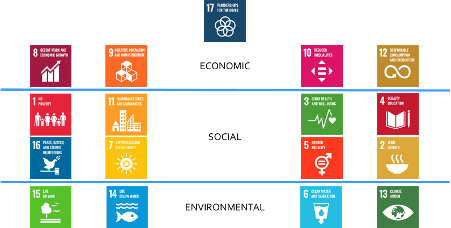
Next to the environmental movement, there has been ongoing focus on social and economic responsibility.  In 2015, the United Nations Sustainable Development Goals (SDGs) were announced that covered sustainability across environment, social and economic development.   The goals covered 17 core areas of focus, each with a set of sub-goals (Figure 2).  These SDGs were signed up to as a global consensus of most of the countries of the world.  They are the best universal view of goals and targets that a sustainable world should encompass.  These targets are effectively linked to the ESG (Economic, Social, Governance) reporting requirements for large public companies.  It’s worth noting that corporates that are looking at their external impact seriously, such as FMCG companies and supermarket groups, have based their strategies on aligning with the SDGs and not just environmental targets and climate specifically. 

UN Sustainable Development Goals
Figure 4-2

It is clear that companies are operating in a complex world that is disrupting the ideal steady state approach to doing business.  Climate change was the big issue that everyone was talking about until we had a pandemic which also triggered our economic crisis.  Instability is really the business environment that we need to be designing our businesses to work in.  By definition, then strategy must be looked at from a system perspective integrating the externalities of our global economy, society and environment and solving a sustainable way forward.  The best guiding light we have on sustainability and what we need to guide our system based strategy at this point in time are the UN Sustainable Development Goals. Businesses need to be designing their strategies integrated with and aligned to also creating external impact economically, at the societal level and environmentally (Figure 3).

Figure 4-3

Categories
REBOOT Strategy

REBOOT Business Strategy

“When written in Chinese, the word ‘crisis’ is composed of two characters. One represents danger and the other represents opportunity.” John F. Kennedy

Blog 2 of Business Strategy Series

Current Global Environment

You can’t start any conversation on the current global environment without talking about Covid 19.

It is useful to look at the global response to the current Covid 19 response.  Here are a few perspectives on how we are doing so far. 

In my lifetime, this is a completely unique situation.  The whole world has been affected from both a health and economic perspective.  There is a potential threat to each person’s life and livelihood.  Even in the world wars, many countries were safe at the local level, especially in the Americas (excluding Pearl Harbour) and in large parts of Africa.  That is not to say that they did not send people to help in the wars.  The war on ISIS which involved over 70 allies to defeat ISIS did not have a short term personal threat to the public in most of the ally countries.  So, this is a global war against an invisible enemy with huge consequences on the lives and health of many and with massive economic consequences.  For the countries that can afford it, it looks like the cost to the governments will be about 15% of GDP from responses and programmes put in place today.  Perhaps, there will be more to come!

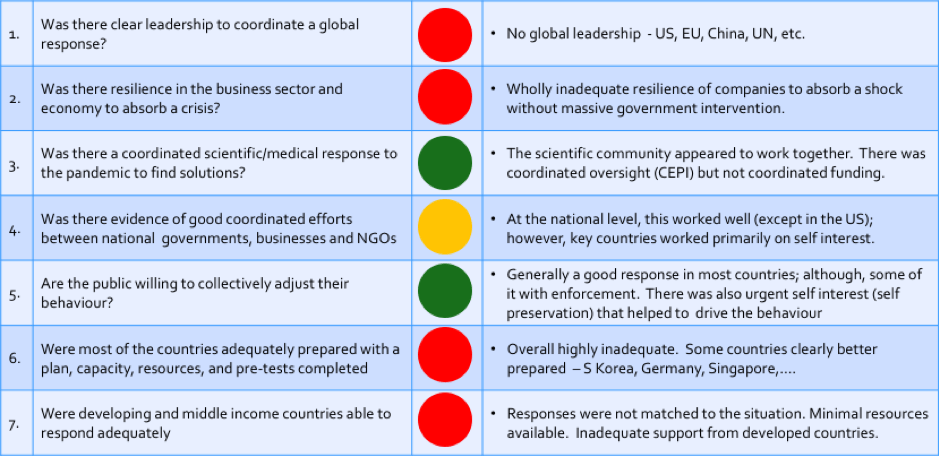
Given this is a global war on this pandemic, how have we responded?  Here is my take so far.  

A screenshot of a cell phone

Description automatically generated
Figure 2-1

On an overall basis, not particularly impressive!  Although, I would note that at the national level a number of countries (including South Korea, Germany, Vietnam), so far, have done well.  The problem is that we need a global solution if we are going to revert back to a similar life of massive mobility of people across borders. 

We should note that this ‘war’ has only just gone through its first phase.  How many more waves will there be?  Will we be able to defeat this virus, with a vaccine, or will we have to learn to live with it and effectively manage outbreaks? What will happen with mutations of Covid 19?  Are there other potential viruses that could come along? 

Perhaps, this isn’t a war; rather it is just a battle in what over time will be a war over lifetimes against pandemics. As an aside, we know that through the analysis of ice core samples, that with the melting of ice there could be a re-emergence of ancient bacteria and viruses that were not previously known to man.  From what I have read, the risks of further pandemics are growing.  This is unlikely to be a once in a century or once in a generation event.

There are still a lot of unknowns!  It is very unclear how this will play out over the next two or more years.  Almost certainly, geo-political tensions will rise unless there is a major shift in US policy after the coming elections.  I would think that we have to expect further economic ripples as the true cost and implications of Covid 19 add up and become clearer.

While we are dealing with this, we do need to face up to the need for action against climate change.  This Covid 19 report card also indicates there is a lot of work to do at all levels to have an effective response to climate change.

Back to Covid 19.  For businesses, if you created a similar business relevant report card, how did you perform?  Were you able to continue business or were you in the food lines to receive government aid to survive?  Did you look after your employees?  What further related economic ripples, or slow movement to a ‘new normal’, will cause you to take further drastic action or look for a bailout to survive?  

With the level of government assistance to businesses globally, it is clear that businesses in general have failed this resilience test.  The governments have had to step in as the lender, or funder, of last resort.  Many companies, if not most, have no rainy day financial capacity, supply chains have failed, retail sales for many companies have ground to a halt and it has not been possible for many companies to do remote working.  

So there are real resilience questions of leadership, financial capacity, preparedness for a disruption and speed and flexibility of response. Many companies will come out of this situation and realise resilience is a key component of strategic positioning, and if positioned properly out of crisis will come opportunities.

Categories
REBOOT Strategy

REBOOT Business Strategy

Blog 1 in Business Strategy Series

Introduction

Thoughts on an upgrade to strategy development for  performing in a sustainable world.

The wake up call has come!  Real leaders are already on the journey!

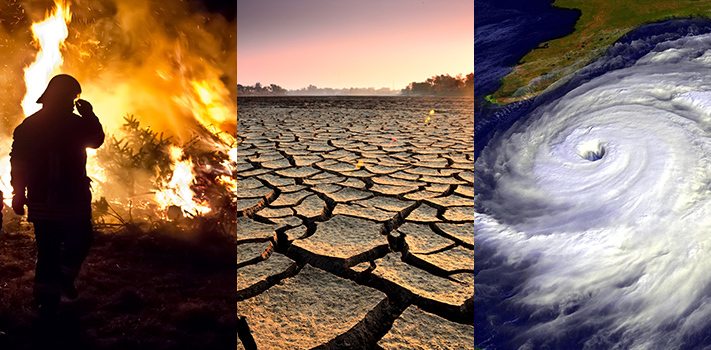
We are seeing immense upheavals across the world with Covid 19, growing levels of disruption from extreme weather events, increasing rates of technological change and threats,  great geo-political uncertainty, growing levels of public activism on the stewardship of our environment, and the real medium term implications of climate change which will be irreversible if we don’t start moving fast.

This is not a once in a hundred years, or even once in a generation, coincidence of events. This is a trend in this Anthropocene era.  These are systemic  interconnected issues that cannot be dealt with one by one.  We will be failing ourselves and future generations if we do not get on top of this.

We are not moving fast enough to deal with the cumulative effect of these changes. But, at least we are starting to move and gain momentum.  Central banks are engaged, governments are increasingly engaged, investors are also rapidly resetting their expectations of how businesses must be focused on social and environmental impact as well as driving strong investor returns.  

Businesses have not been well equipped in dealing with these unpredictable and emerging disruptions, and most businesses  still have to get there heads around how to engage and be able to perform with these changes and increasing stewardship demands by both the government, regulators and investors.

This is a view on how companies need to evolve their strategic thinking and planning, be much better equipped to perform in this changing world and be aligned with the social and environmental need for balance in our world.  As well as new thinking, this requires dramatically more purpose driven leadership, being able to manage with competing priorities, speed, agility and innovation – more on this separately.

I will be adding new content every week. These blogs will cover three core topics. Firstly, the scene setting of a quick view on the ‘Global Environment for Business’. Secondly, discussion of the ‘Key Components To Evolve Strategic Thinking’. Finally, ‘Strategic Framework For The Future’ will be a view on a practical framework for developing strategies. Each blog will cover off a piece of one of these sections and will be sent out in sequential order.