Categories
Covid

Post Covid

“Individual commitment to a group effort – that is what makes a team work, a company work, a society work, a civilization work”, Vince Lombardi

Blog 5 on Post Covid disruption, resilience and innovation

In earlier blogs, we have explored how this pandemic will affect consumer behaviour and how businesses and governments need to respond to build back better to create a ‘new normal’.  This final blog of the series will take a macro level view of the way forward and how a coordinated response needs to come together.  The Covid crisis does not sit on its own, it is surrounded and complicated by all the other pressures that need to be addressed simultaneously including employment and economic recovery, climate, inequality and geopolitical tensions.

Unfortunately, the end of the crisis is not just around the corner as Donald Trump likes to tout.  We are now deep again into the Covid crisis.   According to WHO as of 30 October, we are now approaching 1.2m deaths and 45m confirmed cases.  Many countries are now going back into a deeper level of lockdown.  This looks like we will continue with uncertainty for at least another few months, at which point we will have gone past a year of Covid.  The scale of this crisis dwarfs the ‘great recession’ which started in 2008.  No organisation should be passively watching what is happening; rather, the focus should be on ensuring survival and then coming out stronger for a ‘new normal’.

One of the critical things that must happen for the post-Covid period, or living with Covid period, is that all the actors necessary for a strong recovery (public, companies, government, 3rd sector) need to participate and move in the same direction.  This alignment needs to also work on a multi-lateral basis. 

Summarising from previous blogs, at the macro level there are 5 areas where there needs to be a strong aligned response to create a ‘new normal’ (Figure 5-1).
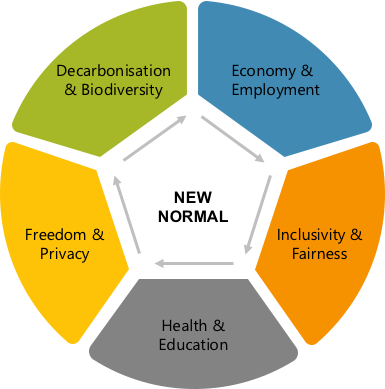
Figure 5-1

Assuming we come out of this period either learning to live with Covid in a relatively normal way or with a massive vaccination program, the most vital area of focus will be economic and employment recovery.  In the second quarter, virtually every economy had significant year on year negative growth with Spain and the UK having in excess of a 20% year on year decline.  The third quarter will be better than the second quarter, but it will still be substantially down year on year.  The ILO (International Labour Organization) at the end of June 2020 had a baseline global scenario of a 4.9% loss of working hours in this second half of 2020 which equates to an equivalent of 140 million jobs.  This assumed no second wave of Covid!  All predictions involve a massive task to restore the economy to restore employment to previous levels.  

The economic damage and loss of employment have hurt the lower income sectors of all economies the most.  This crisis has also more adversely affected women vs. men and the younger groups in employment.  Addressing this imbalance is essential as well as dealing with all the overall issues of inequality.  

What is clear from our current experience, is that there is also significant work to do in both the health and education sectors to create fit for purpose capabilities that can deal with the challenges of repeat disruptive events and move forward providing higher quality and more reliable day to day services going forward.  Across all sectors of the government, especially in health and education, digital innovation or the delivery of ‘fourth industrial revolution’ capabilities are vital.

One of the large controversial areas that has significant attention in many countries is the right of governments to impinge on constitutional rights of citizens during the Covid crisis.  These rights include, key rights of movement, ability to gather, rights of free speech, rights to gather and use information.  There have been a number of situations in several countries, particularly in Germany, where the courts have stepped in on government interventions and defined them as overreaching, unenforceable and unconstitutional.  Restoration of these rights will be a critical part of restoring social balance.  There are some more insidious things that need to be dealt with that I will cover off with respect to privacy, freedom and democracy in my next blog series on ‘The individual, the market economy and the state’.  There will also need to be a restoration of the rights and abilities of companies to do business without the restrictions that have been imposed on them.  

The final area and the largest looming challenge, that has not taken a break, is the urgent need to address climate warming and biodiversity.  Decarbonisation and recovering biodiversity must be integrated into creating a ‘new normal’ for the living with Covid or post-Covid world.

To create alignment against these factors, ideally requires 4 key components.  Multi-lateral coordination, public-private alignment, financing and frameworks and a strong focus on innovation (Figure 5-2).
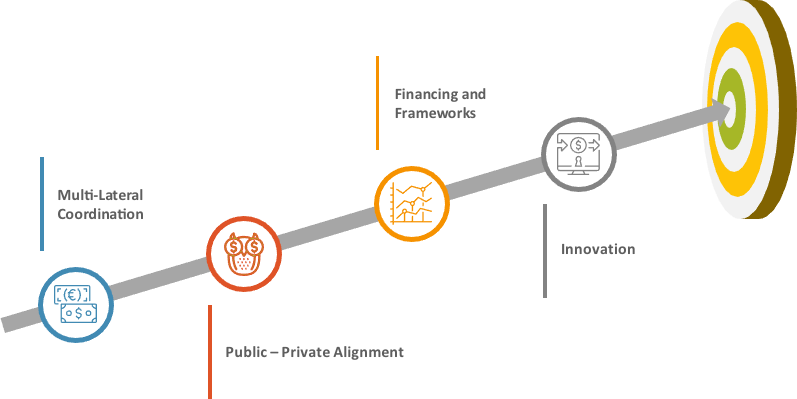
Figure 5-2

When I first started writing this blog at the beginning of the year, my biggest concern regarding the climate and fairness global challenges was the lack of global coordination and response to these issues.  This was then exacerbated by the pandemic.  Since the end of the second world war, the US has shown the leadership to help coordinate and bring together the countries necessary to address key multi-lateral challenges across the full range of issues from health challenges such as HIV/Aids and Ebola, to security and nuclear threats, to the need to address the erosion of the ozone layer.  They were one of the leaders to set up the UN Nations post World War II. 

Unfortunately, under the misguided leadership of Donald Trump, the US has turned inward, moved to an “America First” win-lose focus and escalated geo-political tensions.  Let’s see what happens in the elections and the post-election response.  The first signal will be whether or not the US finalises their withdrawal from the Paris Climate Accord which was targeted for November 4.  For the sake of global progress in dealing with these urgent issues of the pandemic, climate, inequality, and the recovery of a proper democratic process in the US, let’s hope that this is the last we see of Donald Trump in the political arena!  

Multi-lateral coordination is often seen primarily as coordination between countries to drive different agendas.  The scope of these challenges will require responses well beyond just the political sphere.  It needs the involvement of the 3rd sector including of some of the great foundations, such as the Gates Foundation which is working on some of the big issues around health, education and gender equality.  And, most importantly, it needs the productive involvement of the private sector (investors and corporations) with their scale, reach, investment capacity and innovation capabilities.  After all, in the advanced economies most of the wealth lies with the private sector and this investment capability must be tapped into to help solve these challenges with urgency.   

Even deeper alignment of public and private sectors are required at the national level.  The pandemic has seen a much higher inward focus than we have seen for decades.  Local economies are inextricably linked to the health of the private sector and the support of the government, especially in these Covid times.  We should also not forget that the full multiplier effect of the role and services of the government is a substantial part of any countries employment base.  This inward focus, and also the self centered national response to the Covid crisis such as the control of PPE, suggests that governments and companies need to rethink their global supply chains and identify where there needs to be more local sourcing.  Public-private alignment and partnerships are also required in order to have any chance of achieving progress in meeting the Paris Climate Agreement targets and to make progress against inequality.  

The alignment and working together of the public and private sectors requires proactive and productive involvement of the government, key leaders in business and key influential investment groups.  It is in the interest of all parties to contribute to the ‘new normal’.  It does mean that investors and companies have to be thinking in a longer term context and from a multi-stakeholder perspective.  The good thing is that there has been a growing movement in this direction linked to climate change, inequality and the United Nations Sustainable Development Goals.  The integration also requires the convening power of groups such as the World Economic Forum, who this summer initiated such an initiative called ‘The Great Reset’.

The need for financing and improving of market frameworks is substantial and of an unseen scale since the rebuilding post the second World War.  This includes the recovery of employment and repositioning of economies to meet the needs of the future not the past.  We have already invested over 10% of annual gdp in the advanced economies to weather the pandemic storm and substantial new rules, regulations, emergency measures have been put in place to deal with the storm.  A lot more money will be required to restore economies, and there will be a need to remove the often oppressive pandemic related rules, regulations, and collection of personal information.  And, even more financing and framework adjustments are needed to make sure we can prosper and de-risk our future.

The rebooting of our way of life needs to result in a world that is inclusive, multi-stakeholder oriented, more long term focused and aligned to an environmentally sustainable world.  It also need to make a step change in its preparedness for large disruptive events – pandemics, cyber, climate related.  To this extent the frameworks (legislation, regulatory frameworks, reporting requirements, etc.) need to be fit for purpose and future oriented.  This does not have to be more layers of rules and regulations; hopefully, it will be new frameworks replacing or updating old frameworks and not the further layering of bureaucracy.

The financing requirements of the recovery and the setting of a new normal will be vast.  This is going to require the combined financing and investment power of the public and private sectors.  As well as further debt financing, governments will need to look carefully at their taxation programs to not only finance the needs for public services going forward but also to ensure that the right frameworks and incentives are in place to drive private investment in the right places with the right urgency.  In a number of countries, this would also involve a rethink about the focus of some of the current subsidies; such as agricultural subsidies in the US that are driving mono-crop farming in the US vs. regenerative farming.  

Finally, the ‘new normal’ way of life should look and feel very different to the pre-Covid normal.  The driver of achieving this is private and public innovation.  This is accelerated digitisation of the economy and all its sectors including building remote and hybrid working capabilities, hybrid medical and education delivery.  It needs to result in countries predominately driven by clean energy, that have heavily shifted to the electrification of mobility and have significantly changed through the use of AI, sensing and other digital capabilities. Companies need to shift to ‘circular’ strategies and innovation will help them achieve their Net Zero targets.  Innovation is also needed to drive large shifts in food production and consumption and the move towards regenerative farming and rewilding. Increasing carbon sequestration on land and in the oceans is a fundamental part of dealing with climate change and biodiversity.

With the convergence of all these challenges, we are fortunate that we have never been better equipped to meet them head on. We already have the technological know how to drive massive change and new technologies and capabilities are well underway to help us complete this shift.

This is a challenging but also exciting time. As Barack Obama said in a UN General Assembly in 2016, “if you had to choose any moment in history to be born, you would choose right now. The world has never been healthier, or wealthier or better educated…” Obama then called on the audience to look with optimism to the future. “Not blind optimism, but hard-earned optimism, rooted in very real progress.”

#Covid #pandemic #WHO #UN #Donald Trump #economy and employment #inclusivity and fairness #health and education #freedom and privacy #decarbonisation and biodiversity #inequality #climate change #net zero #Barack Obama # sustainable development goals #multi-lateral #public-private # frameworks and financing #innovation

Categories
REBOOT Strategy

REBOOT Business Strategy

“You cannot avoid the responsibility of tomorrow
by evading it today”, Abraham Lincoln

Blog 15 of the Business Strategy Series

This is the final blog on the strategic framework and of the Business Strategy Series.  I will be continuing to write on related subjects.  I am also working on another series that will look at the roles and linkages of the market economy and the state – another critical subject as we work through these turbulent and challenging times.  A coordinated response between the market economy and governments is mission critical for solving our climate crisis and we can see how vital it is for other disruptions such as the pandemic we have now lived with for 6 months.  

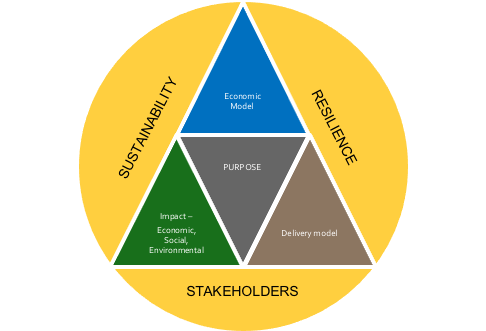
The components in the strategic framework (Figure 15-1) that have been introduced are focused on helping business executives and their boards create a long term sustainable business that has a true purpose in society by delivering both economic returns to investors and impact to other stakeholders.  

Figure 15-1

To date we have discussed purpose and the delivery model.  In this blog, I want to talk a bit more about impact, strategic timeframes, sustainability and resilience.  I will then complete the discussion with a short piece on portfolio strategy.  

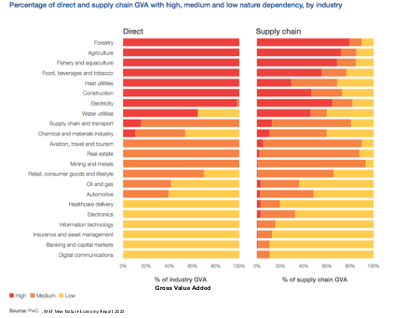
Starting with environmental/climate impact.   Through the ESG reporting requirements (Environmental, Social, Governance), companies are being asked to look at the environmental at both level 1 impact, which is the company’s direct impact, and level 3 impact which considers the full supply chain impact including product use.  Clearly, at the environmental level the specifics of each sector, and its supply chain, will have different environmental dependencies and different opportunities to create impact.  Key sectors such as energy, food, packaging, retail, manufacturing and fashion which have high resource use, significant energy and water usage, and large supply chains will have high environmental impact unless they have already taken action (Figure 15-2). The urgency to create full circular strategies and lead the way is most vital for these high dependency companies; although, that should not stop all companies from moving forward as well.  

Figure 15-2

Taking the view at the societal level, that the climate problem can be solved by just focusing on the major companies that are contributing to climate change, reduced bio-diversity, high water use, etc. is definitely insufficient if you look at the science.   Part of the solution is for the public to be also looking at their consumption and making it more in tune with the needs for environmental sustainability. So the full and necessary challenge is to create a major shift in how we all live and how businesses, the government and NGOs operate. 

As I noted in Blog 14, for companies delaying this shift to a societally responsible strategy will only result in an increasingly challenging shift for each year of delay as the need to hit targets by certain dates will not shift.  Each company in each sector needs to set ambitious and timely targets to make its contribution to this.  It is management’s, and the Board’s, challenge to ensure that the strategy they set meets both its economic needs and its responsible level of impact.  

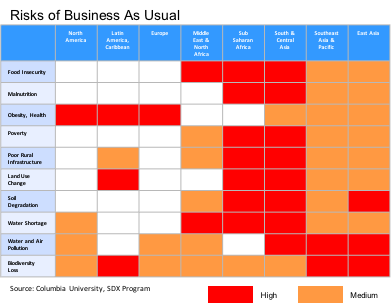
In addition to the sector, the geographic footprint of a business has implications for the impact focus and targets that it sets (Figure 15-3).  For example, companies that have large supply chain footprints in the developing world need to be thinking much harder about its specific social impact goals that it wants to achieve.  Truly exploring the UN Sustainable Development Goals will help define these.  Business as usual in many parts of the world will perpetuate the fundamental environmental, social and economic challenges that need to be overcome.

Figure 15-3

A helpful approach to thinking about how to incorporate impact programs and goals into the business is to look at the leading companies that are already a long way into this journey to be a responsible company.  

One of the companies leading the way is Unilever, who have been focusing on this now for over 10 years.  They now report on their progress against their goals each year (Figure 15-4). 

Source: Unilever Website,
Figure 15-4

From their website, you will see that they have created specific time based targets that roll up to overall ambitious goals, they have linked them to the Sustainable Development Goals, they are tracking their performance over time and they are publishing their performance publicly.

Other good examples covering different sectors are IKEAPatagoniaInterfaceOrstedTata and Microsoft.

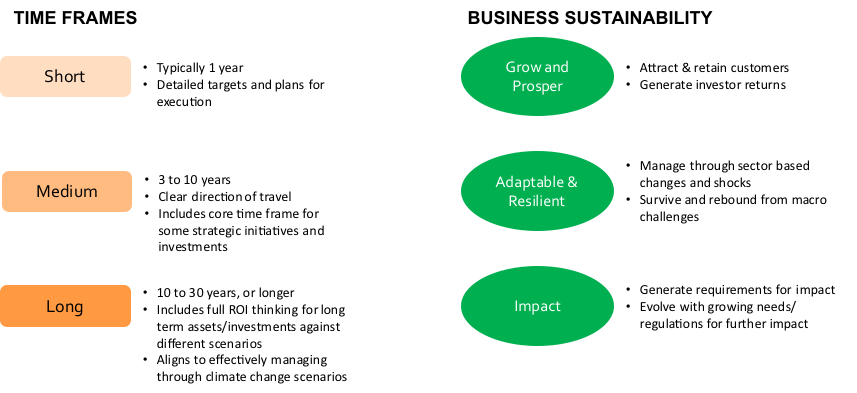
As noted in Blog 12, strategic timeframes need to be extended vs. the typical 3 to 5 year timeframe (Figure 15-5).  A longer term time frame needs to be added to consider fundamental impacts such as climate, major changes in technology adoption and putting in place the right components for resilience.  3 to 5 year thinking and short term ROI horizons will not ensure adequate thinking on the sustainability of a strategy.  

Figure 15-5

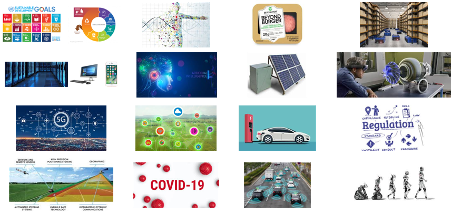
Linked to this, it is critical that there is a proper review of the potential activities and events that change markets and/or generate new opportunities (See Figure 15-6 for examples).  These events will range from changing views on environmental responses required, SDG compliance, new regulations, a changing geo-political environment and of course the potential for massive impact from new and converging technologies.

Figure 15-6

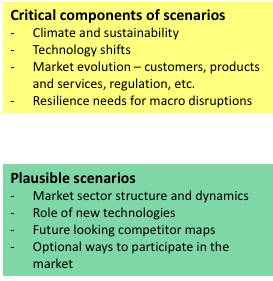
More important than ever is to develop strategic scenarios that would be effective based on different views of what could happen in short, medium and longer term horizons (Figure 15-7).  The approach for doing this is to pressure test strategic options against different externalities and come up with some plausible scenarios to evaluate.  These scenarios need to be developed holistically and need to be comparable. The components of the scenarios should cover off customers, products/services and supply chains, investment, metrics, people, processes and technology. 

Figure 15-7

With a real analysis of alternative scenarios, the comparison should provide further clarity around the performance opportunities for the business as well as the risk parameters.  The true strategic options can be explored along the key dimensions of profitability/ROI, impact, implementation risk, meeting of key stakeholder needs, sustainability and resilience.  

This moves strategic thinking significantly on from a pure profit and shareholder only focus.  In the short run, realigning the business to survive this pandemic and be able to prosper in the post Covid world, having an organisation that is proactively progressing on gender and race issues, as highlighted by the ‘black lives matter’ and ‘me too’ movements, and making a real contribution to the global climate/environmental targets that need to be met are big topics in most board rooms, and with investors, employees and customers.  These challenges need much more than tactical reactions, they are strategic and structural challenges that will inevitably require some major changes to most businesses in terms of how they operate, who they do business with, where they invest, and what performance targets can be expected.  

The overall strategy and each of the components should fit coherently into the strategic framework (Figure 15-8). Continuous evaluation of the components of the strategy over time and looking for ways to continuously improve and refine the strategy is equally as vital as the initial setting of the strategy. As the rate of change in the world accelerates, dynamically adjusting/refining the strategy and improving execution is mission critical. Speed and agility are much more important than a singled minded short to medium term focus on efficiency.

Figure 15-8

The final subject, I want to touch on is the implications of this in a company with a portfolio of businesses. Investors and stakeholders will be looking at the overall economic and impact performance of the business. Non-performing business units within the portfolio will have an overall effect on the attractiveness of the business to investors, employees and other key stakeholders.

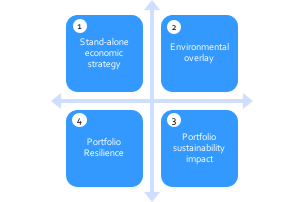
The proposed approach to evaluate a portfolio of businesses is a four step process (Figure 15-9). Firstly, evaluate the portfolio of businesses from an economic perspective. Secondly, overlay the environmental impact of the businesses on to the economic performance of each of the businesses. Thirdly, look at the full alignment of the set of businesses against sustainability impact which will include social and economic impact. Finally, look at the portfolio options from a resilience perspective. This review should be done considering the realistic potential scenarios of each of the businesses.

Figure 15-9

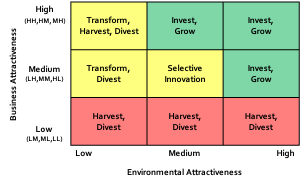
Now looking at each of these components in a little more depth. Starting with the stand-alone economic strategy, we have the traditional grid looking at business position vs market attractiveness (Figure 15-10). Both components of the strategy should be looked at from a short, medium and longterm perspective. Business position is the combination of profitability, market position, and ability to maintain performance over time as markets change and evolve. Market attractiveness is the combination of size, growth and the economic attractiveness of the market. The grid should be fairly self explanatory. If you have a strong market position in an attractive market then you ideally want to stay in the market and should be willing to invest and grow your position. Whereas, if you have a weak position in an unattractive you would rather manage the business for cash or divest from the market and reinvest the capital in more attractive businesses.

Figure 15-10

Moving on to the Environmental overlay (Figure 15-11), this takes the overall position from the economic strategy grid in Figure 15-10, Business Attractiveness, and matches it against the Environmental Attractiveness of the business. High environmental attractiveness has a low or positive environmental footprint within the timeframe of meeting the targets set by the Paris Climate Agreement and the environmental focused SDGs. For many businesses, the key target is the year the company will achieve a Net Zero carbon emissions equivalent level 3 footprint (ie. including the full supply chain of the business).

Overall, unattractive businesses, unless you have clear sight on how to transform them, should be harvested and/or sold. If an unattractive business is also very unattractive from an environmental perspective, such as a coal business, it is more likely that this should be divested as attracting investors and raising funds in your overall business will tend to be more challenging. In an equivalent way, if you have a small business with real potential in an environmentally attractive sector it may well be that you should be diverting your investment capacity into this business to build it. An interesting set of companies to watch on these dimensions will be BP, Shell and Exxon. Both BP and Shell have committed to reach a Net Zero CO2 emission target by 2050. It is not yet clear that they have strategies set out on how to achieve this; but, what is clear is that they will be redirecting their cash generation to the renewables sector where they have much smaller strategic positions. It has been a broad set of stakeholder pressures, including collapsing share prices, that have driven the adoption of these strategic commitments.

Figure 15-11

The third component of a portfolio review is the review of the alignment of impact overall with the business portfolio options (Figure 15-12). Although, climate impact tends to get the lion share of the attention from the press, economic and societal impact are vital components of the SDGs, and in many business and geography combinations, as you can see in Figure 15-3, they may be more important than climate impact. The food sector, including food retailers, are a great example of this with their broad geographically spread supply chains.

Figure 15-12

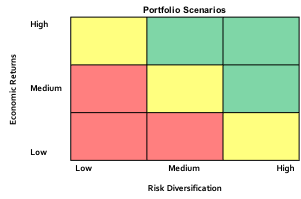
Finally, having evaluated the businesses, and their strategic options, in an overall and comparative context, the final step is to compare realistic combinations of businesses from a portfolio perspective. In particular, given the businesses have been evaluated against the three areas of impact, the portfolio options should be looked at from an economic return vs. a risk diversification perspective (Figure 15-13). The risk assessment is against the longterm sustainability and resilience of the portfolio scenarios. Adjusting a portfolio to reduce risk has real value, as we have seen in this pandemic. The potential benefits of a tight focus of businesses in terms of sector, geography, supply chain, efficiency and commonality of disruption risks may not be justified from a sustainability and resilience perspective. As I have noted before flexibility, adaptability, and diversification can provide real value to the business overall.

Figure 15-13

This brings to a conclusion, the series on Business Strategy. I hope you have found it thought provoking and useful; and hopefully, it will help you make a difference in your business and create a deeper impact in the world around you.

I will continue to write blogs to delve in deeper to sectors and subjects that will explore strategy and sustainability in a deeper context. As noted in the about section of my blog, REBOOT is not just about business, it is about the need for structural changes, or a new operating system, across all areas connected to our lives and our world.

Please continue to follow, share, engage in conversation, contribute and also reach out to me if you want to talk about this further. I can be reached through LinkedIn.

Categories
REBOOT Strategy

REBOOT Business Strategy

“Without a sense of purpose, no company, either public or private, can achieve its full potential. It will ultimately lose the licence to operate from key stakeholders.” Larry Fink, CEO, Blackrock

We have now covered the first six of the eight topics for strategic focus.  As a reminder, the eight topics are:

  1. From shareholders to stakeholders
  2. From Michael Porter’s five forces to macro models
  3. From risk monitoring to business resilience
  4. From product-market fit to customer–product fit
  5. From simple to multi-factor business models
  6. From product to company based technology, innovation and design
  7. From profit focus to triple bottom line
  8. From medium term strategies to long term scenario based strategies

The seventh topic, from profit focus to triple bottom line, is a major shift for most companies from being shareholder focused to stakeholder focused.  This shift in the purpose of the business requires new thinking, different leadership and major adjustments to incentive systems to create alignment.  Simply put, a company must now extend their objectives beyond measurements almost exclusively focused on shareholders to also add measurements on environmental, social and economic impact.  

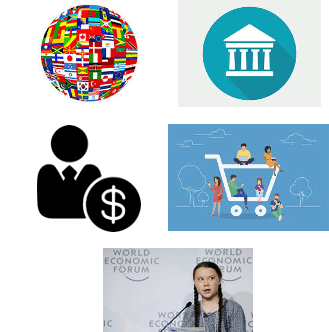
Let’s start by looking at the pressures to move beyond a pure profit focus. These pressures are from nations, central banks, investors, consumers and the public as illustrated by Figure 11-1.

Figure 11-1

In 2015, the UN reached agreement, with all United Nations Member States, on 17 Sustainable Development Goals and 169 targets focused on economic, social and environmental goals for 2030.  193 countries are signed up to this agreement.  

Also in 2015, the Paris Climate agreement was signed.  The Paris Agreement sets out a global framework to avoid dangerous climate change by limiting global warming to well below 2°C and pursuing efforts to limit it to 1.5°C. It also aims to strengthen countries’ ability to deal with the impacts of climate change and support them in their efforts. There are now 197 countries signed up to this agreement.  Shockingly, the US under Donald Trump said that it was going to withdraw from the agreement and the effective date is 4 November 2020, 1 day after the next presidential election.  You can imagine who the rest of the world is voting for!  

As of June 2020, twenty countries and regions have agreed net-zero targets by 2050 –  Austria, Bhutan, Costa Rica, Denmark, the European Union, Fiji, Finland, France, Hungary, Iceland, Japan, the Marshall Islands, New Zealand, Norway, Portugal, Singapore, Slovenia, Sweden, Switzerland and the United Kingdom.  Denmark is leading the way and has legislated a target of reaching a carbon emissions target 70% below its 1990 levels by 2030.

About 50 central banks have now joined the NGFS, the central banks’ network focused on climate change risk management. .  Mark Carney, former Governor of the Bank of England, has been one of the global leaders in pushing forward this climate agenda. The Bank of England will be the first central bank to test how well the financial system can withstand risks posed by climate change.  Under this test the largest lenders, insurers and asset managers will have to stress test their portfolios against different climate scenarios.  In turn, they will need to engage the companies behind these loans, insurance policies and investments to provide information for this reporting. The Federal Reserve has declined to participate; but, it is realising that this position will not be tenable for much longer (FT.com 120120, Gavyn Davies).

Investors representing about $130tn in investments are now starting to require ESG (Environmental, Social, Governance) reporting.  Some of these portfolio managers have also set climate targets for their portfolios as part of their criteria for investment.  Two of these funds are the Norwegian and Japanese Soveriegn Wealth Funds, each of which have fund valuations well in excess of $1 trillion.

There is also a group of over 450 investors, Climate 100+, who represent $40tn in investment that are initially focused on 161 global companies that cover up to 80% of global industrial emissions with 3 goals.  Firstly, to improve corporate climate governance, secondly to curb emissions in line with the Paris Agreement and finally to strengthen climate related disclosure.  

Shifts in investment focus and willingness to lend money to certain sectors is already underway.  One of the first sectors to be hit hard has been the coal industry.  Investors are looking more intensively at the ESG focus of companies and adjusting their decision making on investments. Banks are under increasing pressure to do responsible lending and are also starting to restrict their focus towards companies that are impact focused; although, there is still a long way to go.  

The fourth group of stakeholders are customers who are increasingly voting with their wallets on social and environmentally responsible companies.  This involves shifting their purchasing from companies who breach fair trade principles, are not diversity inclusive, support Amazon deforestation, are high CO2 emitters, and are plastic and types of polluters.

Finally, there is the public that are showing that they want things to change whether it is climate protests all over the world linked to Greta Thunberg, who has twice been nominated for the Nobel Peace Prize, or the response to the recent ‘black lives matter’ protests.  Both of these are driving significant rethinking in Board rooms regarding environment and social responsibility. 

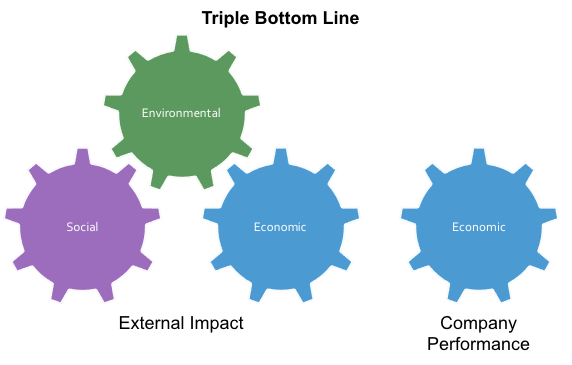
The memorable way to capture this approach is to use the phrase John Elkington coined over 25 years ago, the ‘triple bottom line’ (TBL) or as it is also named ‘people, planet, profit’.  The idea is that as well as profitability of the company there needs to be impact measurements linked to sustainability.  

The use of this phrase has gone in different directions, so I will define it specifically as to how I am thinking about it.  Given the need to integrate with the UN SDGs (Sustainable Development Goals), which is the best current consensus on the set of components required for long term sustainability of the planet, there are three areas of external impact that need attention – economic, social and environmental impact.  Clearly, also for the company to be sustainable it must focus on its profitability and growth in order to attract and retain capital. In this context then the company has two factors in the economic component (Figure 11-2).  Firstly, its own economic performance; and secondly, its external economic impact at the local, national and international levels.  

Figure 11-2

Companies now need to both align their Triple Bottom Line strategies with their key stakeholders as well as building the reporting and measurement requirements for internal use, for ESG reporting and for the needs of investor rating agencies.

These are the impact definitions that need to be considered to establish the impact measurements the company chooses to focus on.  

  • Economic: the positive and negative impact an organization has on the local, national and international economy. This includes creating employment, generating innovation, paying taxes, wealth creation and any other economic impact an organization has.
  • Social: the positive and negative impact an organization has on its most important stakeholders. These include employees, families, customers, suppliers, communities, and any other person influencing or being affected by the organization. 
  • Environmental: the positive and negative impact an organization has on its natural environment. This includes reducing its carbon footprint, usage of natural resources, toxic materials and so on, but also the active removal of waste, reforestation and restoration of natural harm done.

There is confusion on how a company should define its own situation specific impact factors.  Clearly, this is going to be affected by sector and geography as well as the specific strategy of the company, and how impact ties into the value proposition to its customers and other key stakeholders.  The concern is that companies must focus on ambitious impact targets aligned to ambitious profitability targets.  With the fuse on climate change and other critical environmental issues burning, just reporting on ESG without a deep understanding, thinking and commitment to a strategy with impact will fall far short of what is required and ultimately expected by key stakeholders.   

Setting impact factors can start with understanding the current impact of a company; however, it does not stop with just setting tighter targets within the existing strategy that require moderate changes to achieve.  From an environmental perspective, if you are depleting resources, are an energy producer, have high energy consumption, are a manufacturer or you have high volumes of waste (eg. packaging) then a major rethink of your strategy is probably needed to ambitiously reduce your environmental footprint and reposition yourself.  The broad goal would be to shift from a linear strategy of ‘take-make-waste’ towards a wasteless or circular strategy.   One of the leaders in this space who are helping drive this shift is the Ellen MacArthur Foundation (www.ellenmacarthurfoundation.org ).  

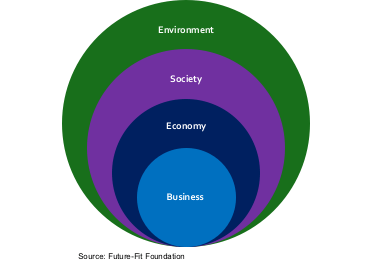
The core elements of a circular strategy, to create a circular economy, is to firstly design out waste and pollution.  Secondly, to keep products and materials in use and finally to regenerate natural systems.  From an economic and social impact view, the goal is very much about responsible management towards employees, customers, other players in the supply chain and related communities.  Considerations include anti-slavery, fair trade and work practices, providing living wages, the provision of health services, education/skills development, paying taxes (eg. not working through tax havens), and enhancing  and supporting the key communities that interact with the business.  Decisions on the impact focus, as well as profitability, also need to be tied into resilience considerations.   A strong and sustainable strategy will create alignment of the business with the economy, society and environment (Figure 11-3). 

Figure 11-3

In summary, businesses need to shift their thinking to focus on both profitability and impact.  Impact factors are defined by the UN SDGs. The specific impact targets that a business sets as its goals will be affected by the industry sector, the businesses geography and the particular strategy of the business.   Businesses need to revisit their strategies and in many cases make some fundamental changes in order to set ambitious impact targets along with their profitability ambitions.    

Categories
REBOOT Strategy

REBOOT Business Strategy

Blog 1 in Business Strategy Series

Introduction

Thoughts on an upgrade to strategy development for  performing in a sustainable world.

The wake up call has come!  Real leaders are already on the journey!

We are seeing immense upheavals across the world with Covid 19, growing levels of disruption from extreme weather events, increasing rates of technological change and threats,  great geo-political uncertainty, growing levels of public activism on the stewardship of our environment, and the real medium term implications of climate change which will be irreversible if we don’t start moving fast.

This is not a once in a hundred years, or even once in a generation, coincidence of events. This is a trend in this Anthropocene era.  These are systemic  interconnected issues that cannot be dealt with one by one.  We will be failing ourselves and future generations if we do not get on top of this.

We are not moving fast enough to deal with the cumulative effect of these changes. But, at least we are starting to move and gain momentum.  Central banks are engaged, governments are increasingly engaged, investors are also rapidly resetting their expectations of how businesses must be focused on social and environmental impact as well as driving strong investor returns.  

Businesses have not been well equipped in dealing with these unpredictable and emerging disruptions, and most businesses  still have to get there heads around how to engage and be able to perform with these changes and increasing stewardship demands by both the government, regulators and investors.

This is a view on how companies need to evolve their strategic thinking and planning, be much better equipped to perform in this changing world and be aligned with the social and environmental need for balance in our world.  As well as new thinking, this requires dramatically more purpose driven leadership, being able to manage with competing priorities, speed, agility and innovation – more on this separately.

I will be adding new content every week. These blogs will cover three core topics. Firstly, the scene setting of a quick view on the ‘Global Environment for Business’. Secondly, discussion of the ‘Key Components To Evolve Strategic Thinking’. Finally, ‘Strategic Framework For The Future’ will be a view on a practical framework for developing strategies. Each blog will cover off a piece of one of these sections and will be sent out in sequential order.