Categories
REBOOT World View

The Social Contract

“Respect for human rights is not social work; it is not merely an act of compassion. It is the first obligation of government and the source of its legitimacy”, Ronald Reagan

Kate Raworth’s diagram of the Embedded Economy (Figure 3-1), with my adaptation, is a useful framework to think systemically about the global context in which we live and critical interconnections related to our economies, societies and the environment.  This model shows the key components of the global system with the individual in the centre, surrounded by the components of the economy, which sits within a society and reside in the global ecosystem.  This is not a fully closed system as the earth is fuelled by the sun and it also dissipates heat.  There is also consumption of scarce resources by society and generation of waste that goes back into the environment.  This is the framework or macro-ecosystem that we need to get in balance to be sustainable.
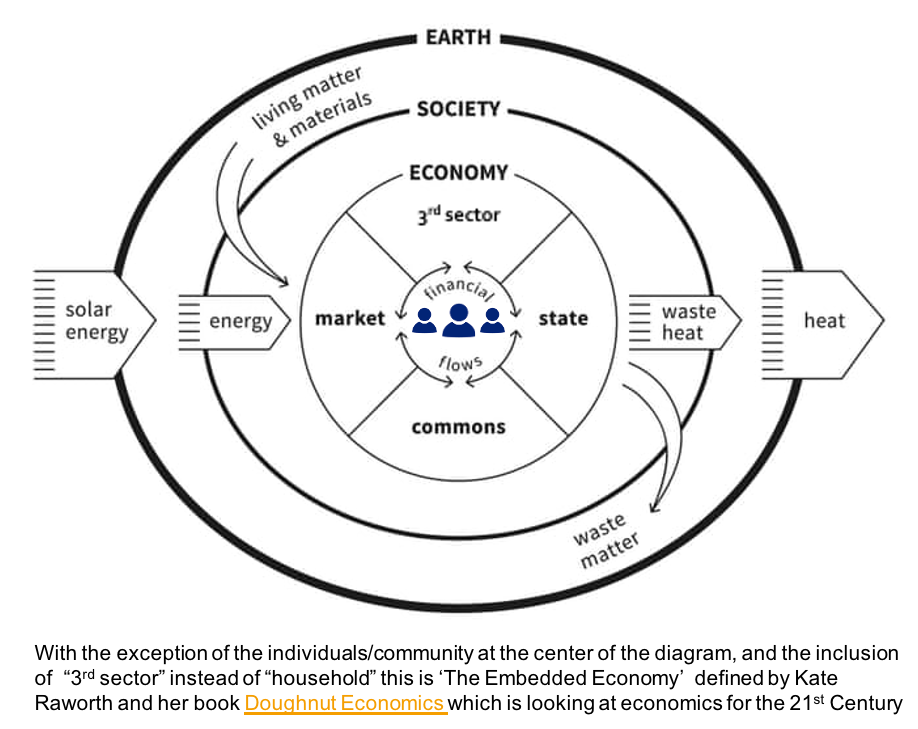
Figure 3-1

Our current system is not in balance! In this Anthropocene era, we are increasing the heat of the planet which is affecting the living world. At the same time, we have been changing land use, displacing and causing the extinction of fauna and flora, depleting finite resources and then disposing of waste matter in unecological ways. We have taken the world out of its most stable 12,000 year period, which has been the period of great human development, into an unsustainable cycle.

This model for driving sustainability does not have the state in the centre as in the case of command economies such as Russia and China with individuals as participants in a state led system.  It also does not have free markets and capitalism sit in the centre, as it does currently in the Western world with the overwhelming focus on capitalism and corporates, with the individual or citizen secondary.   This also is not a plutocracy model, which as Nobel Laureate economist Joseph Stiglitz describes America moving to a government “of the 1%, by the 1% and for the 1%”. 

You just have to look at your life to realise that society has not been properly oriented on citizens. There are occasional exceptions, such as war and the current pandemic, with generate some small rebalancing.  A perfect example of this corporate centricity is the public bailout of the financial sectors misdemeanours in the 2008 Great Recession.

This lack of primary focus on the individual is apparent in a myriad of ways.  The unequal delivery of public services such as health and education to individuals. The reduction of services levels, or raising of prices, when public services are outsourced. The use of public funds to bail out failing corporates and financial institutions. The inadequacy of financial and legal consequences for currency manipulation, interest rate manipulation and mis-selling by financial institutions. The weak governmental response to pollution and environmental damage. The declining levels of personal privacy.

The primacy of the corporation over the individual also manifests itself in what appears to be small ways; but, are cumulatively substantial. We have virtually no control over our personal information on the web. We are served terms by websites in order to use them that are unintelligible, onerous and leave us no choice but to accept.    We see subscriptions from companies that cause term based commitments; yet, companies are able to change their terms of the contract throughout the period.  With regulated companies, such as telecoms, we see that it easy to sign up to new services on the web, yet it is incredibly difficult to cancel services and it needs to be done through their understaffed call centers. And the list goes on.  

Proper protections for consumers would not allow this corporate behaviour, and it would provide material enough penalties to the corporates that they would not repeat offend.  The only way to create a sustainable model is to focus how we operate to be citizen centric and not corporate or government centric.

Individuals are consumers, employees, voters, environmental stakeholders and members of communities.  If we are to build a better model of how we operate then we need to define what the social contract that societies should be striving to provide.  This provides the moral compass for where we are trying to get to.  The other components in the society, in particular the state, the market economy and the financial markets need to be aligned and incentivised to deliver against this target social contract.

The target social contract is the “North Star”, it defines that the individual consents to surrender some of their freedoms, participate in and abide by the rules of the society and submit to the authority (in the case of a democracy to the decision of a majority) in exchange for the protection of their remaining rights, personal safety and security, maintenance of social order, access to employment to earn income, and provision and access to public services.  The social contract that I am referring to is the set of expectations that a member of a society should be able to have that is consistent with building a strong, fair and sustainable society for future generations.  

The rights of an individual start with the UN Declaration of Human Rights that was signed in 1948 and was adopted by a vote of 48 in favour, 0 against and 8 abstentions.  Today there are 193 member states of the UN, all of whom have signed on in agreement with the Universal Declaration of Human Rights (UDHR)  by signing at least one of the nine binding treaties influenced by the Declaration, with the vast majority ratifying four or more.  Currently, 79 of the countries have independent National Human Rights Institutions that comply with International Standards.

The rights include 30 basic human rights. The foundation of the Declaration are the principles of dignity, liberty, equality and brotherhood.  Sitting on these principles are the rights of individuals; the rights of the individual in civil and political society; spiritual, public and political freedoms, and social, economic and cultural rights.  

The 17 UN Sustainable Development Goals (SDGs), see Figure 3-2, take these concepts of human rights and add further specificity.  Over 90 percent of the goals and targets of the SDGs correspond to human rights obligations.  These SDGs defined in 2015 and agreed by over 190 countries, have an agenda and targets set for 2030.
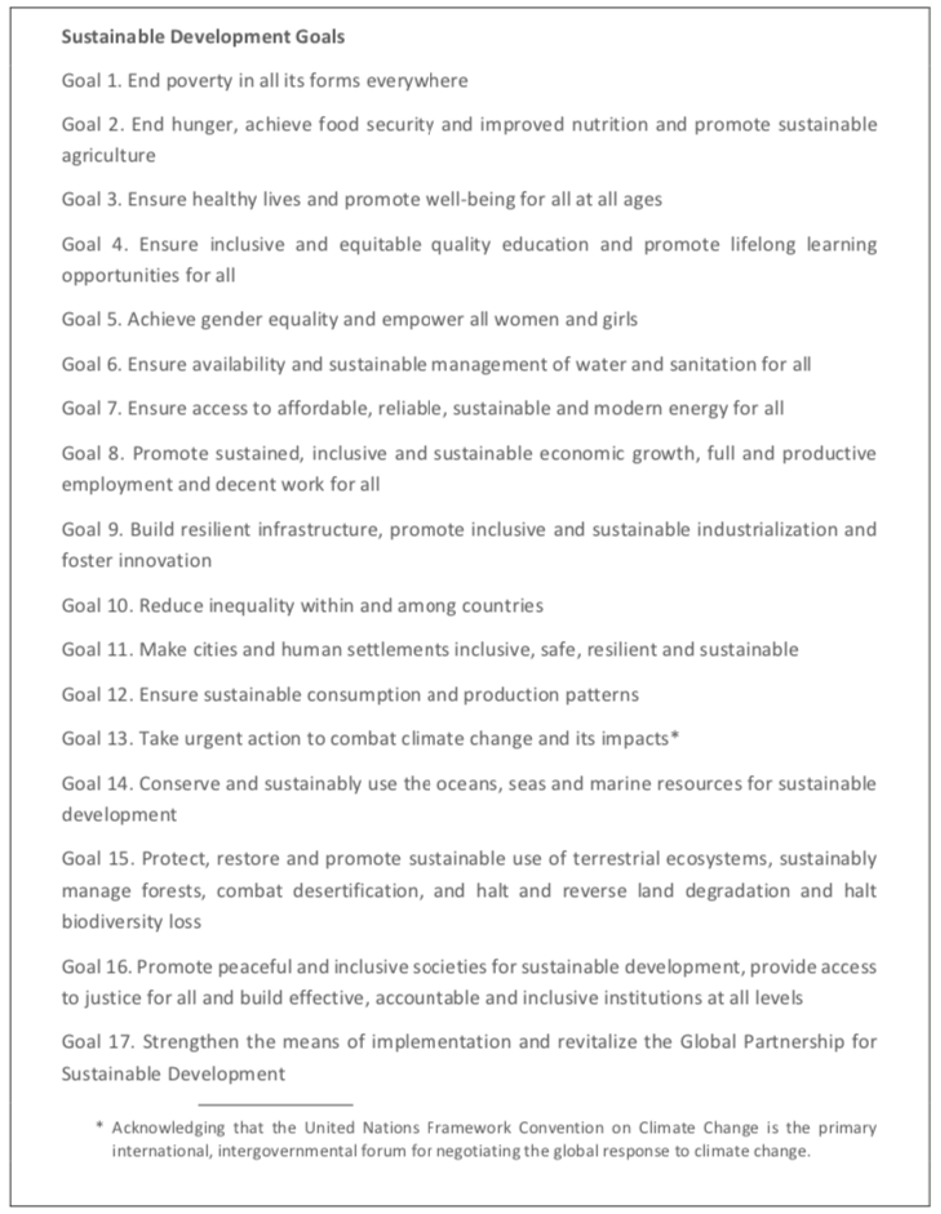
Figure 3-2

It is important to note that across many of the SDGs is the key phrase “for all”.  This is a big shift in thinking on what is expected from a society and how the thinking behind the delivery of services is changing.  The shift has been from average and median thinking to heterogeneous thinking and focus on the importance of inclusivity, or the elimination of exclusion, and overall fairness.  A. Philip Randolph captured this when he said, “A community is democratic only when the humblest and weakest person can enjoy the high civil, economic, and social rights that the biggest and most powerful possess”. It is the focus on ensuring that the world we live in is less plutocratic.

Inclusivity and fairness thinking is not socialist thinking and does not exclude wide ranges of income between people.  It does contemplate that everyone has some minimal rights and a right to fair treatment.  SDG’s are not the enemy of capitalism; rather they are foundations of compassionate and responsible capitalism which in the medium and longterm will be dramatically more sustainable than short term zero-sum-gain thinking.  As I showed in my previous blog, the most prosperous countries are also the most well balanced.  Fair compensation, high levels of employment, good health, education and strong social security have multiplier effects on the prosperity of a society.  

The Cambridge Institute for Sustainable Leadership, has linked the SDGs into three broad social ambitions and three environmental ambitions (Figure 3-3).  These social ambitions revolve around basic needs, decent work and wellbeing.  
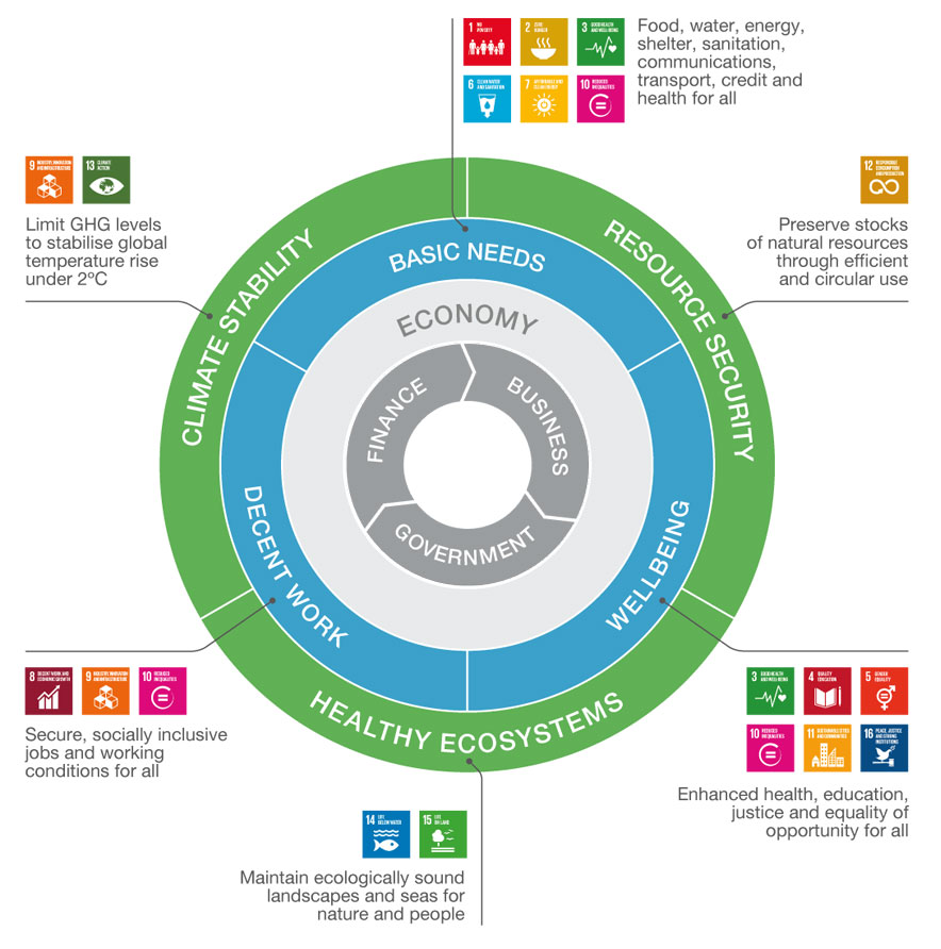
Figure 3-3

These three needs are vital components of the target social contract; but, there are also additional components required. The pervasive digital gathering and use of data attacks privacy. This capability combined with the proliferation of communications and the ability to personalise and deliver fake news to mislead, misinform and misdirect behaviour is a real societal problem. These real and tangible issues relate to Articles 12 and 19 defined in the 1948 Declaration of Human Rights (Figure 3-4). 
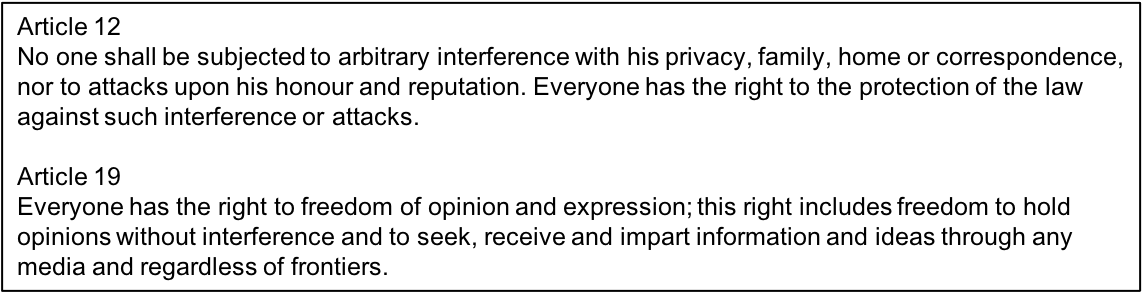
Figure 3-4

At the time these were written it would not have been possible to predict the impact of technology.  As I noted in my first blog of this series, even now it is almost unfathomable how much data on each person is being gathered and how it is being used.  This along with the personalised delivery of communications which can be either true or fake news is creating real cracks in societies.  The 2016 and 2020 US presidential elections have provided a real magnification of what can happen.  How can a country become so polarised and how can 70% of the Republican voters truly believe there has been massive fraud no matter what the courts say or even what the people who have managed the elections say?  The answer is that the information they watch, read and have been fed is different.  In democratic countries with only mass media, it used to be that the truth would rise to the top and there would be a common set of information.  In most countries, there were also rules on the accuracy and balance of information that was provided to voters to help them make their decisions. False information was filtered out by reputable media and there were rules on the truth of advertising messages.  Social media has bypassed this with the ability to push personalised communications that can be either true or fake, and algorithms that reinforce the personalised messages, so there is no longer a common set of facts that all people will see.  Is it possible to maintain an effective and stable democracy without a common set of information and facts from which citizens cast their votes?

There is also a fundamental bias of information driven by both mass media and social media.  We are increasingly seeing that the public view of what is happening in the world is severely distorted from reality.  Figure 3-5 illustrates this distortion perfectly.  If this is the case on a subject such as causes of death, imagine the levels of distortion of reality of other relevant topics to the individual.  If we believe that transparency, data and facts, and truth is paramount to the individual who is a consumer, an employee, a voter and a member of a society, then this is a fundamental social contract issue that must be solved.  

Figure 3-5 

Inevitably the ability to increasingly personalise can be both positive and negative.  Providing more relevant information or advertising more relevant products and services for consumption can have real value to the individual.  However, having information on race, gender, sexual orientation, disability, health, income, etc. can also allow for discriminatory behaviour and pricing for exclusion or to take advantage of an individuals circumstances.  With increasing use of AI, which relies on historical data this can help to reinforce old practices.  We have seen an example of this in 2018 when Amazon was innocently trying to make their recruitment more efficient and found that because of historical data they continued to reinforce gender bias.  The more disturbing use of data is when it provides a company asymmetric knowledge vs. the consumer and they then exploit this opportunity.  Asymmetry of knowledge and power has been an age old problem with financial and pharmaceutical companies exploiting their situation making customer the big losers.  This problem now has arguably crossed the line with how social media companies and other tech giants exploit consumers and their data to enhance their business and keep out competition.  The collection of data is continuing to gather steam and will explode further with the penetration of IoT based devices and the growing levels of information from biotech and neurotech applications.  Privacy control must be one of the fundamental rights of an individual going forward.  

We are seeing the progressive escalation of concern on the power of the large tech companies, in particular the GAFA group – Google, Apple, Facebook and Amazon – with respect to both privacy, anti-trust and misinformation.  The GAFA have between them faced anti-trust challenges and investigations in multiple regions including the US, EU (including individual countries within the EU), India, Canada, Australia, and Japan. Even though fines have been in the billions of dollars this is pocket change for these companies.  The focus on getting the tech giants under control will only escalate. 

Meanwhile some progress has been made with the GDPR (General Data Protection Regulations) that went into effect in May 2018 in the EU and is helping to set the standards that other countries will move towards. The GDPR regulations do have some privacy related rights related to data deletion, previously known as “the right to be forgotten”; but, this is incomplete.  This may be a big step for corporations; but, it is only a small step from an individual’s perspective on rights to privacy.  

So, to conclude there are five categories of components of a social contract to create an individual and citizen centric society that can thrive and prosper going forward.  As identified above by the SDGs and CISL, there are the three requirements of basic needs, well-being and decent work. The basic needs involve minimum levels of availability and access to food, water, shelter, energy, sanitation, communications, credit and transport for all.  It is vital to note that availability and access also included fair pricing.  In terms of wellbeing, there is affordable healthcare and education, and equal access to justice, safety and security.  Healthcare needs to be comprehensive and should not result in gaps as big as 10 years expected length of life differences at birth depending on which side of the street you were born.  The nature of access to education, is about narrowing the gap to affordable and high quality education to provide life and mobility opportunities.  This education includes K to 12, University and apprentice/applied educational programs and reskilling. The third requirement is decent work.  Decent work comprises living wages, social security programs to assist in managing through out different work situations, being disabled and pension arrangements.  Access to ongoing education to provide mobility will be increasingly important as the fourth industrial revolution, particularly with respect to AI and robotics, becomes increasingly pervasive.  

Wrapping these three requirements is the fourth component, which is the right to be living in a climate and environmentally sustainable environment.   The climate and environmental challenges are both global and local issues.  Due to the climate urgency and the potential implications of missing the Paris Climate Agreement target of not more than 2 degrees Celsius increase in average temperature, overall this is the most important component of the social contract.  We know we are tracking to hit over a 3 degree increase in temperature.  This has critical consequences for different countries including liveability, the local economy, access to food and water, and massive inter-country issues such as environmental refugees. Environmental refugees are also inevitably linked into both economic and political refugees.  The refugees crisis can only increase from its current estimated level of 80 million of which 46 million are internally displaced people according to UNHCR.  Predictions of 200m or more climate migrants by 2050 are not uncommon.  The ripple effects of this should not be underestimated in terms of human cost, economic cost, rising populism and societal destabilisation. 

The fifth component comprises the core human rights of privacy, access to facts and the truth, and the interlinked rights of freedom of information and freedom of speech. At the heart of privacy is personal control over all the personal information that is gathered, generated and used in the public arena of the internet and other networks of information.  Collective access to data, information and the truth has to be essential.  This means that fake news needs to be clearly identified, be managed in its distribution, and restricted in critical areas such as advertising and the social media push of content.  Social interaction and discourse needs to have common ground based on truth for societies to operate effectively.  Finally, freedom of access to information and freedom of speech is fundamental.  The debate around this is rightly growing and becoming increasingly complex with developing factors such as the growth of ‘fake news’,  the social media driven and algorithmic based delivery of content, the emerging “cancel culture”, and the growing voice of a full range of minority interests.  

Being definitive on the requirements of each of the components of a “North Star’ social contract is complex; but, excusing ourselves and not progressing on them is irresponsible.  Each country will need to define their specifics behind a common set of principles for all countries. The vital thing is that we become individual and inclusive centric to how we ‘reboot’ to create more sustainable societies and a more sustainable collective world.  

At the heart, the social contract is about solving inclusivity and fairness, which is the solution to the problem of inequality. We can see the urgency to address the growing issue of inequality in many countries. Yet in context, Branko Milanovic, an expert on global inequality, assesses that about 80% of inequality is across countries as opposed to within countries (Branko Milanovic, “Global Inequality – A New Approach For The Age of Globalisation”). Solving multi-lateral problems is exponentially more complex than country problems. I will explore this and inequality in more detail in later blogs.

In my next blog, I will looking in more detail at the role of the government in a democratic society.

#social contract #climate change #global warming #Universal Declaration of Human Rights #inequality #inclusivity #fairness #privacy #digital trust #cyber #mass manipulation #truth #Global Inequality #SDGs #Sustainable Development Goals #Paris Climate Agreement #UNHCR #UDHR #refugees @Kate Raworth @ Joseph Stiglitz @Branko Milanovic @CISL @Google @Apple @Facebook @Amazon
Categories
REBOOT World View

Successful Societies

“It is not the strongest species that survive, nor the most intelligent, 
but the most responsive to change”, Charles Darwin

To address the three challenges, that I identified in the last blog – decarbonisation and biodiversity regeneration, inclusivity and fairness, digital privacy and collective truth – it is worth understanding where we are starting from.  Looking at the components of successful countries and societies is a good place to start.  Most comparisons of countries are focused on GDP per capita, the growth of GDP per capita, and the unemployment rate.  I think we all know that there is much more to life and a society than just these factors.  Income is important but there is also health, education, happiness, safety, freedom, fulfilment and purpose.

Lyndon B. Johnson said, ”The Great Society is a place where every child can find knowledge to enrich his mind and to enlarge his talent…  It is a place where the city of man serves not only the needs of the body and the demands of commerce but the desire for beauty and the hunger for community…It is a place where men are more concerned with the quality of goals than the quantity of their goods”.  The language may not be gender appropriate for today, but the idea of what makes a society is captured. 

Yet, as we sit here and watch what is happening around us we know it is even deeper than this.  It is the ability of someone being able to go to church or to teach a class and not have any risk of being attacked. It is the ability of someone of BAME origin or any gender to have equal respect, equal opportunity and equal justice. It is the ability of a young woman to be able to travel unintimidated on public transport late at night.  It is the feeling that you are safe at home and that your job is secure even though you may different political views.  It is not just freedom of thought but also freedom of speech.  

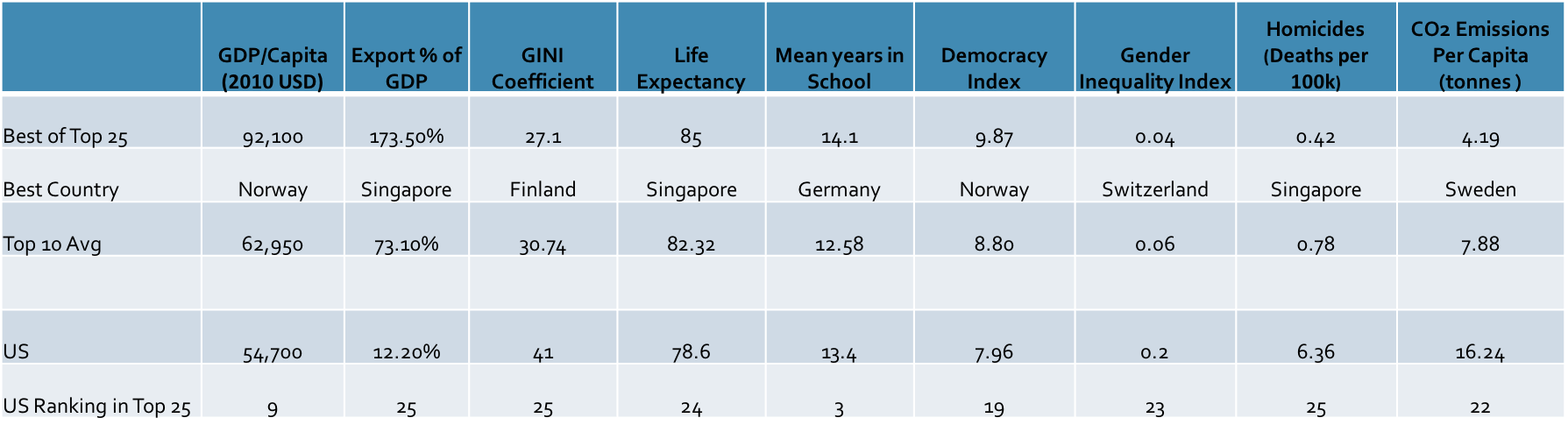
In my analysis, I tried to look at successful countries and societies based on a simple composite ranking across a set of factors including GDP/Capita, Exports as a % of GDP, GINI coefficient, life expectancy, mean years in school, democracy index, gender inequality, homicides, and CO2 emissions per capita. On a GDP per Capita basis, the USA is 9th; and surprisingly, from a composite rank perspective, 25th out of the top 25 countries with the highest GDP per Capita (populations over 4 million people).  This jars with the American narrative we have been fed over generations; although perhaps not, when we watch with amazement the reducing presence of America globally, the polarisation of the country and its massive decline in global respect, especially in the last four years.  More specifically, this is reflected by America’s withdrawal from the Paris Climate Agreement and the World Health Organisation, the levels of social division, the growing gap between the haves and the have nots, the implicit caste system that still to some extent exists, the rapid rise of the public buying of arms and munitions through fears for their own safety and the conduct of the US Presidential Election.  Xi Jinping, Putin, Erdogan et al. are salivating as they watch the main symbol of democracy and prosperity in disarray and broadcasted around the world.  

The common thread across the top 25 countries in GDP per Capita is that they all have market economies and 23 of the 25 (excluding UAE and Kuwait) have democratic forms of government.  It is also worth noting that looking across other countries, there are no strong and progressively developing economies that don’t have market economies.

The top 10 countries (Switzerland, Norway, Sweden, Denmark, Ireland, Netherlands, Singapore, Austria, Finland and Germany) based on the composite ranking outperform as a result of having a much more balanced society.  As well as a high GDP, they have less inequality and higher levels of upward mobility, a higher life expectancy, a more educated population, a more effective democracy, better gender equality, lower homicide rates and are more environmentally friendly.  I would argue that these countries have been able to create an overall better balance between the role of the market economy and the state, and how they together contribute to the well being of their citizens.  

These top 10 countries also outperform across all measures (except CO2 emissions) vs. groups of upper middle income, lower middle income, and low income countries.  It should be no shock that these dimensions are all intertwined to create more prosperous and sustainable societies.

Definitions
Developed countries – Top 10 overall ranking – Switzerland, Norway, Sweden, Denmark, Ireland, Netherlands, Singapore, Austria, Finland, Denmark
Upper Middle Income – Selection of 5 countries – China, Turkey, Brazil, Botswana, Colombia
Lower Middle Income  – Selection of 5 countries – India, Indonesia, Nigeria, Egypt, Ghana
Low Income – Kenya, Bangladesh, Tajikistan, Rwanda, Ethiopia
Note: The data is based on simple averages across the countries

If you look at government spend as a percent of GDP across the country groupings in Figure 2-2, small government involvement in the economy is not a characteristic of advanced economies. More advanced economies do have higher rates of taxation and larger investments in the delivery of public services than less developed countries. Looking across the most advanced economies, there is no apparent clear model of the optimal involvement of a government.  Most of us intuitively believe that a well functioning market economy should create more opportunities, innovate faster, grow more quickly and therefore have more potential to create a better society across a range of dimensions. Perhaps less intuitive, is that strong delivery of public services and the creation of a well balanced society also appears to be an important contributor to economic performance.

So, what is the role of the government to help create a well functioning society.  Lee Kwan Yew, Prime Minister of Singapore from 1959 to 1990, stated, “the ultimate test of the value of a political system is whether that society establish conditions that improve the standard of living for the majority of its people.”  He always stated that the proof is in the pudding; rising incomes for the broad middle class, health, security and economic opportunity.  Today, I would argue that there should also be a concept of ‘no one left behind’ and an opportunity for all; which would be encapsulated by ensuring that there aren’t rising levels of inequality and there are increasing levels of mobility within a society.  In addition, most people would also add responsibility to ensure that society operates in a climate and environmentally sustainable way.  

Arguably the primary fuel behind the growth of the standards of living has been the development of market economies and the driving force of capitalism.  The personal rewards of taking risks and succeeding and of hard work has accelerated progress and built strong economic foundations to many economies. 

Yet, capitalism without frameworks has never worked sustainably.  Unstructured accumulation of wealth and power leads to self destruction of a free market economy, exploitation of the masses, environmental damage, and inevitably social instability.  Since the 19th century, combinations of legislation, regulations, other frameworks and tax policy have been required to manage against the creation of monopolistic powers and the retention of competitive market sectors. Legislation has been required to deal with slave and child labour and to institute the concept of minimum wages.  Rules and requlations have had to be put in place to deal with city air pollution, water pollution, land waste, environmental destruction, the erosion of the ozone layer.  Extensive regulations have also had to be put in place to control financial markets.  Finally, consumer protection has required regulations and legislation for food and drug safety, minimum product warranties, mis-selling and misuse of personal information.  

So, let’s not kid ourselves that unbridled capitalism is in a societies interest.  The real question is – what is the right combination of the freedoms of a market economy and the participation of the government.   A lighter touch is always ideally preferred; however,  in most countries we are still a long way from having the right balance.  To move in the right direction and prioritise actions it is vital that there is clarity on what the social contract is within a society.  Societies are complex systems and there are no simple solutions.  Any individual initiative by either the market economy, the government or the public will inevitably have trade-offs and shortcomings.  The UN Sustainable Development Goals illustrate this complexity in living colour with 17 areas of focus and 169 subsidiary goals!  

Looking at the most successful societies gives us insights into what they have done and where they have been successful in creating their broad based societal success.  R. James Breiding’s book “Too Small To Fail” which focused on the innovative approach of smaller successful countries provides a number of good examples.  Examples include Finland’s transformation of their education system, Singapore’s low cost-high quality inclusive healthcare system, Denmark’s leadership in renewable energy, Israel’s building of a Silicon Valley style ecosystem, and the Nordic story on leading in gender balance. These are best practice examples that give guidance on better ways to move forward.  The challenge is to move towards these best practices globally and then well beyond.  

The three challenges are steeped in the historic practices of our take-make-waste culture, the singular focus on the maximisation of short term profitability and minimally regulated use of technology and data at the expense of the citizen.  Each country sits in a different place on the continuum of progress to solving these issues locally. But we should not forget that all three challenges need to be solved also at the global level.  Isolated examples of progress against climate will not solve this existential crisis! The context for progress is also now different.  There is urgency. There is a recognised need for a unified approach to tackling these issues. There must be an accelerated development and adoption of critical technologies.  And, there is a need, and a demand from the public, for a fundamentally more purpose driven, values driven and sustainability focused approach to how we live and how our societies operate. 

In the next blog, I want to talk about a framework for solving these issues and the social contract. 

#climate change #global warming #decarbonisation #biodiversity #species extinction #regeneration #rewilding #carbon sequestration #inequality #inclusivity #fairness #privacy #digital trust #cyber #mass manipulation #truth #social contract #Too Small To Fail @James Breiding #Sustainable Development Goals #SDGs #Paris Climate Agreement #WHO #take make waste

Categories
REBOOT World View

The Three Challenges

We have a choice!  Kneel before and be conquered or rise 
above and turn the challenges into opportunities.

In this third series of blogs, I will be exploring the three big global challenges that we need to address and the role and needs of the individual, the market economy and the state to solve them to move towards a resilient and sustainable world.  

As a backdrop to this, and with the most serious threat of climate change to achieve resilience and sustainability, we should see ourselves not as inheritors of the earth from previous generations rather as borrowers from future generations. Our burning platform is the threat to the lives of our children, our grandchildren and future generations. 

Overall you can look at where we are from two perspectives.  If you were a pessimist, you would say that even excluding what is happen to our climate and CO2 emissions our situation is disastrous. We have about 1 billion people in extreme poverty, of which most are in sub-Saharan Africa, and income and wealth inequality is growing not shrinking.  We have an exploding population that started at under 1bn people in 1800 that has reached 7.8bn today and could be as high as 11 bn by 2100.  The child mortality rate for children up to 5 years old is as high as 12% in some countries.  The life expectancy rate in Africa is about 63 years old which is dramatically below the top countries where the expectancy is over 80 years old.  About 13% of our population are illiterate, over 250 million children are out of school and learning outcomes are much lower in countries with low levels of GDP per capita.  The level of pollution and waste is continuously growing. We have been over exploiting our resources – energy and minerals.  We continue to destroy key forests especially in the Amazon for beef and soy, and in Indonesia for palm oil.  People are working too hard.  We have too many wars and too much terrorism. There is a large gender gap and real issues of racism.   And the list goes on.  

The optimist would say, yes but.  Yes, there are lot of challenges in the world; but, on almost every dimension we have made significant progress and therefore we should be confident that we can solve the issues that lie in front of us.  Despite population being 8 times larger now vs. in 1800, world GDP has grown by about 100 times.  In that same period, life expectancy has increased from about 30 years to over 80 years in many countries.  The share of population in extreme poverty has dropped from about 90% in 1820 to 44% in 1980 and is now below 10%.  The average work week was over 60 hours in the late 1800s and is now below 40 hours.  In terms of education, in 1800 about 87% of the global population were illiterate, in 1980 it was 30% and now it is only 13% of the population. School enrolment and attendance is improving every year, as well as mean years of schooling and learning outcomes. Our death rates from pollution, disease and homicides are all dropping.  Our farming yields in grain production have allowed us to cover all the needs of a growing higher income population without needing additional land since the 1960s.  We have been successfully covering off our increased consumption of fish since the 1990’s with fish farming. Our shift in use of energy use from wood to coal, to oil, to natural gas, to nuclear and now to clean energy sources has helped reduce our pollution rates per kilowatt hour.  Just since 2010, solar energy generation has increased twentyfold with wind energy generation tripling.  With technology and asset sharing we are dematerialising our spend.  Our levels of gender bias are reducing. Almost everywhere people’s lives overall are improving.  The optimist would summarise this by saying on virtually every part of our life there is a clear long term learning curve of progress and there is no reason for this to not continue. 

Although the positions look diametrically opposite giving us a perspective of two different worlds, both sets of facts are true.  It is all about which lens you look through at the world.  We have made significant progress however there is still a lot of work to do to make the world a better place.  Solving these issues is not just a matter of economics and technology.  Its complexity is like creating a beautiful symphony, it requires getting a lot of different musicians to play their instruments in an orchestrated way.  The musicians in this symphony, or actors in this play, are us as individuals, the market economy, the state and the third sector.  We should remember as individuals we are consumers, we are participants in the different sectors and if activated we are voters that drive our political systems explicitly or implicitly.  

No matter which lens’ you look at our situation, there are three big challenges in a peaceful world that need to be significantly progressed to continue our slow climb towards a better place – Shangri-la. If we don’t address them with the right urgency we could be on the slippery slope to an inferno.  We are at an inflection point!

I think of myself as an activated optimist. We can solve the problems in front of us if we have the will and commitment, because we do have the wherewithal.  To a large extent we already have all the knowledge and capabilities we need; and, for the areas we don’t the technologies and solutions are in sight.  Sitting back and naively expecting these challenges to be solved and with the right urgency is irresponsible.  Taking the view that these challenges are all someone else’s problem and they will solve it, is misconceived.  Everyone can contribute at a minimum by being more thoughtful in their consumption of food and energy, generation of waste and participation in recycling programs, and involvement in their community and society.  

So, what are the challenges.  Firstly, and with urgency, global warming and collapsing biodiversity.  These are two highly interconnected issues and effectively part of the same family of challenges.  Global warming is well documented and confirmed to be largely human driven by virtually all scientists.  It can be measured in terms of CO2 parts per million (including equivalents for GHG gases such as methane) and the short term impact can be felt in terms of average increase in temperature vs. the industrial average temperatures and the level of weather extremes.  We are now sitting at CO2 levels of about 415 ppm (part per million), with the world having fluctuated between 150 ppm and 300 ppm for over a million years.  Also, up to early 20th century we have been in a unique 12,000 year period of climate stability – seasons, weather and temperature predictability – that has provided optimal conditions for the human race to spread around the world and develop.  Slowing down climate warming also helps to significantly reduce the release of C02 and other GHGs from what will occur from melting ice, melting permafrost and warming oceans.  The land, oceans, and ice are large carbon and methane sinks that hold multiples more of these gases than currently exist in our air.  

Biodiversity comprises the genetic, species and ecosystem diversity that has developed and helped created this stable environment.  It is also what has created the environment for effective carbon sequestration in the land and sea.  We are now running at an unprecedented loss rate of flora and fauna which is affecting our food supply, carbon sequestration and environmental stability.  The current rate of diversity loss is estimated to be 100 to 1000 times the naturally occurring extinction rate.  David Attenborough effectively describes this in his latest book and documentary, “A Life on Our Planet”.  The solutions include shifting to regenerative farming, regenerating fishing stocks in the seas, and rewilding land and seas. 

The second challenge is inequality.  Inequality manifests itself at one level in terms of the extremes in distribution of income and wealth, and the shortfall in the basic necessities of life – food, shelter, clothing, health and education.  However, it also is reflected in freedoms, our access to opportunities, and our rights to safety, security and equal justice.  Unfortunately, the absolute levels of inequality are significant both within and across most countries and continue to persist.  It is no wonder that there appears to be rising social unrest across many countries, LGBTQ+ and BLM movements and many other areas of social concern. Clearly, our market economies and governments have not been effectively addressing these issues.  A focus on these issues and adjustments to how governments and market economies operate can solve this situation. There is global consensus that this is a critical issue that must now be solved.  

The third challenge is digital trust and mass manipulation.  At its base level, this is about privacy and the need for enlightenment and truth in a society.  These components are key drivers of freedom, transparency and trust.  For a period now we have seen increasing levels of theft of private information, expansive monitoring and surveillance (accelerated during this pandemic), rising populism and increasing distrust of governments.  We just have to look at the US elections, and other recent elections, to see evidence of this.  

The digital world has provided us with some amazing levels of progress and benefits; but, unfortunately it can have a dark side.  This includes the program to monitor, manipulate and control the Uighurs in China and the building of their overall digital social credit system.  The Western world has a somewhat equivalent system that gathers all forms of data to make credit evaluations of individuals; good and bad behaviours are judged on risk, reliability and trustworthiness of individuals with respect to financial transactions.  The dark side also includes the targeted delivery of fake news to drive votes in democratic elections as is shown in the movie ‘The Great Hack’ describing the use of social media in the US 2016 election and the Brexit vote, among others.  A growing number of countries have tech ops groups to drive misinformation and manipulate election outcomes among other clandestine objectives. The targeting and selection of news/fake news comes from intimate analysis of people’s use of social media.  The ease with which you can micro target the delivery of real or fake information through social media to shift people’s thinking and behaviour is growing.  The fragmentation of truth, the growth of conspiracy theories, a missing common base of facts and increasing levels of misinformation for a population will cause growing problems.  Democracy has been an essential component of social progress across the world and needs to be protected.  The value of democracy has not been helped by the shambolic display of US 2020 presidential election; thankfully, it appears that is has held up this time.   As well as an economic recession we now appear to be in a democratic recession with rising populism and the growth in power of China; 

Extensive problems are caused by  the social media companies (Facebook, Twitter, Instagram, etc.) which are driven by their advertising business models which are fed by building addictive dopamine generating behaviour for billions of users.  Their success is based on gathering every conceivable piece of information about you and combining it with AI to serve you content and create the desired outcomes/behaviour shifts that provides a return to their clients for the money they spend on the social media site.  You are the product and the information they have on you includes – every piece of content you generate, every piece of content you look at and for how long, the web of friends and people you interact with, likes, follows, comments, reactions to content you look at and is served up to you, every website you visit, all the times you are on each site, GPS coordinates, etc., etc., etc.  At the same time, there is very little control and no direct responsibility for the content they serve you, which may also be content from foreign trolls and bots, conspiracy and extremist groups, and false advertising.  The implications on the individual of social media addiction, misinformation, distortion of the real world, breach of personal privacy and freedom is significant and the accumulation of this across whole societies is extremely concerning.  

These challenges can be translated into the need to focus on three things.  Firstly, decarbonisation and biodiversity regeneration.  Secondly, inclusivity and fairness. Finally, digital privacy and collective truth.  The first two challenges are well covered off by the UN Sustainable Development Goals (SDGs).  The third challenge is recognised and looked upon with increasing concern around the world and is highlighted by the World Economic Forum as one of the key risk factors we are facing.

There are three critical issues to solve in addressing these challenges.  Firstly, ensuring there is clarity on the potential solutions for each of the challenges.  This concerns having clear solutions that will drive us to address the challenges within the required timeframes.  Inevitably, this will be a combination of existing solutions that are already in place but not pervasive enough; existing technologies that are proven but only in early stages of rollout and need to cycle through further generations of development to increase their effectiveness and drive down their cost position; and, emerging technologies and applications that are in sight to be available within the next 10 years or so. 

Secondly, to be clear on roles of the individual, the market economy, the state, and the 3rd sector to drive the implementation of solutions.  This is very much about finding the right approach that does not disrupt the ongoing innovation and development that has progressed us to where we are today.  Probably, the most critical issue is to find the right balance between the role of the state and the reliance on the market economy and capitalism.  Within the state there are the supra-national activities and then the roles of the government at the state, regional and local levels.  Within the market economy, investors, asset managers, and corporate boards and executives all have vital roles. And, there is also an important role of the individual as a member of the public, a consumer, a worker/contributor, and a voter who has a stake in the outcomes.  Finally, there is also the 3rd sector which includes charities, voluntary and community organisations, social enterprises and cooperatives, advocacy groups, think tanks, private research institutes and large philanthropic organisations.  We are seeing a growing role of philanthropic groups, such as the Gates Foundation, that are focused on large global problems including health, education, poverty and now climate change. 

Thirdly, implementing the incentives and checks and balances to ensure progress is being made to time.  The most critical challenge in this regard is to maintain a focus on the actions and time frames agreed in the 2015 Paris Climate Agreement which is to try to keep climate warming below 2 degrees centigrade and targeting 1.5 degrees.  We are already well behind the goal as we are currently trending towards a 3+ degree Celsius outcome, so there is a lot of work to get back on track.  These incentives, checks and balances need to be keeping the pressure on each set of participants to meet their responsibilities, solve how to make adjustments, and have back-ups to shortfalls. 

I think we have a pretty good idea of what we could do for ‘Decarbonisation and Biodiversity Regeneration’ and ‘Inclusivity and Fairness’.  The challenges have been understood, potential solutions have been identified and quantified, and the goals have been set within the 17 UN SDG’s and the Paris Climate Agreement.  What is missing is a well thought through program accompanied by the commitment, mobilisation, resourcing, incentivisation and monitoring that is required to ensure we meet the goals within the timeframes identified. 

‘Digital Privacy and Collective Truth’ perhaps sits as a different type of problem given that is likely viewed more at a national level and within the purview of each country’s political system; yet, it sits within the global scope of the internet and the global footprint of the large social media companies.  Privacy and the need for facts and truth are a human right, they are also vital for the effective long term development of a society; however, cyber and all its manifestations are also seen as a new form of, cross border and internal, warfare and mass manipulation.

I will be exploring in more depth, these three challenges – decarbonisation and biodiversity regeneration, inclusivity and fairness, digital privacy and collective truth – along with the roles of the individual, the market economy and the state in subsequent blogs. 

#climate change #global warming #decarbonisation #biodiversity #species extinction #regeneration #rewilding #carbon sequestration #regeneration #rewilding #inequality #inclusivity #fairness #privacy #digital trust #cyber #mass manipulation #truth @David Attenborough @Gates Foundation @Bill Gates
