Categories
REBOOT World View

Urgency and Alignment

“If we are to have peace on earth, our loyalties must become ecumenical rather than sectional.  Our loyalties must transcend our race, our tribe, our class, and our nation; and this means we must develop a world perspective.” Martin Luther King Jr.

Hans Rosling said how can you solve major challenges if you don’t understand the facts.  He was a Professor of International Health at the Karolinska Institute and Founder and Chairman of Gapminder Foundation.  As a well known and influential speaker on global issues, he used to systematically ask 10 questions to his audience about the state of the world.  To his dismay he found that no matter the intelligence of his audience their true understanding of the world fell well short of being even adequate.  In fact, their overall scores were worse than what a chimpanzee would score with random picks.  His final book, “Factfulness – Ten reasons we are wrong about the world – and why things are better than you think”, dealt specifically with this issue. He was on a mission to save people from their preconceived ideas.  

This is the tenth and last blog of this World View series.  This series came about as I felt that it was vital to be up to date with the current state of the world across a number of dimensions and develop an integrated world view of where we are and where need to be going.  This series was the result of over 18 months of extensive research across a broad range of subjects learning from the works of Nobel prize winners, professors, researchers and well respected individuals.  It also involved analysing different databases, reading research and using the power of the web to capture information, understanding and alternative perspectives.  I have tried to look at our world in an integrated way and explore a range of perspectives and not just confirm cognitive biases I already had.  It is safe to say that my view of where we are and what we need to do going forward at the global level is different from my initial thoughts.  What is unchanged is that I remain optimistic. To be an effective leader going forward I believe having a grounded world view is essential. Building successful sustainable businesses cannot be done in isolation anymore.  

In the first blog, I laid out what I thought were the three big global challenges that needed to be addressed.  Although being more tightly defined, not surprisingly they were consistent with the UN Sustainable Development Goals and the World Economic Forum Global Risk Report.  The three challenges as I defined them were:

  • Decarbonisation and Biodiversity Regeneration
  • Inclusivity and Fairness
  • Digital Privacy and Collective Truth

In the second blog, I analysed the components of successful societies.  The third blog, set the scene for thinking about the challenges going forward in the context of what should be the social contract for citizens of a society.  The next three blogs covered off different aspects of delivering against the social contract – democracy and the role of government, the market economy and capitalism, and the nine waves of technology innovation.  Blogs 7 to 9 each explored in more detail one of the three challenges, including thoughts on how to solve them.  

This tenth blog explores the keys to unblocking one of the most critical barrier to success, urgency and alignment.  It is not a case of not understanding the challenges, shortcomings in our scientific knowledge, a lack of potential solutions; rather it is a lack of urgency and alignment that will make us fall short. And, don’t forget the consequences are immense!  Together the challenges are solved by underpinning them with policies, incentives and appropriate stakeholder pressure provided on a timely basis.  Given where we are, we know that the current governmental policies and the outcomes of our market economies and capitalism have been inadequate, and therefore, need to change. As Albert Einstein said, “The definition of insanity, is doing the same thing over and over again, but expecting a different result”.

Getting the right balance of incentives, carrots and sticks, across participants that need to change is the biggest challenge.  The shaping of them must take place from the supra-national level, to national/regional/local governments, to the private sector, the third sector and to the public itself.

In the last few weeks, we have seen some critical indicators that we are making progress on this topic of urgency at the governmental level.  In late April, Germany’s Federal Constitutional Court made a judgement on Germany’s 2019 Climate law which set as a target to cut 2030 carbon emissions by 55% from the level of 1990 and emit no net greenhouse gases by 2050. The Court ruled that the younger and future generations are entitled to “fundamental rights to a human future” and the current legislation results in a “radical burden” post 2030 on future generations that would drastically reduce their freedoms.  The government now wants to lift the 2030 reduction target to 65%, and to bring forward the net carbon-neutral date to 2045. In a similar vein, in 2019 the Supreme Court of the Netherlands ordered the government to substantially increase its ambition after it watered down its carbon reduction target. 

In Asia, there has been increasing legislation focused on digital censorship, including fake news, coming from a number of countries including Singapore, Malaysia, India and most recently Indonesia. Although, the focus includes dealing with the critical issues of national security, disturbance of public order and the conduct of elections; it can be said that much of the legislation is overreaching.

In the private sector, there is also progress.  In a landmark climate case in late May 2021, the Dutch court ordered Shell to reduce its carbon emissions by 45% by 2030 from 2019 levels.  This is in comparison to their current targets of 20% by 2030.  In the same week, a small activist hedgefund, Engine No. 1, managed to replace two existing board members at Exxon with its own candidates to drive the company towards a greener strategy; and, Chevron shareholders rebelled against the Company Board by voting 61% in favour of forcing the group to cut its carbon emissions.  Investors are increasingly taking these challenges seriously.

The cornerstone for making this happen is at the country level where government policies, taxes and incentives set the tone for the kind of society that needs to be built.  They need to raise expectations for the private sector, and more diligently think about the social contract which they have with their citizens.  

Supporting this are supra-national pressures to get all countries on board with the overall goals of fighting climate change and environmental degradation, and inequality.  The UN Climate Change Conference in November 2021, COP26, will be a critical indicator of the level and urgency of ambition to tackle climate change at both the governmental level and by the private sector.  There is also the 76th Session of the UN General Assembly in September 2021 which will be looking at the progress against the 2030 Sustainable Development Goals. In addition, ongoing pressure needs to be coming from the G7 and G20 conferences.  

In addition, it is the involvement of financial markets, investors and asset managers that control the flow of funds to and from different sectors.  The broad pressure points are coming from central banks, organisations such as Climate 100+ and ESG reporting requirements. Momentum is growing; however, the rate of change of aligning investment and financing decisions is too slow and the pressure for faster progress by the companies they are investing in is too light.

As long as boards and executive management are driven by short term strategies, thinking and incentives, change will be too slow. In large US corporates, changing the momentum from a continuously growing level of CEO compensation, from 30-40 times average worker compensation in the 1980’s to the current day level of 300-400 times, based on short term corporate performance to more challenging longterm performance with clear and ambitious impact goals is not in the self interest of these leaders. Boards must be willing to rapidly align the structure of compensation with long term sustainability. The Boards must be motivated to do this by the investors and asset managers; and where appropriate or needed by governmental policies, taxes and incentives.  If leaders don’t adopt the need and urgency then nothing will happen.  This is both a question of ensuring they are aligned with the priorities and they are leading with the right time horizons.  

Finally, there are the citizens, who are also employees and customers, who need to use their voice and actions to drive change and must also change themselves.  To do this they need transparency on the environmental and social behaviour of the company that is captured within the ESG reporting requirements. As noted earlier, both the court judgements and the shareholder actions were all triggered by stakeholder activism. More than ever stakeholders (employees, consumers, public, investors, etc.) are increasingly powerful voices that are requiring changes to corporate behaviour and a fundamental shift to responsible capitalism.

If you look at the private sector challenges, at its simplest level there are three dimensions to getting the incentives right and driving impact.  Firstly, rewarding value and impact creators.  Too much of our economy overly rewards value extractors, including profiting from trading and financial engineering, which adds little to the economy and nothing towards addressing these challenges. The question is, are you adding value and moving towards meeting the outcomes required by the challenges, or are you not contributing or falling short of the outcomes required.  For any company or organization, if you have no measurable and relevant impact goals you should be seen as a value detractor regardless of what you are doing. Value creators should benefit in terms of governmental policies, tax levels and incentives in comparison to value detractors. Mariana Mazzucato, a leading economic thinker, has written a seminal book on this topic, “The Value of Everything – Making and Taking in the Global Economy”

Secondly, ensuring a proper balance of priorities across the short, medium and long term horizons.  The challenges of climate change, biodiversity and inequality cannot be solved and be properly addressed in the short or medium term; however, investment in factors that have vital long term outcomes are required now.  Achieving Net Zero for most companies and all countries will take more than 10 years; but, investment almost certainly needs to start now. Longterm investment behaviour should be rewarded vs. short term profit taking and extractive behaviour. Once again, policies, taxes and incentives are needed to assist in biasing investment returns towards impact focused investments.

Thirdly, addressing the challenges with the right urgency.  This defines whether organisations own goals are in line with the timing of the needed/agreed collective achievement of the challenges.

To create urgency and alignment in incentives there are a few key principles. Firstly, the goals and related incentives need to be as simple as possible. Incentives must cover both value creation and impact in a balanced way. Secondly, the goals need to be clear, transparent, timely, measurable and auditable.  Thirdly, programs and incentives must be adjustable to new and preferable technological solutions. Although overall long term targets are clear, interim targets and the set of actions to achieve them are not. Finally, incentive design must understand the heavy human bias towards focusing on easier short term goals and rewards vs. not comprising long term targets. It is a natural inclination to back end load change which often is beyond the work horizon of the existing leadership team. Early investment and impact gains are essential for success.

At the governmental level, it is vital that they set the tone in terms of level of ambition, timing and responsibilities.  As I often say, uncertainty is the enemy of progress.  Clear forward looking and stable policies, taxes and incentives will accelerate the commitment of investment by the private sector.  These programs need to create alignment of the private sector with the goals and urgency of them; bias scale investment to meet these challenges; secure government financing to meet their own commitments; and, ensure the right research, development and innovation is happening to solve challenges where no economic solution currently exists.  

Rightly so, there are concerns about overbearing and overly complex involvement of governments.  However, it is also important to note that pure capitalism does not have a track record of solving these types of problems without the right involvement of governments.  Policies, regulations, legislation, taxes and incentives need to set the direction towards outcomes and define the urgency; but not, specify the exact set of solutions.  Marianne Mazzucato has defined this as “mission oriented” governmental programs.  These activities should be designed to unleash the market power, speed and innovation capacity of the private sector to be the major contributor to the solution of these challenges.

In the second week June 2021, the senate broke their partisanship and agreed a mission oriented spending bill, the US Innovation and Competition Act, of a quarter of a trillion dollars focused on key technology sectors. This was achieved by defining it very much as a way the US can strengthen their competitive and adversarial position with China in key sectors. China has successfully had mission oriented programs to achieve leadership in specific technology sectors, including areas such as solar and electric cars.

So much can be achieved by just putting these frameworks in place, and then allowing innovation, financing and entrepreneurial energy to drive change towards the goals in the most effective way.

Without solving alignment and the creation of appropriate incentives using both carrots and sticks, it is highly unlikely that these challenges can be met on a timely basis.

I hope this series has been insightful to help you build your own World View. In this rapidly changing world, politically, economically and technologically staying abreast of where we are and what is possible is vital for leaders. There are also increasing requirements and expectations in terms of responsibility to have an impact on the key environmental and societal challenges. The need for boards and executives to be on top of the context in which they operate will be an essential component of long term sustainable success. Our collective success and sustainability will be linked to solving the three challenges of Decarbonisation and Biodiversity Regeneration, Inclusivity and Fairness, and Digital Privacy and Collective Truth.
Categories
REBOOT World View

Inclusivity and Fairness

Inclusivity and fairness is the second of the three challenges identified.  The previous blog covered the first challenge, “decarbonisation and biodiversity regeneration’.  The next blog will cover the third challenge of ‘digital privacy and collective truth’.

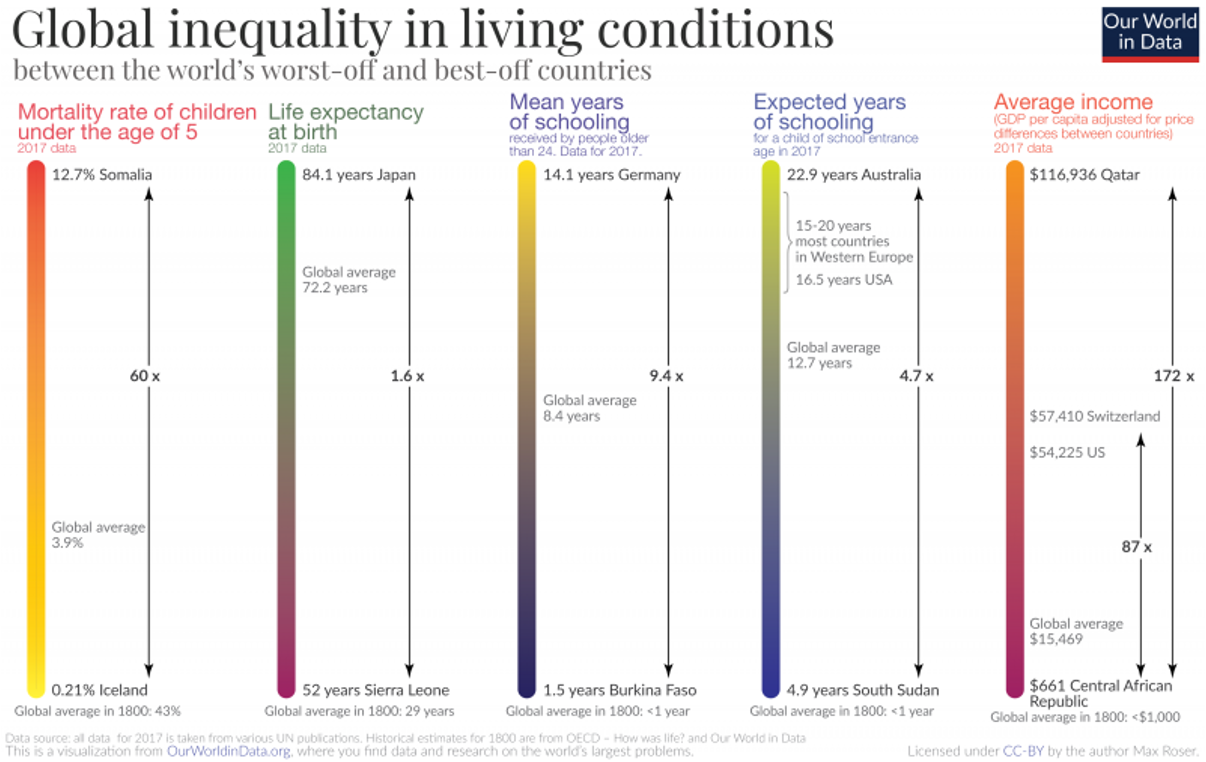
Can you imagine having a life expectancy of 52 years, 1.5 years of schooling and an average income of $661 per year?  And for your children, looking at a 12.7% mortality rate under the age of 5 and only 4.9 years of expected schooling.  In addition, you may have no shelter, you are undernourished, no clean water and virtual no access to health services.  Is it any consolation that you are better off than the average person in 1800 on a number of dimensions?  This is the worst of inequality – born in the wrong place on the wrong side of the street.

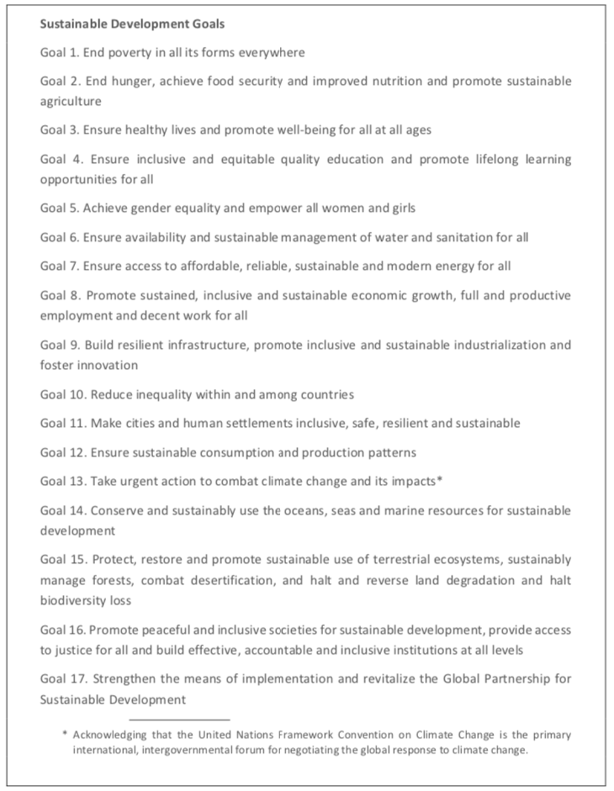
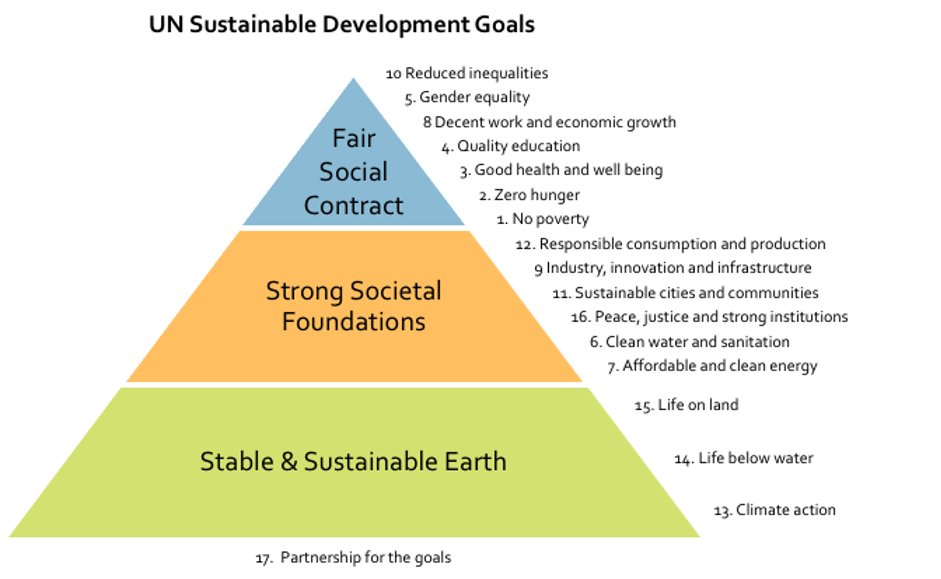
The climate crisis maybe the most existential crisis we have ever face but it does not stand-alone.  Solving the challenges of inequality through a set of initiatives focused on inclusivity and fairness also need to be addressed.  Probably, the best place to capture the overall goals that we need achieve are the United Nations Sustainable Development Goals (SDGs). In 2015, the United Nations adopted 17 SDGs (Figure 8-1) which then had 169 sub goals.  This is effectively the global consensus on priorities. Strong societal foundations and a fair social contract are critical components of the SDGs.

Figure 8-1

Why is it that we need to talk about inequality now after all the developments in the last 50 years?  We have the technologies and the capacities to solve these issues and as I have noted before almost all the trend lines of progress have been going in the right direction with the major exceptions of income and wealth inequality.  

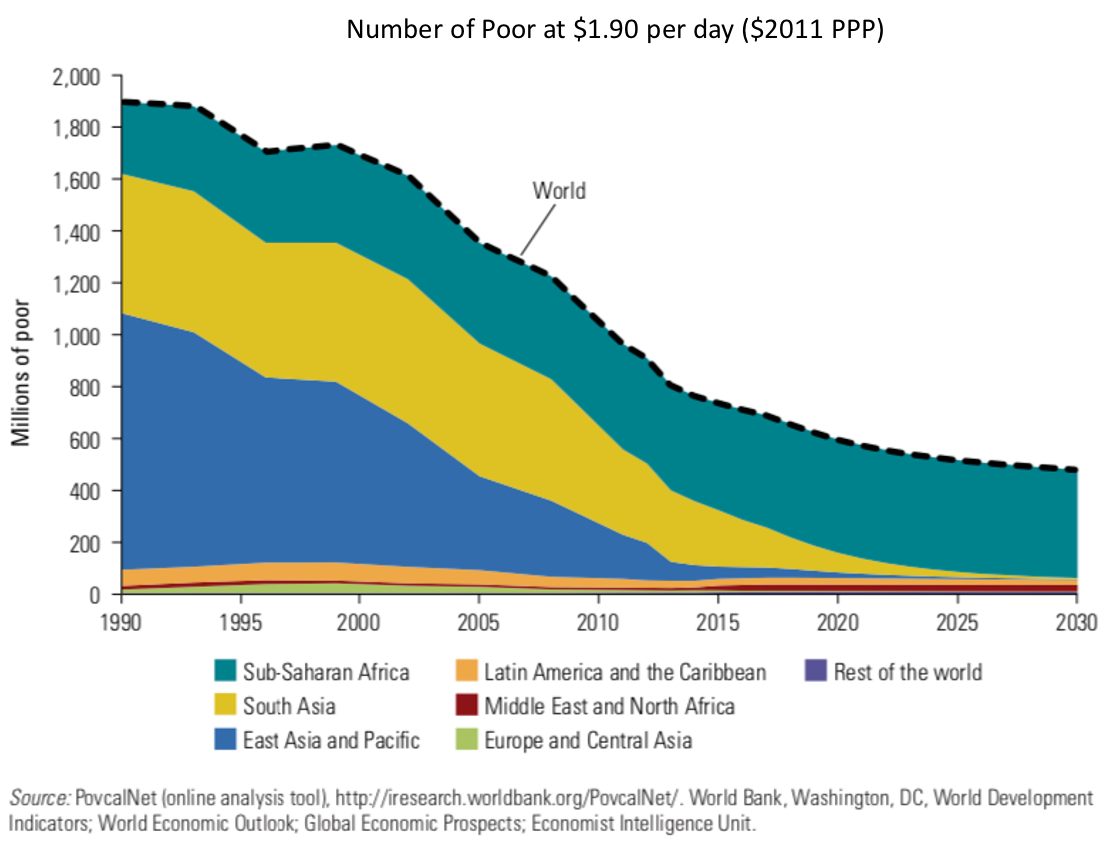
Just looking at extreme poverty, the reduction in the number of poor has been incredible since 1990 (Figure 8-2). The number of people in extreme poverty have dropped from 1,895m to 736m in 2015 and is now below 10% of the population from 36% of the population in 1990.  However, looking behind the numbers we can see that this has been primarily a story of China; and, more recently India has also been making progress. In fact when you move from extreme poverty of $1.90 ($2011 ppp) per day to lesser levels of $3.20/day and $5.50/day China is also making significant progress. The region of most concern is sub-Saharan Africa where across all poverty levels noted above, the number of people is growing dramatically in this high population growth region.  In fact, at $5.50 /day there are 895m people in the region in poverty.  So overall, trends are not expected to continue and solve the problem of poverty.  Additional interventions are required.

Figure 8-2

The core issue as I mentioned in the previous blog is the lack of commitment and pace to solving these issues and the hope that if we just keep on moving forward, as we have been doing in the past, the problems will go away.

Inequality manifests itself in the context of extremes in distribution of income and wealth and the shortfall in access to the basic necessities of life – food, clean water, energy, shelter, clothing, health, education and technology access.  We see the reality of these inequalities in different forms whether in sub-Saharan Africa, China or the US.  Today, 71 percent of the global population live in countries where inequality has grown.  In 2018, the 26 richest people in the world held the equivalent wealth of 3.8bn of the poorest people, half of the global population.  Since 1990, inequality has increased in most developed countries and a number of middle income countries including China and India.  

It is important to note that although there are growing levels of inequality within countries, particularly developed countries, the bigger source of inequality is across countries.  This is contrary to the source of inequality 200 years ago when 80% of inequality was found within countries as opposed to 20% today.

 Class Inequality 
(within a country)
Location Based Inequality(across countries)
182080%20%
Mid 20th Century20%80%

With growth in incomes in the developing world exceeding those of the developed world there has been some narrowing of the inequality gaps between countries especially in Asia and parts of South America; however, there has been little progress across sub-Saharan Africa.

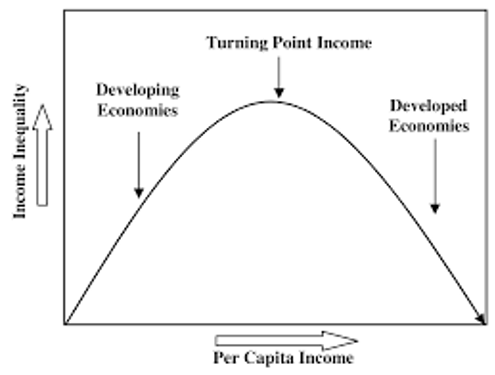
Traditionally, there has been the belief that inequality over time follows Kuznets Curve (Figure 8-3).  Kuznets Curve argued that income inequality tends to increase at an initial stage of development and then decrease as the economy develops, implying that income inequality will fall as income continues to rise in developing countries.

Figure 8-3

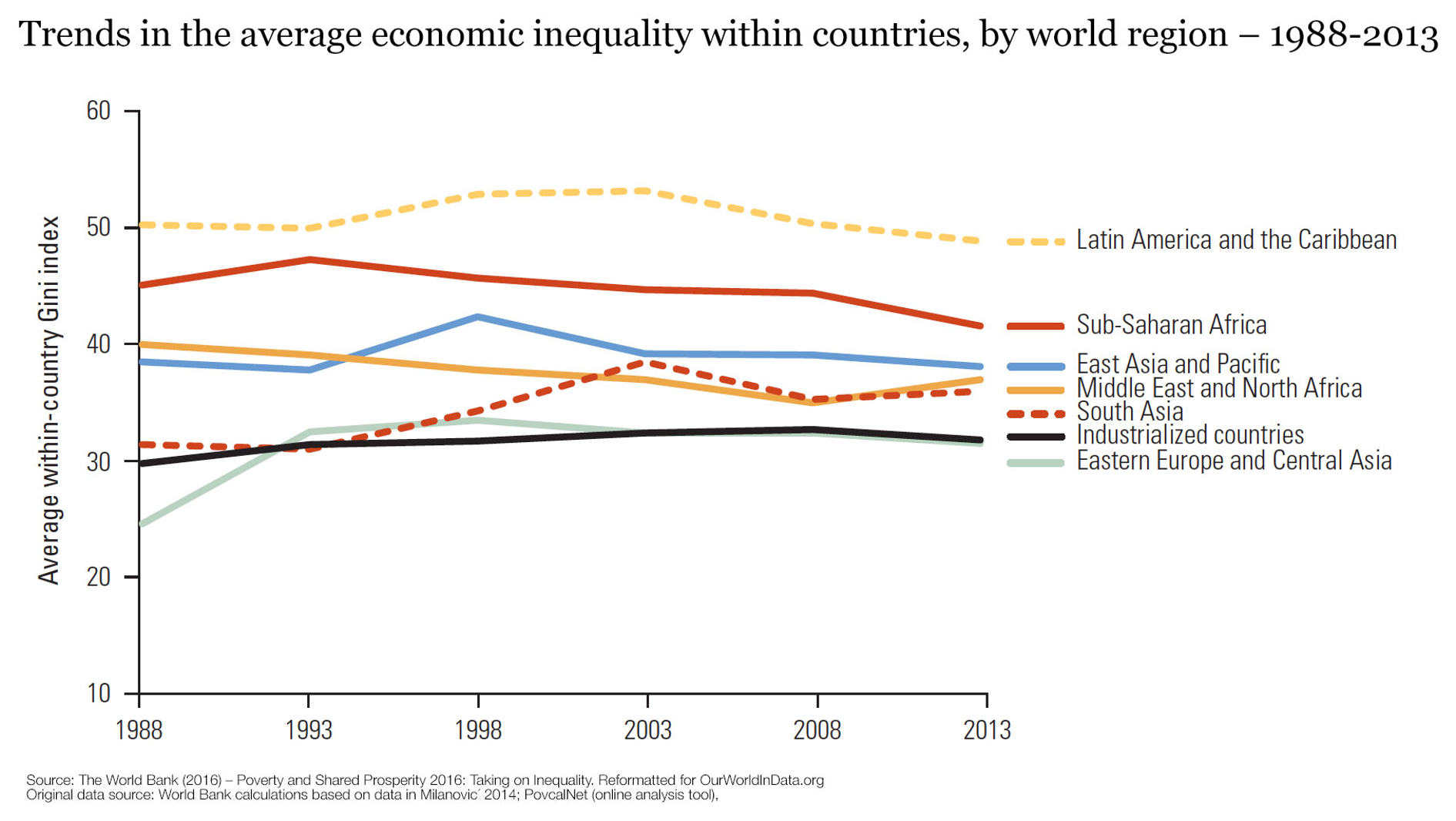
Conceptually, this curve appears to make sense; yet, it does not appear to happen in reality (figure 8-4).  In the upward sloping part of the curve, the shape depends on where the developing country was starting from. In the case of China with communism, they started from a low level of income inequality (low GINI score) and the income inequality has risen; however, in South America many countries started with very high GINI scores, perhaps linked to their previous colonial situations, and the levels of inequality have been slowly declining since about 2000.The downward shaped curve for developed countries does not also bear truth.  In the Western world, this did appear to be possible until about 1980 when the curves started to rise again for key countries such as the US, some countries in Europe and overall, in particular, in the English speaking countries.  The down-curve only appears to happen when there are appropriate progressive taxes on income, when tax rates on wealth are not less than taxes on income, and the income growth rate exceeds the average return on capital.  

Figure 8-4

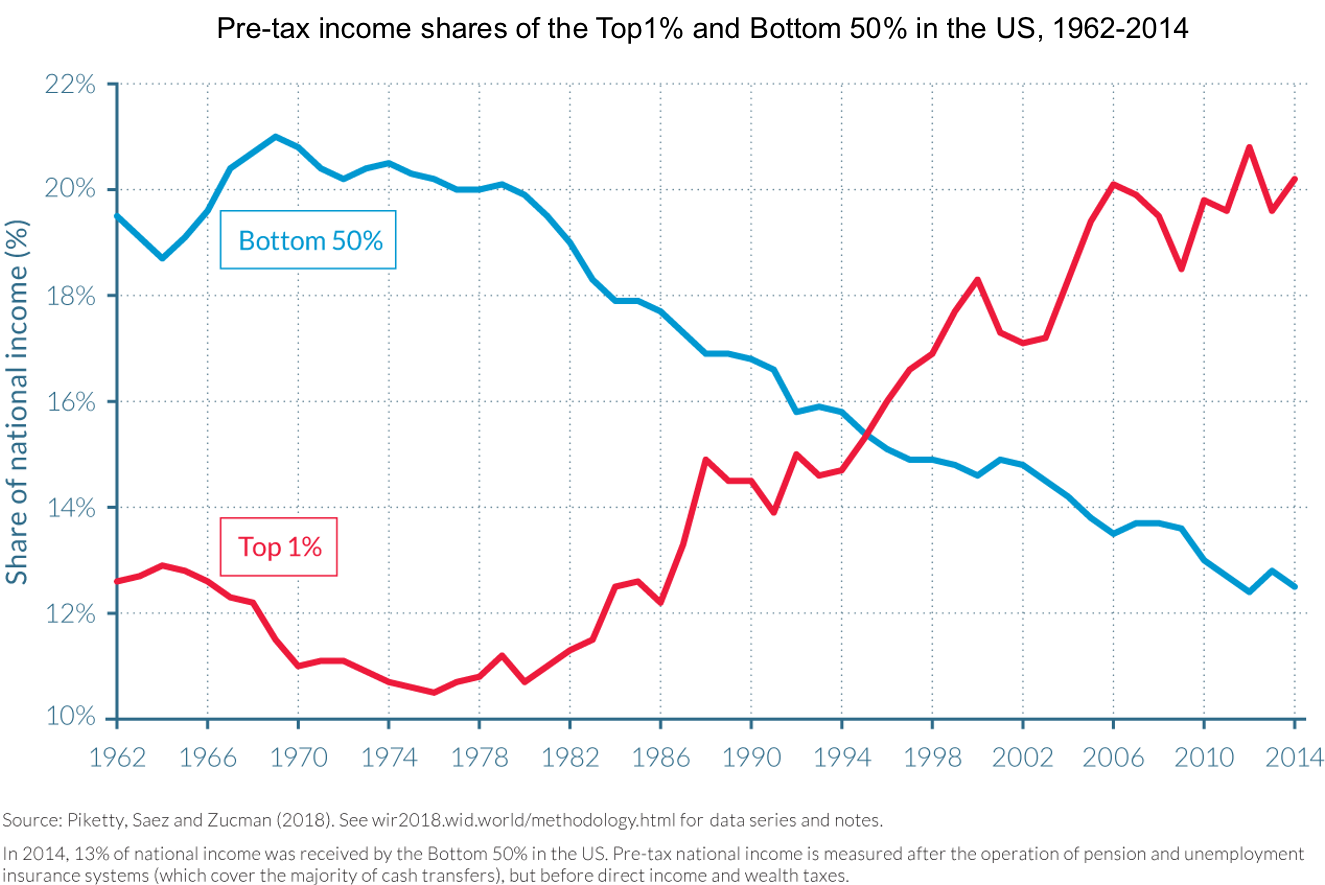
In countries, such as the US, which are now more resemblant of plutocracies than democracies these conditions are not being met and therefore inequality will continue to grow.  In the US, tax cuts are primarily for the top 10%, and especially the top 1%, who benefit from lower income tax rates and lower capital gains tax rates.  As an example, the wealthiest 400 families in America in 1960 paid as high as 56% in taxes, by 1980 it was 40% and in 2018 it was 23%.  The bottom 50% of households in America in 2018 paid an average rate of 24.2%.  Figure 8-5 shows the increasing concentration of income in the US mirroring the declining share of the bottom 50%.  In terms of wealth, in the US the top 1% have over 40% of total wealth and the top 10% comprise about 80% of all wealth. Both of these percentages of wealth are continuing to grow.

Figure 8-5

We have not seen this disturbing trend in many of the successful countries in Europe where across all dimensions their levels of inequality, or lack of inclusivity, are much lower; and, their average GDP/capita is higher than the US.

Inequality is also reflected in freedoms, access to opportunities and economic mobility, and the rights of safety, security and equal justice.  We see these issues every day in the news whether it is about the Uighurs in China, the Rohingya in Myanmar, Black Lives Matter in the US, the unequal treatment of women and girls in Afghanistan, the Middle East and most other countries. 

Growing inequality and mistreatment of groups of people builds political instability and is the antithesis of what is required of building a strong and stable society.  The historic metrics have been focused on watching the growth in averages.  Growing average income, average expected life, average years of education is only good in a society if the growth has some form of distribution.  If most of the benefit goes to the top 10% of society and none reaches the bottom 50% then the average is misleading.  What is needed is a focus on inclusiveness where no one is left behind.  

This is not about being driven by minority interests, it is about practically being inclusive.  It is the practice or policy of providing equal access to opportunities and resources for people who might otherwise be excluded or marginalized, such as those economically disadvantaged, having physical or mental disabilities, or belonging to disadvantaged minority groups.

Inclusivity and fairness is about ensuring that of primacy there are minimum standards and principles that countries need to focus on.  This is about not being left behind and it is about having a minimum set of opportunities for a good life at birth.  It is about minimising the differences in access and treatment across the basic requirements of a strong functioning society including equalising the access to quality education, equivalent outcomes for healthcare (eg. life expectancy), and equal opportunity.  It is about ensuring that we are addressing the unacceptable and then moving forward.  The definition of these items are not my views, they are those articulated within the UN SDGs.  The SDGs articulate where we need to get to nationally, regionally and globally.

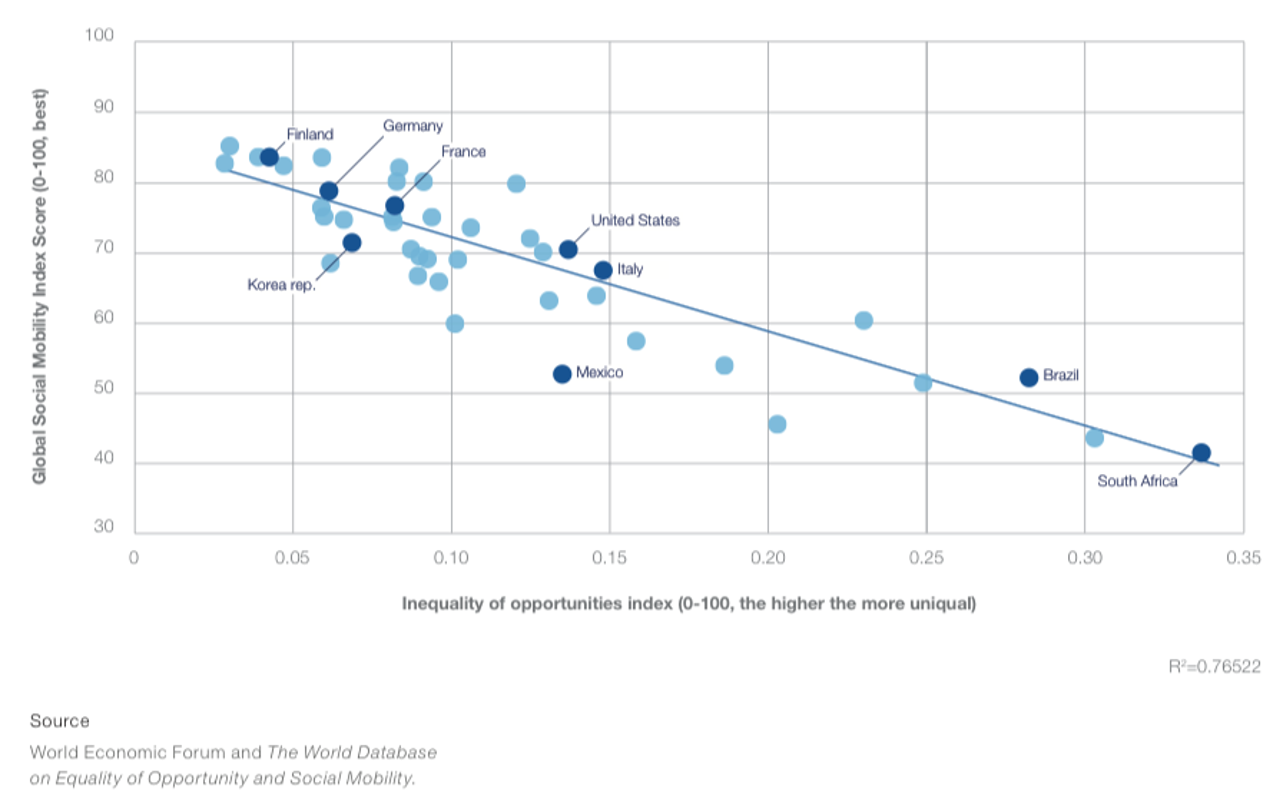
The outcome of inclusiveness and fairness should be social mobility.  As can be seen in Figure 8-6, there is a strong relationship between inequality of opportunity and global social mobility.  

Figure 8-6

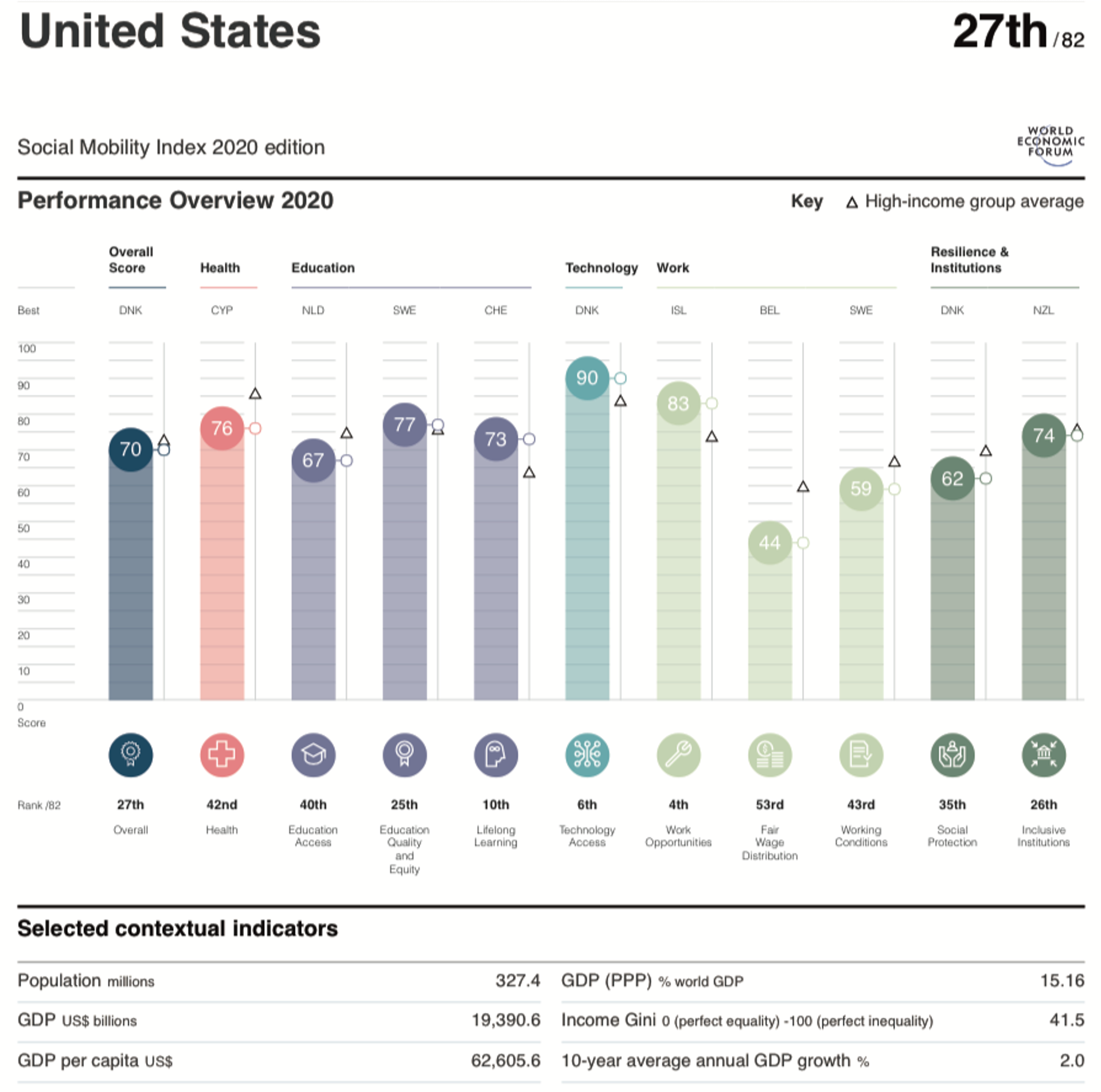
In the World Economic Forum’s new Global Social Mobility Index, 17 of the top socially mobile societies are in Europe with Denmark being the overall leader.  The US is 27th, while China is 45th and India is 76th.  In Figure 8-7, you can see how the US ranks across the different mobility factors.  The set of factors illustrated shows just some of the complexity of what needs to be addressed.

Figure 8-7

An important context to the solutions is to also address potential negative impacts from changes in how society is developing.  There are five critical dynamics to consider.  Firstly, changes in the nature of globalisation affects both where companies are sourcing their labour and where demand will be generated.  We have seen recently with the Covid 19 crisis and increasing geo-political tensions that the dynamics are changing.  There is also the inevitable shift in economic power towards China and ultimately India away from the US and Europe.  

Secondly, the impact of technology on labour markets.  Technology and innovation are increasing the interchangeability of labour and capital.  The innovative use of robotics, AI and autonomous vehicles will have profound effects on labour markets.  This will cause the need for more comprehensive social security programs and the need for increased levels of continuing education to improve labour mobility.  Without addressing this, there will be further pressures on the decline of the middle class.

Thirdly, the propensity for increased concentration of income and wealth within countries.  Unless countries address the increasing concentration of income, wealth and power, increasing social unrest is inevitable.  The importance of the use of both progressive taxes and taxes on wealth is an essential component to addressing this problem.  This will also provide critical financing for deeper programs to address inclusivity and fairness.

Fourthly, the changing composition of populations within countries.  In the last 40 years, there has been dramatic changes in the composition of populations within countries.  The mixes between pre-work, working, and retired populations have changed dramatically.  In particular, in the developed world solving for managing in situations where the retired population is a major part of the mix of a country raises real challenges. Post 2050, other than sub-Saharan Africa virtually all other countries will have peaked in populations and will be ageing.

Finally, climate and environmental crisis.  All the evidence points to the developing world, especially sub-Saharan Africa and India, being particularly affected by increased temperatures, which impacts food production and water access.  In addition, we know that the increase in droughts, floods, fires, etc. will impact the most disadvantaged.

Moving towards a more inclusive and fair world with base standards of living, freedoms and opportunity can be broken down into 2 areas to address.  Firstly, in-country inclusiveness which is about thinking about the problem within a country at the individual level.  Secondly, across country fairness is about policies and programs that are required to help underdeveloped and developing countries make an overall shift upwards while they solve their in-country problems.  

Starting with in-country inclusiveness, the commitment to this form of social contract starts with governmental programs and policies and then ripples through to the private sector.  In most of the developing world this should include inclusive and affordable access to quality health and educational programs.  Educational access needs to include tertiary education and life long learning and skills development.  There is also need for strong social services programs, for the retired, disadvantaged and those in-between jobs.  There needs to be a continued movement from minimum wage to living wage programs and clear policies for Gig economy workers.  Finally, ubiquitous equivalent access to the internet for all, through mobile devices such as smart phones, is one of the vital components to help move towards equality of opportunity. Financing of these programs can come in different forms including a proper approach to progressive taxes and taxes on wealth.  

Small and medium businesses are vital for employment levels. SMEs (small and medium sized enterprises) comprise 60-70% of jobs in most OECD countries. They also provide a disproportionate number of new jobs creation. In the US, businesses with under 500 employees comprise 48% of all employees. Solving the failing of financial markets for small businesses is critical in a number of countries such as the UK. Governments should also be looking at providing a fair share of their sourcing and outsourcing expenditures to support small and medium sized businesses.  It is a false economy for governments to focus disproportionate levels of their spend on large companies.   In all of the developed economies, a significant portion of private company revenues is from procurement and outsourcing activities by governments at the federal, regional and local levels. 

There are multiple examples of countries that have made progress across a range of the inclusiveness issues. There is the healthcare system in Singapore, Finland’s success in education, Scandinavia’s over all progress on gender equality, Denmark’s model of social security and mobility, and Switzerland’s strength on life-long learning. Of the larger countries, Japan and South Korea have very high scores on health and technology access and Germany is a strong performer in social protection and work opportunities. Good references for this are the WEF Global Social Mobility Report 2020, and R. James Brieding’s book “Too Small To Fail”.                      

Improving inclusivity and fairness in underdeveloped and developing countries is a big challenge.  At the national level, countries must understand that consistent development support from the developed world is earned through strong political, economic, and social structures.  Dictatorial behaviour and increasing concentration of wealth damages economic and social development.

Accelerated progress will only happen with external support.  This includes foreign government policies on aid and assistance, financial support from intergovernmental organisations such as the IMF and Worldbank, and philanthropic assistance to tackle big problems such as what we are seeing by The Bill and Melinda Gates Foundation.  

In the private sector, from multi-nationals there needs to be more rapid progress on progressing proper employment practices with fair pay, education and health support. In more remote locations, there is often also a need to engage more actively with the overall communities.  Secondly, consideration should be given to special pricing, such as in the health sector, to increase the accessibility of critical goods and services.  Finally, technology and innovation investment needs to be focused on solving both development and climate challenges.  This includes ubiquitous access to clean water and sanitation, access to low cost continuous energy (ideally green energy)  and quality internet access with smart devices.  Social impact needs to be high on the corporate agenda as well as achieving a Net Zero carbon position.

Financing of the SDGs and in particular meeting the needs of the developing world is clearly a challenge.  The UN Secretary General’s “Roadmap For Financing The 2030 Agenda For Sustainable Development” published in 2018, estimated a short coming of $2.5tn – $3 tn per annum to achieve the SDG’s in developing countries.  This is against a context of global GDP being $88 tn and global wealth of about $215 tn.  It is particularly challenging in the context of the need for post-Covid financial recovery and for the developed countries to set and meet their own climate and SDG goals.  A majority of this financing will need to come from the private sector.  

To achieve this, new financial thinking is required and alternative financing instruments are needed to improve the flow of finance to these needs. The current global situation of climate warming and increasing stakeholder response to inequities is changing the context of investment decisions creating the need to incorporate related economic and risk factors into long term financing decisions. 

Global, national and local policies and programs drive change and where there is large scale change there will be broad sets of investment opportunities.  The higher the level of clear and certain policy directions the bigger the opportunities in the private sector. Uncertainty is the enemy of growth and investment.

Increasing transparency on the risk and return of not engaging in driving impact will be a vital contributor to shifting investments towards solving these social and environmental challenges we are facing. The increasing requirements for ESG reporting and the movement towards consistent, comparable and auditable measurements will help embed impact into business decision making. However, what is also needed is growing stakeholder pressure to accelerate the incorporation of impact into strategies and business models. Consumers and employees need to help business leaders see that without impact their businesses will not flourish and be leaders in their markets. It needs to become clear that social and environmental leadership can be vital components of competitive advantage.

In addition, the potential of existing and emerging technologies to solve large global issues is real. There is no reason that this should not attract significant investment. Passionate impact oriented entrepreneurs with the latest technological know how have massive opportunities to create great businesses.  Probably the most visible company in this space is Tesla which is focused on shifting the world to clean energy through electric cars, solar technology and battery storage. I am sure there is more to come from them. Other opportunities include the creation of low cost clean energy solutions for remote communities.  Slingshot and Skysource are great examples of companies working to improve the availability of low cost clean water.  Zipline, the leader in drone medical deliveries, developed their business in Rwanda where there was a critical need for remote and timely delivery of critical medical supplies.  Elon Musk, Facebook and Jeff Bezos are all looking at building large satellite networks that have the potential to vastly improve internet access in remote areas. The business opportunities are immense.

There is already a $31 tn ESG and impact investment pool, which is about 15% of global investable assets. This level of money is already increasing the focus on companies that are creating impact as well providing shareholder returns; although, many of the companies in the pools are focusing primarily on ESG reporting first and only just starting on the journey towards to Net Zero carbon emissions and social impact.

New forms of financing at scale are also essential to contribute to filling the financing gap. The term used for the specific new forms of financing focused on generating impact is impact investing. Impact investment financial solutions work on the basis of risk-return-impact equations. A key proponent of this is Sir Ronald Cohen who has recently published a book talking about this, “IMPACT – Reshaping Capitalism To Drive Real Change”. Sir Ronald Cohen is a preeminent international philanthropist, venture capitalist, private equity investor, and social innovator.

The market for impact focused investment products is small today; but, it is emerging. Green bonds in the market today are valued at about $750 bn. These green bonds are being followed by blue (ocean), education, social and gender bonds. The DIB/SIB (Development and Social Impact Bonds) market will become more substantial through the scaling of Outcome funds. To achieve scale this will require some of the growth coming from the $5 tn investment pool comprising private equity, venture capital, real estate and infrastructure investing.

We understand the challenges of inclusivity and fairness. Through the UN SDGs there is global recognition of what needs to be done. It is now up to political commitment coupled with supporting governmental policies and programs, philanthropic support, and most importantly, private sector commitment to move towards risk-return-impact business models and investment criteria.

My next blog will cover the third challenge of ‘digital privacy and collective truth’. This is an emerging and critical challenge that unaddressed affects the conduct of democracies, the level of social instability across all countries, and the violation of the rights of individuals.

Categories
REBOOT World View

Successful Societies

“It is not the strongest species that survive, nor the most intelligent, 
but the most responsive to change”, Charles Darwin

To address the three challenges, that I identified in the last blog – decarbonisation and biodiversity regeneration, inclusivity and fairness, digital privacy and collective truth – it is worth understanding where we are starting from.  Looking at the components of successful countries and societies is a good place to start.  Most comparisons of countries are focused on GDP per capita, the growth of GDP per capita, and the unemployment rate.  I think we all know that there is much more to life and a society than just these factors.  Income is important but there is also health, education, happiness, safety, freedom, fulfilment and purpose.

Lyndon B. Johnson said, ”The Great Society is a place where every child can find knowledge to enrich his mind and to enlarge his talent…  It is a place where the city of man serves not only the needs of the body and the demands of commerce but the desire for beauty and the hunger for community…It is a place where men are more concerned with the quality of goals than the quantity of their goods”.  The language may not be gender appropriate for today, but the idea of what makes a society is captured. 

Yet, as we sit here and watch what is happening around us we know it is even deeper than this.  It is the ability of someone being able to go to church or to teach a class and not have any risk of being attacked. It is the ability of someone of BAME origin or any gender to have equal respect, equal opportunity and equal justice. It is the ability of a young woman to be able to travel unintimidated on public transport late at night.  It is the feeling that you are safe at home and that your job is secure even though you may different political views.  It is not just freedom of thought but also freedom of speech.  

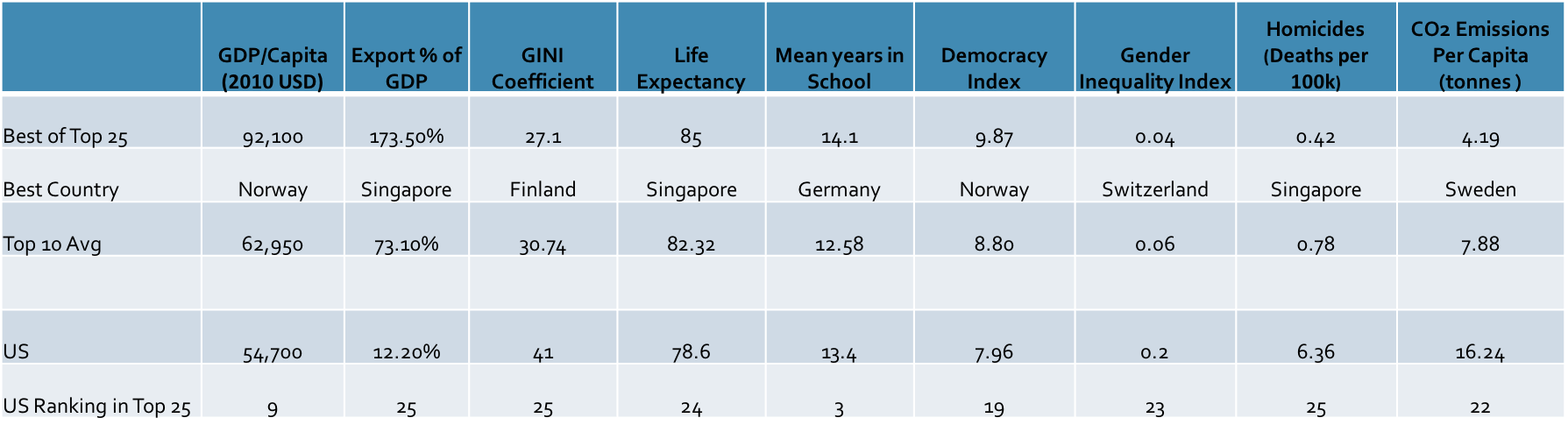
In my analysis, I tried to look at successful countries and societies based on a simple composite ranking across a set of factors including GDP/Capita, Exports as a % of GDP, GINI coefficient, life expectancy, mean years in school, democracy index, gender inequality, homicides, and CO2 emissions per capita. On a GDP per Capita basis, the USA is 9th; and surprisingly, from a composite rank perspective, 25th out of the top 25 countries with the highest GDP per Capita (populations over 4 million people).  This jars with the American narrative we have been fed over generations; although perhaps not, when we watch with amazement the reducing presence of America globally, the polarisation of the country and its massive decline in global respect, especially in the last four years.  More specifically, this is reflected by America’s withdrawal from the Paris Climate Agreement and the World Health Organisation, the levels of social division, the growing gap between the haves and the have nots, the implicit caste system that still to some extent exists, the rapid rise of the public buying of arms and munitions through fears for their own safety and the conduct of the US Presidential Election.  Xi Jinping, Putin, Erdogan et al. are salivating as they watch the main symbol of democracy and prosperity in disarray and broadcasted around the world.  

The common thread across the top 25 countries in GDP per Capita is that they all have market economies and 23 of the 25 (excluding UAE and Kuwait) have democratic forms of government.  It is also worth noting that looking across other countries, there are no strong and progressively developing economies that don’t have market economies.

The top 10 countries (Switzerland, Norway, Sweden, Denmark, Ireland, Netherlands, Singapore, Austria, Finland and Germany) based on the composite ranking outperform as a result of having a much more balanced society.  As well as a high GDP, they have less inequality and higher levels of upward mobility, a higher life expectancy, a more educated population, a more effective democracy, better gender equality, lower homicide rates and are more environmentally friendly.  I would argue that these countries have been able to create an overall better balance between the role of the market economy and the state, and how they together contribute to the well being of their citizens.  

These top 10 countries also outperform across all measures (except CO2 emissions) vs. groups of upper middle income, lower middle income, and low income countries.  It should be no shock that these dimensions are all intertwined to create more prosperous and sustainable societies.

Definitions
Developed countries – Top 10 overall ranking – Switzerland, Norway, Sweden, Denmark, Ireland, Netherlands, Singapore, Austria, Finland, Denmark
Upper Middle Income – Selection of 5 countries – China, Turkey, Brazil, Botswana, Colombia
Lower Middle Income  – Selection of 5 countries – India, Indonesia, Nigeria, Egypt, Ghana
Low Income – Kenya, Bangladesh, Tajikistan, Rwanda, Ethiopia
Note: The data is based on simple averages across the countries

If you look at government spend as a percent of GDP across the country groupings in Figure 2-2, small government involvement in the economy is not a characteristic of advanced economies. More advanced economies do have higher rates of taxation and larger investments in the delivery of public services than less developed countries. Looking across the most advanced economies, there is no apparent clear model of the optimal involvement of a government.  Most of us intuitively believe that a well functioning market economy should create more opportunities, innovate faster, grow more quickly and therefore have more potential to create a better society across a range of dimensions. Perhaps less intuitive, is that strong delivery of public services and the creation of a well balanced society also appears to be an important contributor to economic performance.

So, what is the role of the government to help create a well functioning society.  Lee Kwan Yew, Prime Minister of Singapore from 1959 to 1990, stated, “the ultimate test of the value of a political system is whether that society establish conditions that improve the standard of living for the majority of its people.”  He always stated that the proof is in the pudding; rising incomes for the broad middle class, health, security and economic opportunity.  Today, I would argue that there should also be a concept of ‘no one left behind’ and an opportunity for all; which would be encapsulated by ensuring that there aren’t rising levels of inequality and there are increasing levels of mobility within a society.  In addition, most people would also add responsibility to ensure that society operates in a climate and environmentally sustainable way.  

Arguably the primary fuel behind the growth of the standards of living has been the development of market economies and the driving force of capitalism.  The personal rewards of taking risks and succeeding and of hard work has accelerated progress and built strong economic foundations to many economies. 

Yet, capitalism without frameworks has never worked sustainably.  Unstructured accumulation of wealth and power leads to self destruction of a free market economy, exploitation of the masses, environmental damage, and inevitably social instability.  Since the 19th century, combinations of legislation, regulations, other frameworks and tax policy have been required to manage against the creation of monopolistic powers and the retention of competitive market sectors. Legislation has been required to deal with slave and child labour and to institute the concept of minimum wages.  Rules and requlations have had to be put in place to deal with city air pollution, water pollution, land waste, environmental destruction, the erosion of the ozone layer.  Extensive regulations have also had to be put in place to control financial markets.  Finally, consumer protection has required regulations and legislation for food and drug safety, minimum product warranties, mis-selling and misuse of personal information.  

So, let’s not kid ourselves that unbridled capitalism is in a societies interest.  The real question is – what is the right combination of the freedoms of a market economy and the participation of the government.   A lighter touch is always ideally preferred; however,  in most countries we are still a long way from having the right balance.  To move in the right direction and prioritise actions it is vital that there is clarity on what the social contract is within a society.  Societies are complex systems and there are no simple solutions.  Any individual initiative by either the market economy, the government or the public will inevitably have trade-offs and shortcomings.  The UN Sustainable Development Goals illustrate this complexity in living colour with 17 areas of focus and 169 subsidiary goals!  

Looking at the most successful societies gives us insights into what they have done and where they have been successful in creating their broad based societal success.  R. James Breiding’s book “Too Small To Fail” which focused on the innovative approach of smaller successful countries provides a number of good examples.  Examples include Finland’s transformation of their education system, Singapore’s low cost-high quality inclusive healthcare system, Denmark’s leadership in renewable energy, Israel’s building of a Silicon Valley style ecosystem, and the Nordic story on leading in gender balance. These are best practice examples that give guidance on better ways to move forward.  The challenge is to move towards these best practices globally and then well beyond.  

The three challenges are steeped in the historic practices of our take-make-waste culture, the singular focus on the maximisation of short term profitability and minimally regulated use of technology and data at the expense of the citizen.  Each country sits in a different place on the continuum of progress to solving these issues locally. But we should not forget that all three challenges need to be solved also at the global level.  Isolated examples of progress against climate will not solve this existential crisis! The context for progress is also now different.  There is urgency. There is a recognised need for a unified approach to tackling these issues. There must be an accelerated development and adoption of critical technologies.  And, there is a need, and a demand from the public, for a fundamentally more purpose driven, values driven and sustainability focused approach to how we live and how our societies operate. 

In the next blog, I want to talk about a framework for solving these issues and the social contract. 

#climate change #global warming #decarbonisation #biodiversity #species extinction #regeneration #rewilding #carbon sequestration #inequality #inclusivity #fairness #privacy #digital trust #cyber #mass manipulation #truth #social contract #Too Small To Fail @James Breiding #Sustainable Development Goals #SDGs #Paris Climate Agreement #WHO #take make waste